The Odyssey Review: Christopher Nolan's Homer Is a Technical Marvel — and a Box-Office Event
Shot entirely on IMAX 70mm film, Christopher Nolan's Homer adaptation is a genuine formal event — now confirmed as a record opening and audience favorite — even if the epic's scale occasionally outpaces its heart.
★★★★½ 4.5/5
A staggering technical achievement, Nolan's highest-rated film with critics, and a rare A-CinemaScore blockbuster audiences are actively recommending. See it on the biggest screen you can find.
Updated July 22, 2026: post-opening-weekend refresh. The Odyssey opened July 17 to roughly $264–268 million worldwide ($123.5M domestic final) — Nolan’s biggest global launch — and holds a 95% Tomatometer, 97% Popcornmeter, Metascore 89, and an A CinemaScore. Our verdict is unchanged; the scoring and box-office context are updated to the settled midweek numbers.
An image the medium has never produced
Every few years, a film arrives that exists primarily to answer a technical question, and The Odyssey is this decade’s clearest example. Christopher Nolan has built a career on resisting digital convenience, but shooting an entire feature — not sequences, the whole thing — on IMAX 70mm film cameras is a different order of ambition. The format has no patience for compromise: every frame is enormous, every location has to justify its own weight in celluloid, and there is nowhere for a filmmaker to hide. What’s striking is how rarely Nolan needs to hide. Storm-lashed coastlines, firelit interiors, the cyclopean scale of Polyphemus’s cave — these are photographed with a clarity and depth that genuinely does not exist anywhere else in current commercial cinema. A week into wide release, the critical verdict has settled rather than softened: a 95% Tomatometer from more than 400 reviews — still Nolan’s highest-rated film on the site — and a Metascore of 89, firm “universal acclaim” territory. The Independent’s Clarisse Loughrey went furthest pre-release: it “deserves to be the film that defines him.” On the photography, reviewers remain close to unanimous.
Myth as machine, not just spectacle
What separates The Odyssey from a merely handsome spectacle is Nolan’s structural instinct. Homer’s poem is not a straight line — it famously begins in medias res, with Odysseus’s own journey told partly in flashback, partly through Telemachus’s parallel search for his father — and Nolan, a director who has never met a nonlinear structure he didn’t want to complicate further, leans into that fracture rather than smoothing it into a conventional voyage narrative. Time, memory, and the unreliability of a story told secondhand become the film’s real subject, echoing the temporal games of Memento and Tenet but in service of a text that was already doing this three thousand years ago. It’s a genuinely interesting critical position: that Homer was the first unreliable narrator, and Nolan the filmmaker most temperamentally suited to say so. RogerEbert.com’s Matt Zoller Seitz captured the adaptation’s rigor in a single image: it is “a rare modern blockbuster that doesn’t feed us lotus flowers.”
An ensemble carrying uneven weight
Matt Damon anchors the film with a physically committed, increasingly haunted performance — this is Odysseus as a man being worn down by his own cunning, not a straightforward hero. Anne Hathaway’s Penelope, largely confined to Ithaca, does a great deal with comparatively little screen time, suggesting an entire parallel siege of patience and political survival happening just off-camera. The ensemble around them is deep to the point of excess — Zendaya, Robert Pattinson, Charlize Theron, Lupita Nyong’o, Elliot Page, and Jon Bernthal all register as mythic figures rather than stunt casting — but it’s worth being honest that not every thread lands with equal force. Several critics have singled out Tom Holland’s Telemachus as the film’s flattest register, a performance that reads as intentionally adrift but occasionally just reads as adrift, full stop.
The cost of scale — and why audiences don’t seem to mind
Here is the film’s real tension, and the reason the critical reception, while overwhelmingly positive, isn’t the flawless rapture some pre-release chatter suggested. At nearly three hours (173 minutes), The Odyssey is frequently described by critics as dazzling the eye and mind while keeping the heart at arm’s length — a film you admire with total sincerity more often than one that moves you. The dialogue, adapting verse into prose, inevitably sheds some of the poem’s lyricism for narrative efficiency, and the back half in particular has drawn genuine (not manufactured) criticism for pacing that occasionally luxuriates when it should propel.
None of that has stopped audiences. Verified Rotten Tomatoes ratings sit at 97% — higher than the Tomatometer — CinemaScore came back an A, and the opening weekend ($264.1M worldwide) is Nolan’s biggest global launch to date. That gap between admiring critics and ecstatic crowds is the story of the film’s first week: whatever emotional reserve some reviewers felt, ticket buyers are walking out ready to recommend it. That’s a real, not manufactured, data point — and it should recalibrate anyone writing the film off as “critics only.”
Verdict
The Odyssey earns its reception on craft alone — it is, unambiguously, one of the most extraordinary-looking films of the decade, and Nolan’s structural gambit with Homer’s text is smart rather than merely reverent. Where some critics place it short of the year’s absolute best is in exactly the place epics traditionally struggle: sustaining emotional urgency across a three-hour runtime built primarily around spectacle. That’s a fair reservation about a film operating at a level almost nothing else this summer is even attempting — and the opening-weekend numbers suggest audiences are taking the trade gladly. See it on the largest screen available; this is a rare case where the format genuinely is the argument.
Availability is a catalogue snapshot and can change. Confirm with the provider in your region.
Where to watch The Odyssey
The Odyssey is in cinemas now.
Not confirmed on major subscription platforms in our US baseline — check regional listings.
Full scores and availability on the movie page.
Guides for The Odyssey
If you liked The Odyssey
Ranked by genre overlap and Celluloid Score. More movies like The Odyssey →
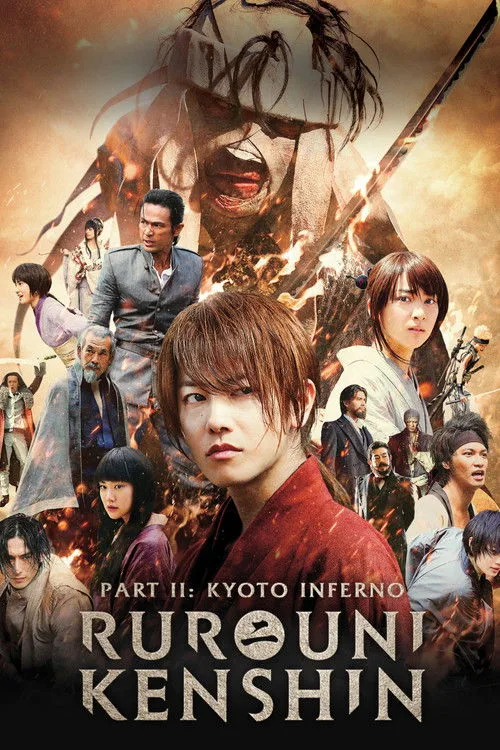 Tokyo 2014
 Rurouni Kenshin Part II: Kyoto Inferno
Action, Adventure · 2h 18m
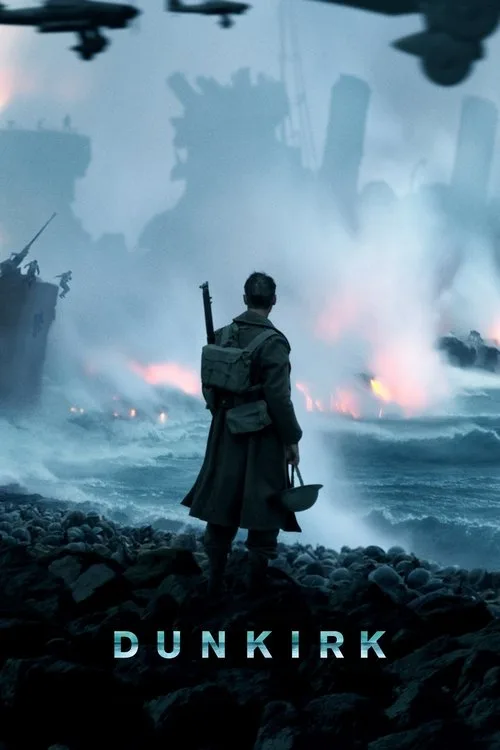
Dunkirk
War, Action · 1h 47m
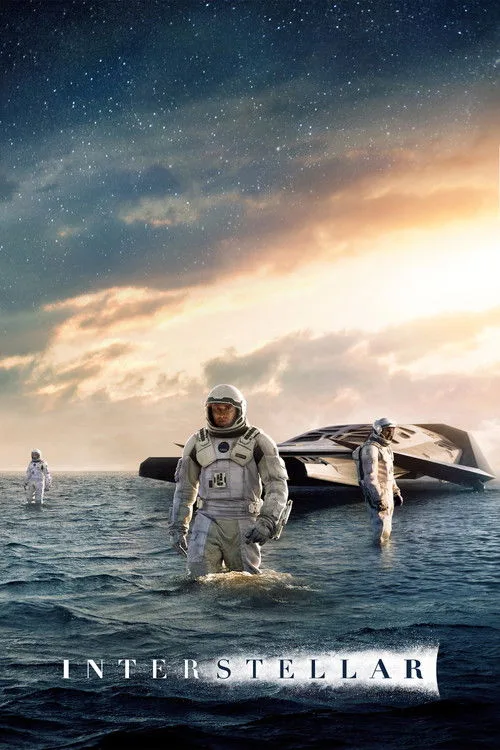 Featured
 Interstellar
Adventure, Drama · 2h 49m
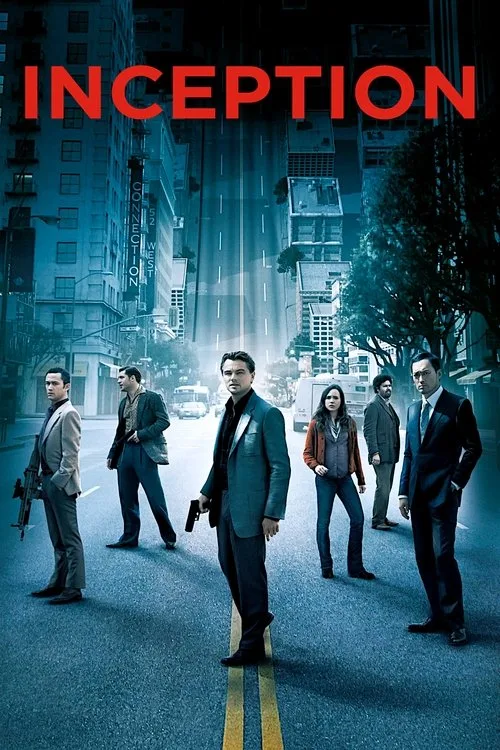
Inception
Action, Science Fiction · 2h 28m