Ramayana (2026) Reviews: What Critics Said
Most critics single out Yash's Ravana and the sheer scale of Nitesh Tiwari's Ramayana, but split over Ranbir Kapoor's restrained Ram, the quality of the visual effects and whether the 195-minute epic finds the emotion beneath its spectacle.
Critics lean towards yes for big-screen spectacle and Yash's Ravana, but many found Ram flat and the storytelling cautious, and the harshest review calls it overproduced and lifeless. This compares published reviews; Celluloid has not screened or rated the film.
Editorial note: This article compares named, published reviews of Ramayana. It is not a first-hand Celluloid screening report and carries no Celluloid review rating. Sources were checked on 25 November 2026.
Is Ramayana worth watching?
For viewers who want an epic on the biggest screen they can find, most of these critics say yes; for anyone hoping to be moved by a fresh retelling, the reviews are far more divided. Admirers praised a scale Indian cinema has rarely attempted, Yash’s commanding Ravana and a faithful, respectful approach to a story most Indian viewers grew up with. Mixed reviews found a visual feast whose characters stay flat. The harshest critics argued that the film is so careful with a sacred text that it forgets to tell a story, and that its computer effects often look artificial.
What is Ramayana about?
The first of two films adapting Valmiki’s ancient epic, Ramayana opens with its villain rather than its hero. Ravana, a devotee of Shiva, wins a boon from Brahma that makes him almost invincible and takes the throne of Lanka, and Vishnu is born as Ram, a prince of Ayodhya, to stop him. Ram wins Sita’s hand, but as he is about to be crowned, his stepmother Kaikeyi holds King Dasharatha to old promises and has Ram exiled for 14 years so that her son Bharat can rule. Sita and Ram’s brother Lakshman follow him into the forest, where an encounter with Ravana’s sister Surpanakha leads to Sita’s abduction. The second part is due in 2028.
Nitesh Tiwari directs from a screenplay he wrote with Shridhar Raghavan, and Namit Malhotra’s Prime Focus Studios produced the film with Yash’s company, Monster Mind Creations. Ranbir Kapoor plays Ram, Sai Pallavi plays Sita and Yash plays Ravana, with Ravi Dubey as Lakshman and Arun Govil, who played Ram in Ramanand Sagar’s television series, as Dasharatha. Lara Dutta, Sheeba Chaddha, Rakul Preet Singh and Shobana play Kaikeyi, her maid Manthara, Surpanakha and Ravana’s mother, Kaikasi, and Anupam Kher voices the vulture Jatayu. Hans Zimmer, working on an Indian film for the first time, scored it with A.R. Rahman, who also composed the songs. The film runs 195 minutes and opened in Indian cinemas on 5 November 2026; critics have reviewed it both as Ramayana: Part 1 and as Ramayana: Rise of a Legend. Release dates for other countries and any recorded viewing options are on the Ramayana film page.
Does Ranbir Kapoor work as Ram?
This is the critics’ sharpest disagreement. Renuka Vyavahare, who gave the film four and a half stars out of five in the Times of India, thought Kapoor consciously holds his intensity in check and lets stillness do the work, almost the opposite of his performance in Animal. Vineeta Kumar, who gave four stars for India Today, at first wondered whether he would slip into the mannerisms of his Yeh Jawaani Hai Deewani character, but came to admire the calm and restraint he finds in Ram. Taran Adarsh’s five-star Bollywood Hungama review praised his grace and dignity, and Saibal Chatterjee, who gave three stars for NDTV, felt Kapoor keeps his star persona out of the way and brings the contained intensity the part needs.
Others read the same restraint as stiffness. Rahul Desai at The Hollywood Reporter India argued that an actor known for playing flawed men works so hard to look flawless that his sincerity comes across as nervousness. Sreeju Sudhakaran, who gave two and a half stars at Rediff, blamed a one-dimensional conception of Ram that leaves a fine actor little to do but look kindly until his final scene, and found him stiff again in a brief turn as Parashurama, another of Vishnu’s avatars. Zinia Bandyopadhyay, a self-declared Kapoor fan who gave three stars for Firstpost, could not accept him as Ram in the first half, noticing an awkward posture and a tremor in close-ups. Nandini Ramnath at Scroll felt both leads seem afraid to put a foot wrong, a caution she found unsurprising given how proponents of Hindutva have turned the epic into a political weapon, and Simon Abrams, who gave one star out of four at RogerEbert.com, found Ram a largely passive hero. The split is less about effort than about how restraint reads: to admirers it is the composure of an ideal king, to detractors a performance too careful to come alive.
Why is Yash’s Ravana the most praised performance?
Yash, a Kannada star in his first Hindi film, is the closest thing to a consensus. Vyavahare thought he makes the strongest impression of anyone, setting unrestrained fury against Ram’s composure, and counted his opening stretch of nearly half an hour and the climactic fight with Jatayu among the film’s high points. Kumar could not imagine anyone else in the role and was struck by how much he conveys with his eyes. Even sceptics agreed: Sudhakaran found the villain far more interesting than the hero and called the scene that stages Ravana’s ten heads as ten inner voices the film’s best, and Abrams thought Ravana, a troubled antihero from the underclass who turns cruel, the more interesting of the two leads.
The praise comes with caveats. Desai argued that the best stretches belong to Ravana because they are the only place the makers feel free to experiment, and that his sympathetic backstory as a wronged asura king almost undoes the epic’s moral design; he added that Yash plays him much like the brooding, hyper-masculine heroes of recent Indian blockbusters. Ramnath made a similar link, seeing the character as a forerunner of Rocky, the gangster Yash played in the KGF films, while Sudhakaran read Ravana’s rise as an uprising of the oppressed and found his Lanka livelier than Ram’s Ayodhya. Bandyopadhyay felt the film clearly wants Ravana to be more than a dark figure but does not explore his complexity deeply enough, and Chatterjee observed that where Kapoor chooses restraint, Yash chooses excess.
How do Sai Pallavi and the supporting cast fare?
Sai Pallavi’s Sita drew warmer notices than Kapoor’s Ram, though not unanimously. Kumar was struck by how Tiwari makes Sita a healer and a fighter in her own right rather than only a devoted wife, and felt the couple’s chemistry grows naturally once they reach the forest; Vyavahare admired her poise, and Bandyopadhyay liked her grounded, restrained performance. Ramnath, however, felt the actor suppresses her usual liveliness and found the Ram–Sita scenes dull, and Sudhakaran, while rating Sai Pallavi slightly above Kapoor, saw no chemistry between them. Bandyopadhyay also questioned why Sita is dressed so modestly while Surpanakha and the asura women show far more skin.
Ravi Dubey’s Lakshman divides critics more mildly. Kumar thought him perhaps the standout of the ensemble, Vyavahare found him convincing and Ramnath enjoyed an irreverent Lakshman who supplies what little humour the film has, but Bandyopadhyay felt he sometimes slides into comic relief and Sudhakaran found his wisecracks unfunny. Among the rest of the cast, Ramnath singled out Shobana’s commanding presence as Ravana’s mother, Sudhakaran thought only Rakul Preet Singh’s Surpanakha left a real mark, and Adarsh considered Arun Govil ideal casting. Abrams felt the rush to cover so much plot short-changes important supporting figures, including Lakshman and Bharat.
How do the effects and music hold up?
The film’s scale is rarely disputed; its craft is. Adarsh credited the effects house DNEG with raising the bar for Indian cinema, and Vyavahare found the effects more detailed and precise than almost anything seen in Indian films. Kumar picked out Ram’s fight with Khar-Dushan, Ravana’s confrontation with the god Indra and Indra’s journey to Vaikunth Lok. Peter Bradshaw, who gave the film four stars out of five in the Guardian, enjoyed its vast canvas and beautiful sunsets, saw a little of The Lord of the Rings and The Lion King in it, and found Ravana’s bizarre flying machine pleasingly reminiscent of Terry Gilliam. Chatterjee judged most of the effects flawless but felt the film’s lavishness becomes an end in itself, and Ramnath thought the effects teams’ work is most impressive after the interval.
The reservations are specific. Kumar found some AI-generated imagery too obvious and thought creatures such as Khar-Dushan and Kumbhkaran look like caricatures, and Vyavahare noticed poor lip-sync in the opening portions. Sudhakaran considered the effects impressive by Indian standards, with the climactic fight between Ravana and Jatayu as their peak, but felt the computer imagery sometimes drains scenes of naturalness, that some scenes are flatly lit and graded, and that the swerving camera in Ravana’s fights is hard to follow in 3D. Desai noticed faces lit unevenly against digital backdrops. Abrams was harshest: he found the computer-generated compositions cheap-looking and lifeless, and while noting the filmmakers’ statement that AI was used only for lip-syncing, he doubted it, pointing to expressionless faces, glassy lighting, stiff movement and smeared motion that make many effects scenes look as prefabricated as AI-generated images.
The music splits critics as well. Kumar considered Zimmer arguably the film’s greatest asset and felt Rahman’s songs grow on you once they sit inside the story, Vyavahare singled out Mangal Rang as the most memorable track, and Adarsh found the songs well integrated into the narrative. Ramnath, by contrast, heard unremarkable songs and an overbearing score, Sudhakaran found Zimmer’s work intrusive and loud while preferring Rahman’s, and Bandyopadhyay felt no song or theme stays with you afterwards. Desai argued that the score strains to supply the emotion the staging cannot.
Is it too long, and does the story hold together?
At 195 minutes, Ramayana is long by any measure, but critics argue more about its rhythm than its running time. Vyavahare felt it largely holds the attention, though the pace slackens between action scenes. Chatterjee found it far too long and more a series of energetic set pieces than a cohesive story, spelling out every plot point in broad strokes so that audiences across cultures can follow. Ramnath thought it slows after the move to Ayodhya and drags before picking up considerably after the interval, and Bandyopadhyay also found the second half more engaging.
Several critics found the film long and rushed at once. Desai argued that the first half races through the epic like a checklist without letting any scene breathe, while the exile section is tighter; Sudhakaran thought famous episodes such as Sita’s swayamvar and the exile itself are handled perfunctorily; and Abrams saw a choppily edited, unfocused film whose final hour is more polished than the first two. Those who were moved pointed to the family drama: Kumar found the film’s heart in Dasharatha’s separation from Ram, and Adarsh singled out the emotional pre-interval sequence with Dasharatha, Kaikeyi and Ram. Desai, by contrast, felt that scene leans on the music rather than the staging and compared it unfavourably with a similar moment in Baahubali 2: The Conclusion.
Does the film play the epic too safe?
This is where critics differ most over what the film is for. Desai argued that Ramayana is weighed down by the pressure to serve devotion rather than imagination: nostalgia does much of the work, the loudest cheers at his screening greeted the long-anticipated reveal of Ravana’s ten heads, and the chaste Hindi dialogue sits uneasily between a high-tech surface and a television-serial style. He called the result “media-trained mythology.” Sudhakaran credited the film with comfortably outdoing Adipurush, the previous big-budget Hindi version, but felt it plays safe and concluded that no amount of spectacle makes up for its timidity. Ramnath found the air of piety overwhelming, yielding heavily Sanskritised speeches and many displays of folded hands, and Chatterjee thought the film explains rather than interprets, with nothing new to offer on the story itself.
The admirers saw that fidelity as a strength. Vyavahare argued that Tiwari makes a story everyone knows feel new without losing its Indian ethos, and saw the film as Indian storytelling claiming a global scale on its own terms rather than copying Hollywood. Kumar valued the way it recalls watching the Ramayana on television with family while understanding that the epic is about relationships and hard choices. Bradshaw enjoyed its direct, unembarrassed storytelling, which reminded him of Hollywood’s sword-and-sandal epics of the 1950s and 1960s, and found it a remarkable adventure. Even Abrams conceded that the sturdy source material makes it more engaging than Kapoor’s earlier mythological fantasy, Brahmastra Part One: Shiva, though he saw little in it that other versions of the story do not offer.
How positive is the overall critical response?
Opinion is split rather than lopsided. Among the ten reviews compared here, Bollywood Hungama (five stars), the Times of India (four and a half), and India Today and the Guardian (four each) were enthusiastic; NDTV and Firstpost (three stars each) and Scroll, whose review carries no star rating, were mixed; and Rediff (two and a half stars), RogerEbert.com (one star out of four) and The Hollywood Reporter India, whose review is also unrated, were largely negative. This roundup cites no aggregator scores, and no Celluloid Score has been published for the film. Reviews on both sides agree that the production is enormous, and most single out Yash’s Ravana.
Who should watch it?
On the critics’ evidence, Ramayana is best for viewers who want a familiar epic on the largest screen available (Vyavahare recommended IMAX 3D, and Adarsh the biggest screen possible) and for anyone curious about Yash’s Ravana. Bandyopadhyay considered it a good introduction to the epic for younger viewers, while Abrams suggested that enjoyment depends largely on how attached a viewer already is to the story. Those hoping for a fresh interpretation, an emotionally involving Ram or seamless effects should weigh the reservations of Desai, Sudhakaran and Abrams. The film runs 195 minutes with an interval, and Sudhakaran found the early battle in which Ravana seizes Lanka on the violent side. Age ratings vary by country: the Times of India’s listing gives the Indian certificate as U, RogerEbert.com lists the US rating as PG-13, and Celluloid’s film record shows MA 15+ in Australia.
Two critics compared Ramayana with Christopher Nolan’s Homer adaptation: Bradshaw suggested it for viewers missing The Odyssey, and Chatterjee called it India’s answer to that film. Celluloid’s review of The Odyssey covers Nolan’s epic, and readers looking for more mythic adventure can browse Celluloid’s fantasy selection.
The critical verdict
Ramayana divides critics less between love and hate than between spectacle and storytelling. Admirers see a landmark: a faithful, enormous retelling with a magnetic Ravana, a dignified Ram and a score to match. Detractors see a cautious, overstuffed film whose effects often look synthetic and whose hero never comes alive. Most agree on Yash and the scale of the production, and even admirers concede the length. Viewers who want an epic on the biggest screen are likelier to side with Vyavahare, Kumar and Bradshaw; those who want to be moved as well as dazzled will find their doubts echoed by Desai, Sudhakaran and Abrams.
Sources & further reading
This article compares the named critics below. It is not the author’s personal review; any confirmed personal rating is shown separately on the film page.
- Bollywood Hungama — Taran Adarsh's five-star review
- The Times of India — Renuka Vyavahare on the spectacle and Ranbir Kapoor's restraint
- India Today — Vineeta Kumar on Sita, Lakshman and the uneven imagery
- The Guardian — Peter Bradshaw on a rousing, old-fashioned epic
- NDTV — Saibal Chatterjee on spectacle over substance
- Firstpost — Zinia Bandyopadhyay on an inconsistent retelling
- Scroll — Nandini Ramnath on a sleek but pious spectacle
- The Hollywood Reporter India — Rahul Desai on devotion versus storytelling
- Rediff — Sreeju Sudhakaran on a villain who outshines the hero
- RogerEbert.com — Simon Abrams's dissenting review
Availability is a catalogue snapshot and can change. Confirm with the provider in your region.
Where to watch Ramayana
Ramayana is in cinemas now.
Not confirmed on major subscription platforms in our US baseline — check regional listings.
Full scores and availability on the movie page.
If you liked Ramayana
Ranked by genre overlap and Celluloid Score.
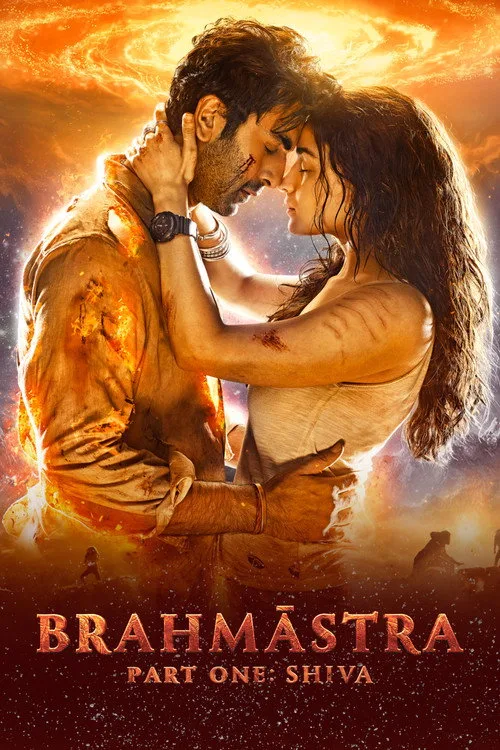
Brahmāstra Part One: Shiva
Action, Adventure · 2h 48m
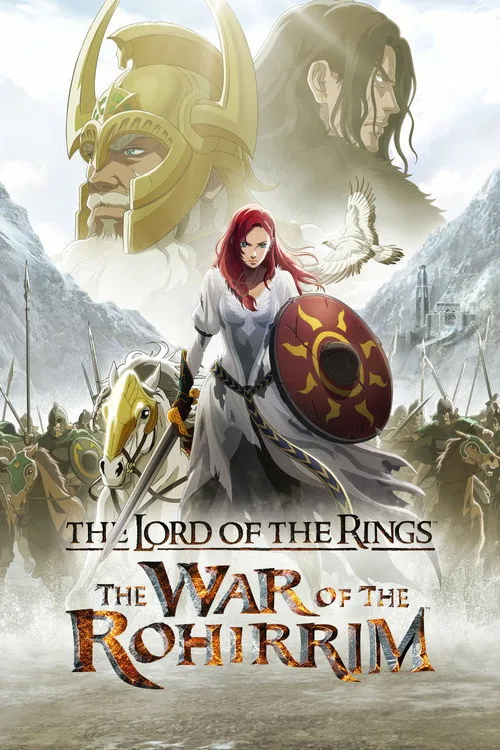
The Lord of the Rings: The War of the Rohirrim
Animation, Fantasy · 2h 14m
The Odyssey
Action, Adventure · 2h 53m
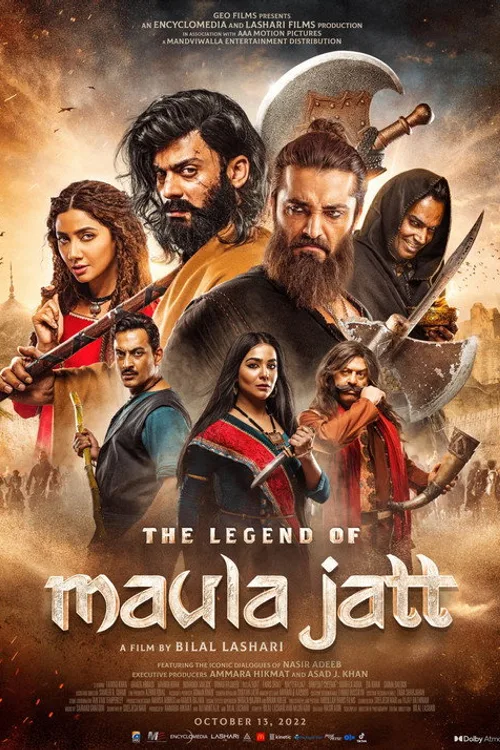 Featured
The Legend of Maula Jatt
Action, Drama · 2h 33m