Moana Review: Disney's Live-Action Remake Sails in Circles
Disney's live-action Moana is a lavish act of transcription: Catherine Lagaʻaia shines and Oscar Faura's camera gives the ocean real weight, but Thomas Kail's shot-for-shot fidelity to a ten-year-old classic leaves the remake with nowhere of its own to sail.
★★½☆☆ 2.5/5
Handsomely mounted and warmly acted, but creatively becalmed — a faithful copy that never argues for its own existence. Revisit the 2016 original instead.
Updated July 22, 2026: scores settled near 31% Tomatometer / 89% Popcornmeter after two weeks; the remake holds #2 at the box office behind The Odyssey while remaining Rotten with critics. Verdict unchanged.
The remake as ritual
Ten years is not a generation; it is a memory still warm. When Gus Van Sant restaged Psycho frame for frame in 1998, the experiment at least carried the frisson of conceptual art — a question about what, exactly, lives inside a shot. Thomas Kail’s Moana asks no question at all. It arrives as the latest sacrament in Disney’s decade-long liturgy of self-adaptation, and it is the most faithful yet: scene for scene, beat for beat, often gesture for gesture. Fidelity of this order is not homage; it is embalming. The 2016 film was a late masterpiece of the CG era, its water a character with moods and manners. Translating that into photorealism trades metaphor for meteorology.
A stage director at sea
Kail is a theatre animal — the director of Hamilton, a man who understands the proscenium as a pressure chamber — and the remake’s one genuinely alive sequence proves it. “You’re Welcome,” restaged as a delirious plunge through two-dimensional mural painting, becomes a psychedelic Busby Berkeley number that momentarily stops transcribing and starts directing. It is the single passage where the film argues for its own medium. Elsewhere Kail defers — to the storyboards of his predecessors, and to a climax so murky and brown it plays as weather rather than myth. Oscar Faura, J.A. Bayona’s great cinematographer of water and grief, gives the daylight passages a salt-air luminosity; that his images turn illegible precisely when the story demands transcendence tells you where the production’s conviction ran out.
Lagaʻaia against the current
Catherine Lagaʻaia is the reason the film is watchable, and the evidence of what it might have been. She has the rarest screen quality — stillness that reads as thought — and in her scenes with Rena Owen’s Gramma Tala the film brushes against something animation cannot do: the documentary weight of real Pacific faces in real Pacific light. But the production keeps her on a leash, conducting her toward an impersonation of a performance already given. Dwayne Johnson, returning to Maui in the flesh, illustrates the trap from the opposite direction: what animation rendered as mythic exuberance now reads as a star politely revisiting an old hit. Their chemistry is real; the material asks nothing new of it.
The songs know the way
The music remains the argument. “We Know the Way,” carried across open water by an ensemble of Pacific Islander performers, is the one place where flesh-and-blood casting deepens rather than dilutes. Lin-Manuel Miranda’s lone new composition, “Along the Way,” is a shrug relegated to the end credits, and its slightness is diagnostic: a project this expensive could not summon one new melody worth keeping. The costume and production design are exquisite throughout — craft in service of a void.
Verdict
There is an honourable cinema of the remake — Sirk out of Stahl, Carpenter out of Hawks — in which a story is retold because a new director has something to say through it. Kail’s Moana belongs to a different economy, in which a story is retold because the audience already said yes once. Lagaʻaia deserves a film invented for her; Faura’s ocean deserves a myth it is allowed to finish. Somewhere inside this act of transcription is a ten-minute argument for live-action — the mural, the flotilla, an old woman’s hands. The rest is a tide going out and coming back exactly where it began.
Availability is a catalogue snapshot and can change. Confirm with the provider in your region.
Where to watch Moana
Not confirmed on major subscription platforms in our US baseline — check regional listings.
Rent: Amazon Video, Apple TV, Fandango at Home
Buy: Amazon Video, Apple TV, Fandango at Home
Full scores and availability on the movie page.
If you liked Moana
Ranked by genre overlap and Celluloid Score. More movies like Moana →
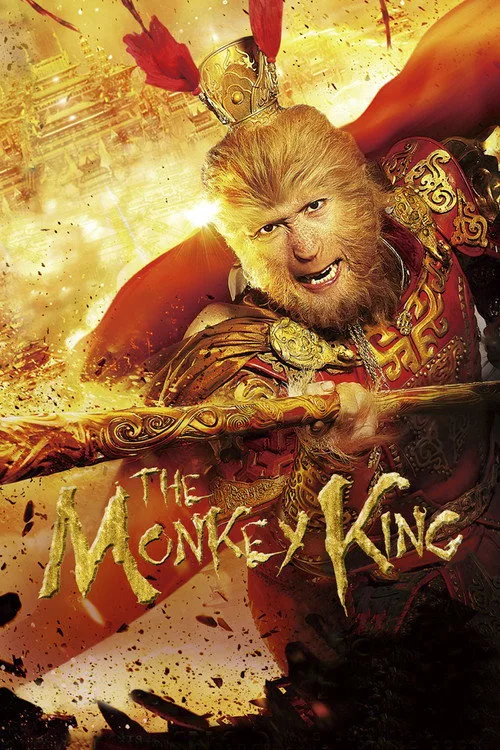
The Monkey King
Action, Adventure · 1h 59m
 Featured
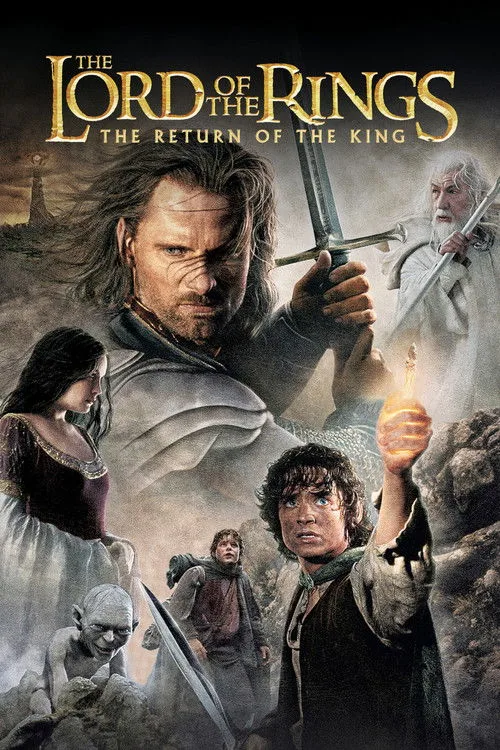
 The Lord of the Rings: The Return of the King
Adventure, Fantasy · 3h 21m
 Featured
 The Odyssey
Action, Adventure · 2h 53m
 Featured
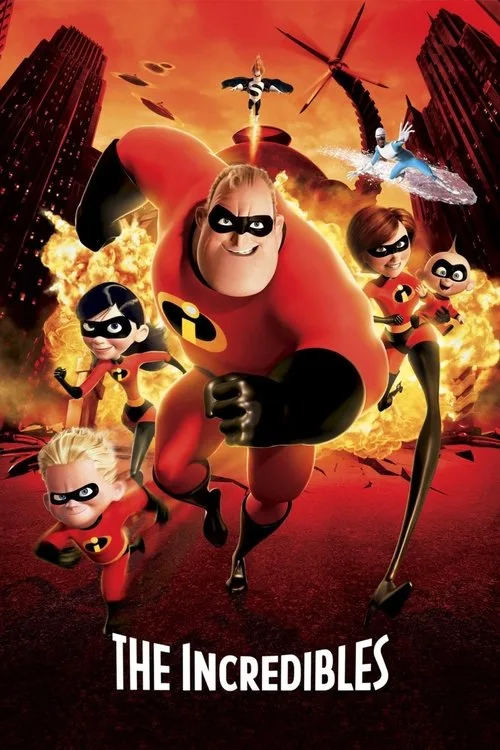
 The Incredibles
Action, Adventure · 1h 55m