Farewell My Concubine (1993) Review: Art Against History
Farewell My Concubine is Chen Kaige's sweeping Beijing opera epic, a story of two performers whose lifelong bond is tested by half a century of Chinese upheaval.
★★★★½ 4.5/5
Yes. It is a landmark of world cinema and one of the great epics about art and politics, best for patient viewers ready for nearly three hours of melodrama.
Is Farewell My Concubine worth watching?
Yes. Farewell My Concubine is one of the great historical epics of the 1990s, a film in which the stage and the state compete for two men’s lives, and Leslie Cheung gives a performance that still feels startling. Chen Kaige ties personal devotion to national upheaval with rare ambition, and the opera sequences are among the most beautiful ever filmed. The reservation is its sheer weight: at close to three hours of heightened emotion, it asks for stamina as well as attention.
What is Farewell My Concubine about?
Farewell My Concubine follows two boys who grow up together in a harsh Beijing opera academy, where training is brutal and discipline is physical. As adults they become celebrated stage partners in the classic opera that gives the film its title: Cheng Dieyi (Leslie Cheung) specialises in female roles and plays the doomed concubine, while Duan Xiaolou (Zhang Fengyi) plays the king she loves.
Offstage, the balance is less stable. Dieyi’s devotion to Xiaolou runs deeper than their partnership, and it is shaken when Xiaolou marries Juxian (Gong Li), a sharp, independent woman from a Beijing brothel. From there the story tracks all three across roughly fifty years of modern Chinese history, as each change of regime alters what the opera means and who is allowed to perform it.
Chen Kaige directed this Mandarin-language drama from China, which runs 171 minutes. It won the Palme d’Or at Cannes in 1993, sharing the prize with Jane Campion’s The Piano, and was nominated for the Academy Award for Best Foreign Language Film.
Leslie Cheung’s Dieyi is the film’s burning centre
The film belongs to Cheung. Dieyi is a man shaped from childhood to live inside a role, and Cheung plays him as someone for whom the concubine’s loyalty is not a performance but a creed. His stillness on stage and his volatility off it make the character both magnetic and hard to be around, and he never softens Dieyi’s jealousy or pride to win sympathy.
Zhang Fengyi has the less showy part, and he is shrewd in it. Xiaolou is practical, vain and sometimes cowardly, a man who treats the opera as a trade while his partner treats it as a faith. Gong Li makes Juxian far more than a rival. She is the most clear-sighted of the three, and the uneasy triangle she forms with the two men gives the film its emotional friction; none of them is entirely right, and the film is better for refusing to choose.
Opera as a mirror for a changing country
What makes the film more than a backstage melodrama is how it uses the stage. The opera of the title is about loyalty unto death, and Chen keeps setting that story against a century in which loyalty keeps shifting with whoever holds power. Warlords, occupiers and new political masters each arrive in the audience, and each wants something different from the performers.
Gu Changwei’s cinematography gives the theatre scenes a lacquered richness of reds, golds and painted faces, so the stage looks like the one place these characters are fully alive. The academy sequences, with their cruelty presented as tradition, are hard to watch but essential: they explain how Dieyi became who he is and why he cannot imagine a life outside the role.
Where the epic strains
The film’s reach sometimes exceeds its grasp. Covering so many decades means leaping across years in single cuts, and some turning points in the characters’ lives are summarised rather than dramatised. The pitch of the melodrama rarely drops, which gives the later chapters tremendous force but can also leave viewers feeling pummelled. Those unfamiliar with modern Chinese history may want a little background before starting, since the film assumes more than it explains.
Who should watch Farewell My Concubine?
It is essential for anyone interested in world cinema, historical drama or stories about performers, and for admirers of Leslie Cheung and Gong Li at their peak. Plan for a long evening with no distractions. The film includes child abuse within the opera school, drug use, sexual exploitation and political persecution, so it suits adult viewers.
If it moves you, three natural companions:
- Raise the Red Lantern, Zhang Yimou’s formally exacting drama with Gong Li trapped inside another rigid institution.
- Still Life, Jia Zhangke’s quieter look at ordinary lives swept along by national change.
- Hero, for another Chinese epic that turns history into ravishing colour and ritual.
The verdict
Farewell My Concubine is a monumental achievement: an intimate love triangle, a portrait of an art form and a history of a nation in one sweeping film. Its length and relentless intensity will test some viewers, but Cheung’s performance and Chen Kaige’s staging make it essential.
Rating: 4.5/5
Availability is a catalogue snapshot and can change. Confirm with the provider in your region.
Where to watch Farewell My Concubine
Streaming: Hoopla, MUBI, BFI Player
Rent: Amazon Video, Apple TV, Google Play, YouTube, Fandango at Home
Buy: Amazon Video, Apple TV, Google Play, YouTube, Fandango at Home
By region: Hoopla, MUBI, BFI Player in the United States; TVING in South Korea; Netflix, Prime Video, Hulu in Japan
Full scores and availability on the movie page.
If you liked Farewell My Concubine
Ranked by genre overlap and Celluloid Score. More movies like Farewell My Concubine →
 FeaturedCannes 2024
 Caught by the Tides
Drama · 1h 51m
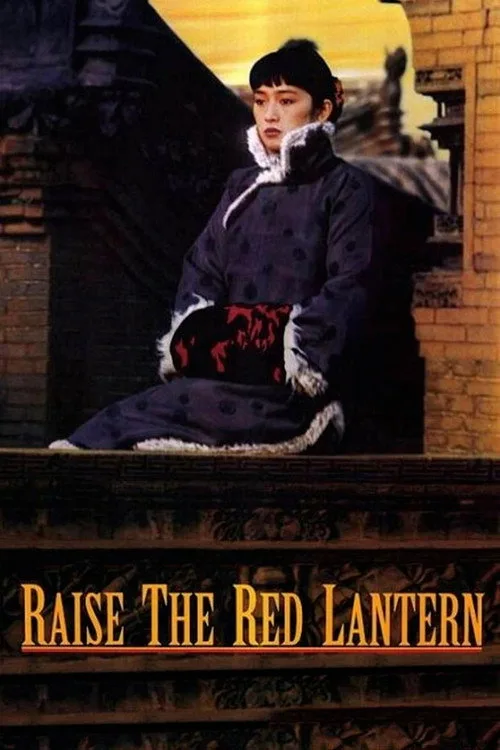 Venice 1991
 Raise the Red Lantern
Drama · 2h 5m
 Cannes 2019
 Parasite
Thriller, Drama · 2h 12m
 Cannes 1963
 The Leopard
Drama, History · 3h 5m
Where can I watch Farewell My Concubine?
Streaming: Hoopla, MUBI, BFI Player. Rent: Amazon Video, Apple TV, Google Play, YouTube, Fandango at Home. Buy: Amazon Video, Apple TV, Google Play, YouTube, Fandango at Home. Regional notes: Hoopla, MUBI, BFI Player in the United States; TVING in South Korea; Netflix, Prime Video, Hulu in Japan.