Raise the Red Lantern (1991) Review: A Gilded Prison
Raise the Red Lantern is Zhang Yimou's severe, ravishing drama of a young concubine in a 1920s household, with Gong Li at her best as a woman learning its rules.
★★★★½ 4.5/5
Yes. It is one of the great films of the Chinese Fifth Generation, essential for anyone interested in world cinema and patient enough for a slow, controlled tragedy.
Is Raise the Red Lantern worth watching?
Yes. Raise the Red Lantern is a masterpiece of controlled, claustrophobic filmmaking, and more than three decades on it remains one of the most striking films ever made in China. Zhang Yimou turns a household of rival wives into an image of a whole system of power, and every frame is composed with precision. The only real reservation is temperature: this is a cold, deliberate film that keeps its audience at arm’s length, and viewers wanting warmth or momentum may find it austere.
What is Raise the Red Lantern about?
In 1920s China, a young, educated woman named Songlian (Gong Li) agrees, under family pressure, to become the fourth wife of a wealthy older master (Ma Jingwu). She arrives at his walled compound to find a world with its own rituals. Each evening the master chooses which wife he will spend the night with, and red lanterns are lit outside that woman’s quarters, bringing her privileges, attention and status among the servants. Songlian quickly learns that the other wives, including the former opera singer Meishan (He Caifei), are competitors as much as companions, and that the household runs on favour.
Raise the Red Lantern is directed by Zhang Yimou and adapted from Su Tong’s novella Wives and Concubines. It is in Mandarin, runs 125 minutes, and won the Silver Lion at the 1991 Venice Film Festival.
A house designed as a trap
The compound is the film’s great creation. Zhang almost never leaves it, and he shoots its courtyards, rooftops and corridors with a rigid symmetry that makes the architecture feel like a set of rules made physical. Doorways frame the women like figures in a cabinet; high walls cut off the sky. By the time the camera looks down on the maze of roofs from above, the audience understands the geography of power without a word of explanation.
The master is barely shown. He is a voice, a figure at the edge of the frame, a presence known through his decisions, and that choice is inspired. It shifts attention to the women, who spend their energy fighting each other rather than the man who sets the terms.
Colour as a language
Zhang came to directing as a cinematographer, and here, working with Zhao Fei behind the camera, he uses colour with unusual discipline. The red of the lanterns floods interiors with warmth that reads as both desire and surveillance, while the stone greys and blues of the compound grow colder as the seasons pass. The film is built in a cycle of seasons, and the shifting light is its clock. Sound works the same way: the tapping of a foot massage, the call announcing the master’s choice, the opera singing drifting across the rooftops, all become part of the ritual.
Gong Li holds the centre
Gong Li’s Songlian begins proud and sharp-tongued, convinced that her education sets her apart, and much of the film’s power lies in watching that confidence adapt to the house. Gong plays the change in small shifts of posture and expression, keeping Songlian neither victim nor villain. He Caifei gives Meishan a theatrical spark that the compound can barely contain, and the supporting wives are drawn with enough ambiguity to keep alliances uncertain.
If there is a limitation, it is that the allegory is sometimes more visible than the people. The film’s argument about patriarchy and ritualised cruelty is so clearly designed that a few late developments feel inevitable rather than surprising.
Who should watch Raise the Red Lantern?
It is essential for anyone exploring Chinese cinema, the work of Zhang Yimou or the great period dramas of the early 1990s. Allow just over two hours and your full attention; this is a film that rewards stillness. There is little on-screen violence, but the themes of coercion, psychological cruelty and despair are heavy, better suited to adults and older teenagers.
Where to go next:
- Farewell My Concubine, Chen Kaige’s sweeping companion piece from the same generation, also starring Gong Li.
- Curse of the Golden Flower, in which Zhang returns to a palace full of secrets, this time on a lavish imperial scale.
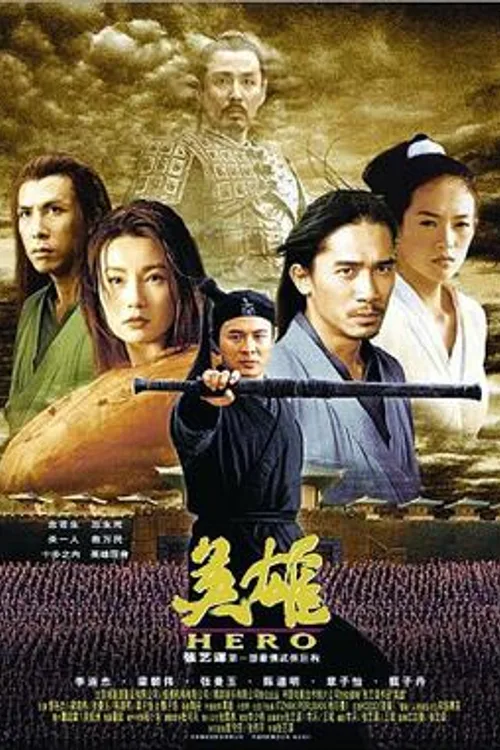
- Hero, for Zhang’s use of colour as storytelling carried into the wuxia epic.
The verdict
Raise the Red Lantern is a film of immaculate control: a single house, a handful of women and a ritual of lanterns that together say more about power than most epics. Its chill keeps it from being an easy watch, but its images and Gong Li’s performance are unforgettable.
Rating: 4.5/5
If you liked Raise the Red Lantern
Ranked by genre overlap and Celluloid Score. More movies like Raise the Red Lantern →
 Berlinale 2003
 Hero
Action, Drama · 1h 39m
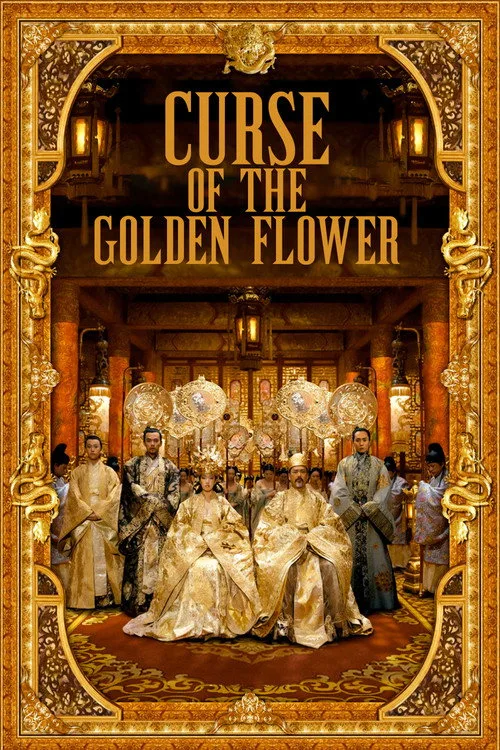
Curse of the Golden Flower
Action, Drama · 1h 54m
 Venice 1954
 Seven Samurai
Action, Drama · 3h 27m
 Venice 1951
 Rashomon
Crime, Drama · 1h 28m
Where can I watch Raise the Red Lantern?
Regional notes: Wavve in South Korea; Prime Video, Hulu, U-NEXT in Japan.