Deaf President Now! (2025) Review: Eight Days at Gallaudet
Deaf President Now! revisits the 1988 Gallaudet University protests through the people who led them, and tells deaf history in a deaf filmmaking language.
★★★★★ 5/5
Yes. It is a thrilling, essential piece of civil rights history, and it suits anyone who likes documentaries with the momentum of a political thriller.
Is Deaf President Now! worth watching?
Yes. Deaf President Now! is a rousing, beautifully made documentary about a student uprising, and one of the essential nonfiction films of 2025. Its great achievement is perspective: the story of the 1988 protests at Gallaudet University is told by deaf participants, largely in American Sign Language, and the filmmaking is built around their way of communicating rather than translated for hearing viewers as an afterthought. The only caveat is that its tight focus leaves the wider history for other films to explore.
What is Deaf President Now! about?
In March 1988, the board of trustees at Gallaudet University in Washington, D.C., the world’s leading university for deaf and hard-of-hearing students, chose a hearing candidate as its new president, passing over deaf finalists. Students responded by shutting down the campus. The film tracks the eight days of protest that came next, as student leaders, among them student body president Greg Hlibok and Jerry Covell, organised marches, barricades and a media campaign that turned a campus dispute into a national story.
Deaf President Now! is an American documentary directed by Nyle DiMarco, the deaf actor and activist, who made it with Davis Guggenheim. It combines archival footage with present-day testimony from the people who were there, including I. King Jordan, one of the deaf candidates for the presidency. It runs 100 minutes and is streaming on Apple TV+.
History told in its own language
Most documentaries about deaf history are made by hearing filmmakers for hearing audiences. This one reverses that default. The interviewees tell the story in their own language, and the film gives the rhythm and emphasis of their signing room to breathe rather than treating it as something to be hurried past on the way to the subtitles. For hearing viewers, the effect is quietly transformative: they are invited into a conversation rather than handed an explanation.
That choice is not just symbolic. The whole protest was about who gets to speak for a community, and a film that let others narrate it would have undercut its own subject. DiMarco’s approach makes the form part of the argument.
A protest with a thriller’s momentum
The eight-day structure gives the film a natural countdown, and the editing makes the most of it. Day by day, the pressure mounts, strategies shift, allies and opponents emerge, and the archival footage captures the sheer energy of students who realised, perhaps for the first time, how much collective power they had. Much of that footage has the rough immediacy of news gathered on the run, and the film cuts it with real urgency.
The present-day interviews add weight without slowing the pace. Looking back from decades later, the participants bring hindsight and personality to events that the archive can only show from the outside, and their reflections turn a piece of campus history into a story about courage and self-respect.
Where its focus narrows
If there is a limitation, it is scope. The film stays tightly on the eight days and the people at the centre of them, so the longer history of deaf education, and the debates within the deaf community about language and identity, are only sketched. Viewers who want that broader context will need to look beyond it. Within its chosen frame, however, it is close to flawless.
Who should watch Deaf President Now!?
It is a natural choice for anyone interested in civil rights movements, student activism or disability history, and a valuable film for classrooms. Hearing viewers unfamiliar with deaf culture will learn a great deal without feeling lectured. At 100 minutes, it is a brisk and uplifting watch, with no content concerns beyond archival images of heated protest.
More documentaries that pair well with it:
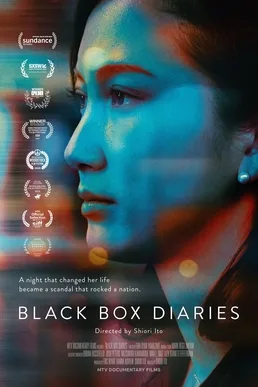
- Black Box Diaries, another film in which the person at the centre of a fight with institutions tells her own story.
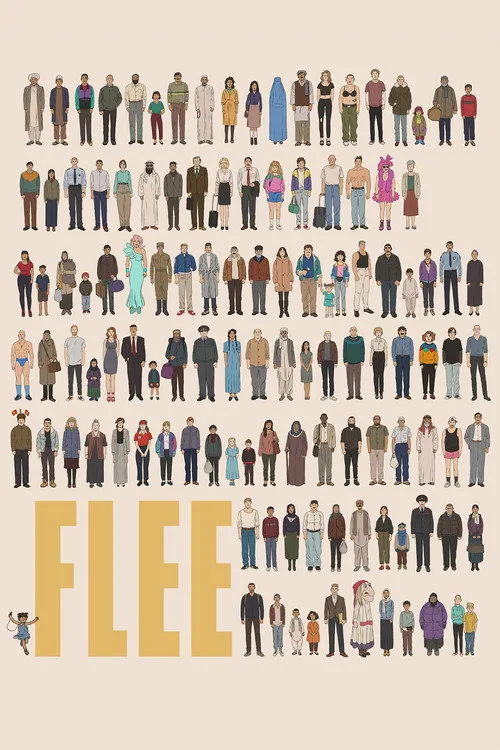
- Flee, whose inventive form, like DiMarco’s, is shaped around the needs of the person telling the story.
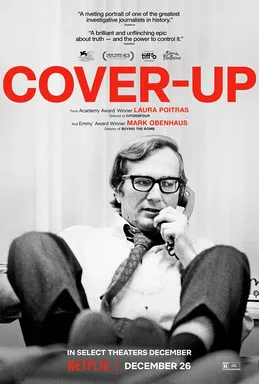
- Cover-Up, a portrait of stubborn persistence against powerful institutions.
The verdict
Deaf President Now! is stirring history and bold filmmaking at once, a documentary that honours a landmark protest by letting its leaders tell it in their own language. Its narrow focus is a deliberate choice, and the result is one of the most exhilarating documentaries of recent years.
Rating: 5/5
Availability is a catalogue snapshot and can change. Confirm with the provider in your region.
Where to watch Deaf President Now!
Streaming: Apple TV+
By region: Apple TV+ in the United States; Apple TV+ in the United Kingdom; Apple TV+ in Indonesia; Apple TV+ in India
Full scores and availability on the movie page.
If you liked Deaf President Now!
Ranked by genre overlap and Celluloid Score. More movies like Deaf President Now! →
 Sundance 2021
 Flee
Documentary, Animation · 1h 29m
 Sundance 2024
 Black Box Diaries
Documentary · 1h 43m
 FeaturedVenice 2025
 Cover-Up
Documentary · 1h 57m
 Venice 2022
 All the Beauty and the Bloodshed
Documentary · 2h 2m
Where can I watch Deaf President Now!?
Streaming: Apple TV+. Regional notes: Apple TV+ in the United States; Apple TV+ in the United Kingdom; Apple TV+ in Indonesia; Apple TV+ in India.