Parasite Ending Explained: The Garden Party, the Bunker, and That Final Letter
Full spoilers for Bong Joon-ho’s Parasite — what the birthday party massacre means, who survives in the bunker, and why Ki-woo’s final fantasy is the film’s cruelest joke. Celluloid Pick context.
Spoilers ahead
This guide reveals major plot points. Reveal when you are ready.
Spoilers for Parasite (2019). Bong Joon-ho’s class thriller is a Celluloid Pick and Oscar Best Picture winner; this guide walks the ending’s logic for anyone who left the theater (or the couch) arguing about the stairs.
What happens at the end of Parasite?
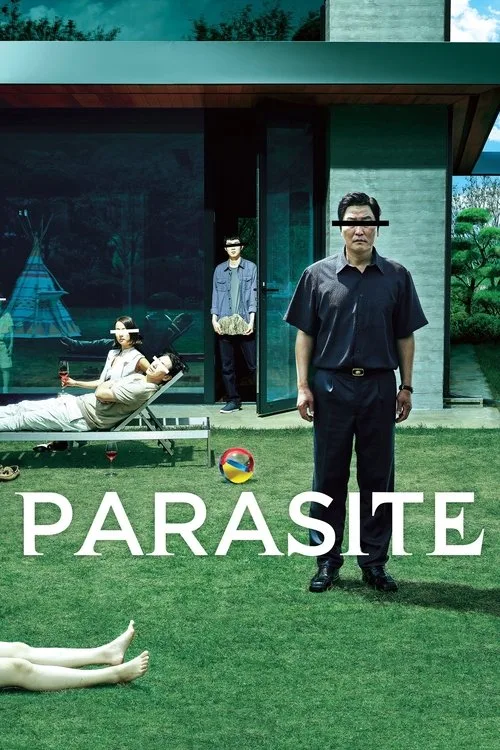
The Parks’ garden party collapses into violence; the Kim family’s infiltration scheme dies with it. Geun-sae, the husband hidden in the Parks’ bunker, erupts during Da-song’s birthday celebration. Chaos kills Park Dong-ik (Lee Sun-kyun) after a moment of class disgust — the smell that has haunted the Kims — and leaves Ki-taek (Song Kang-ho) to flee into the very bunker system that symbolized invisible labor. Chung-sook and Ki-jung’s fates seal the family’s fall from parasitic comfort back to flood-line poverty. Ki-woo (Choi Woo-shik), injured and haunted, narrates a fantasy of buying the house and freeing his father. The film ends on that fantasy — not its fulfillment.
What does the bunker mean?
It is the film’s thesis in concrete. Under the Park house lives another poor man, already eating the family’s leftovers in secret. The Kims thought they had invented a clever invasion; the architecture reveals a longer history of hidden servitude. When Ki-taek replaces Geun-sae downstairs, the “win” is indistinguishable from burial. Vertical space — semi-basement, sunlit living room, subterranean cell — was always the casting.
Why is Ki-woo’s final plan so devastating?
Because it is hope as self-deception. He writes a letter promising to earn enough to buy the house and walk down those stairs as an owner. Bong cross-cuts the dream with the reality of the bunker light still blinking. The audience is allowed to want the fantasy and then forced to recognize it as capitalism’s lullaby: work harder, ascend, redeem. Parasite does not believe the lullaby. That refusal is why the ending still trends in “explained” searches years later — it denies the uplift Hollywood endings train us to expect.
Is the ending about smell?
Smell is the tell that class cannot be performed away. The Parks’ noses keep detecting the Kims even when costumes and jobs line up. Dong-ik’s final reflex — recoiling from Ki-taek’s odor in a life-or-death moment — is the film’s coldest joke: hierarchy lives in the body, not the résumé. The ending violence is not random; it is the return of everything the polite house tried to perfume.
How does Celluloid score Parasite?
As a masterpiece-tier Pick — critic, Metascore, and Letterboxd alignment rarely this clean. Use the movie page for the four-input breakdown and our critic review. For more world-cinema ladders, browse the South Korea country hub and compare when you want a tonal palate cleanser after the bunker.
Films featured in this piece
More in Ending Explained · All guides