Critics vs. Audiences in 2026: A First-Party Study of 796 Scored Films
First-party analysis of 796 films on Celluloid with both critic and public user ratings: critics average higher on 52.6% of titles, median gap is 7 points, and documentaries show the widest split.
Across 796 scored films in the Celluloid catalogue that carry both critic inputs and public user inputs, the median gap between critics and everyday viewers is 7 points on a 100-point scale (mean absolute gap: 8.1 points). Contrary to the cliché that critics and audiences constantly disagree, both sides land within 3 points of each other on 28.9% of films (230 titles). Where they do diverge, critics are more generous far more often than popular myth suggests: critic averages outscore public user ratings by more than 3 points on 52.6% of films (419 titles), while public user ratings beat critics by more than 3 points on 18.5% (147 titles).
This study is computed directly from Celluloid’s open film dataset as of 28 November 2026. Every title page on Celluloid publishes its individual inputs openly — never hiding them inside a black-box score — and you can inspect the raw numbers yourself on our open data page or read the full formula in our scoring policy.
How was this critics-vs-audiences gap measured?
For every released, scored film in our catalogue that has at least one critic input and at least one public user input (n = 796), we compare two averages on a unified 0–100 scale:
- Critic average: Mean of the available critic inputs on the film’s record — the Celluloid editorial rating (0–100) and Metascore (0–100, where published).
- Public user average: Mean of the available public user inputs on the film’s record — Letterboxd (converted via
rating × 20) and IMDb (converted viarating × 10). - Signed gap (
Critics − Users): Positive values mean critics rated the film higher; negative values mean public user platforms rated it higher. Separate audience-sentiment snapshots are excluded from this calculation, just as they are excluded from the composite Celluloid Score.
| Cohort across 796 scored films | Films | Share of dataset |
|---|---|---|
| Critics higher by > 3 points | 419 | 52.6% |
| Close agreement (within ±3 points) | 230 | 28.9% |
| Public users higher by > 3 points | 147 | 18.5% |
| Median absolute gap | — | 7 points |
| Mean absolute gap | — | 8.1 points |
Which genres produce the biggest critic-audience divides?
Genre is the single strongest predictor of whether critics and audiences align. Across the 16 genres represented by at least 20 films in our 796-film sample, Documentaries record the widest split by a clear margin (11.7 points mean absolute gap, and +11.6 signed — almost unanimously higher among critics than on public rating platforms). At the other end of the spectrum, War, Family, Animation, and Action show the tightest overall alignment.
| Genre (n ≥ 20) | Scored films | Mean absolute gap | Mean signed gap (Critics − Users) |
Pattern |
|---|---|---|---|---|
| Documentary | 21 | 11.7 pts | +11.6 | Strongest critic tilt |
| Romance | 113 | 8.7 pts | +1.8 | Polarised in both directions |
| Comedy | 143 | 8.6 pts | +2.5 | Wide variance by cultural humor |
| Drama | 487 | 8.5 pts | +4.1 | Festival dramas lift critic averages |
| Horror | 44 | 8.1 pts | +2.0 | Prestige horror pulls critics higher |
| Mystery | 44 | 7.9 pts | +2.2 | Moderate critic lean |
| Fantasy | 79 | 7.7 pts | +0.5 | Nearly balanced on average |
| Sci-Fi | 72 | 7.3 pts | +1.5 | Slight critic edge |
| Thriller | 174 | 6.9 pts | +1.1 | Consistent alignment |
| Adventure | 127 | 6.8 pts | 0.0 | Exact zero net bias |
| Crime | 121 | 6.5 pts | +1.9 | Steady agreement |
| History | 39 | 6.5 pts | +2.7 | Modest critic lean |
| Action | 234 | 6.3 pts | +0.1 | Virtually balanced |
| Animation | 37 | 6.1 pts | +4.6 | High consensus, critics slightly warmer |
| Family | 26 | 5.8 pts | +3.3 | Tight agreement |
| War | 40 | 5.6 pts | +1.3 | Narrowest average divide |
Two patterns stand out from the table:
- Zero net bias does not mean zero disagreement. Adventure has a
0.0signed gap and Action sits at+0.1, yet both still average a6.3to6.8point absolute gap per film. Critics and audiences simply trade places equally often on big-budget spectacles. - Romance and Comedy are the most polarised mainstream genres. Both show small net tilts (
+1.8and+2.5), but high absolute gaps (8.7and8.6), because critics reward sharp formally ambitious comedies and romances while penalising broad studio tearjerkers that general viewers still embrace.
Which films do critics love far more than general viewers?
The titles with the widest positive gaps (Critics > Users) are overwhelmingly festival-circuit premieres, formally adventurous indie dramas, and regional breakthroughs whose pacing or tonal restraint wins over festival juries and critics while dividing casual Letterboxd and IMDb voters.
| Film | Director | Critic avg | User avg | Gap |
|---|---|---|---|---|
| Detective Chinatown 1900 | Chen Sicheng, Dai Mo | 85 | 59 | +26 |
| Vulcanizadora | Joel Potrykus | 90 | 64 | +26 |
| Lesbian Space Princess | Leela Varghese & Emma Hough Hobbs | 84 | 60 | +24 |
| On Becoming a Guinea Fowl | Rungano Nyoni | 94 | 70 | +24 |
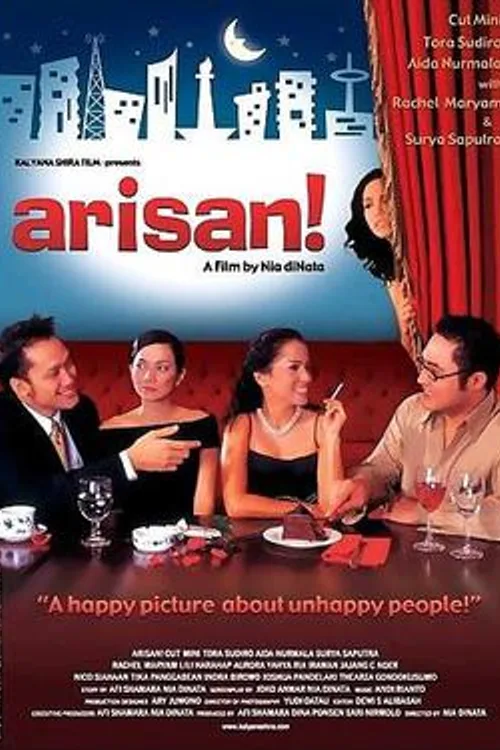
| Arisan! | Nia Dinata | 100 | 77 | +23 |
| Caught by the Tides | Jia Zhangke | 93 | 70 | +23 |
| Eephus | Carson Lund | 92 | 70 | +22 |
| Fire at Sea | Gianfranco Rosi | 92 | 70 | +22 |
| Good One | India Donaldson | 92 | 70 | +22 |
Notice how many of those films sit at 70/100 on user platforms — meaning audiences did not dislike them; they rated them a solid 3.5/5 or 7/10 — while critics hailed them in the 92–94 range. A +22 gap on a festival film such as On Becoming a Guinea Fowl or Caught by the Tides usually signals quiet formalism rather than a bad movie.
Which films do audiences champion far above critics?
Flip the table around and the gaps grow much larger — up to 44 points. The biggest viewer-over-critic outliers fall into three clear buckets: nostalgic Hollywood star vehicles, broad national box-office phenomena, and intense crowd-pleasing dramas that critics marked down for formula or heavy-handedness.
| Film | Director | Critic avg | User avg | Gap |
|---|---|---|---|---|
| Cocktail | Roger Donaldson | 10 | 54 | −44 |
| Sweet November | Pat O’Connor | 21 | 60 | −39 |
| Recep Ivedik | Togan Gökbakar | 25 | 63 | −38 |
| Elite Squad | José Padilha | 44 | 80 | −36 |
| 47 Ronin | Carl Rinsch | 22 | 54 | −32 |
| Remember Me | Allen Coulter | 34 | 64 | −30 |
| The Beach | Danny Boyle | 32 | 62 | −30 |
| Dangal | Nitesh Tiwari | 58 | 86 | −28 |
| Transcendence | Wally Pfister | 30 | 56 | −26 |
| Instructions Not Included | Eugenio Derbez | 52 | 76 | −24 |
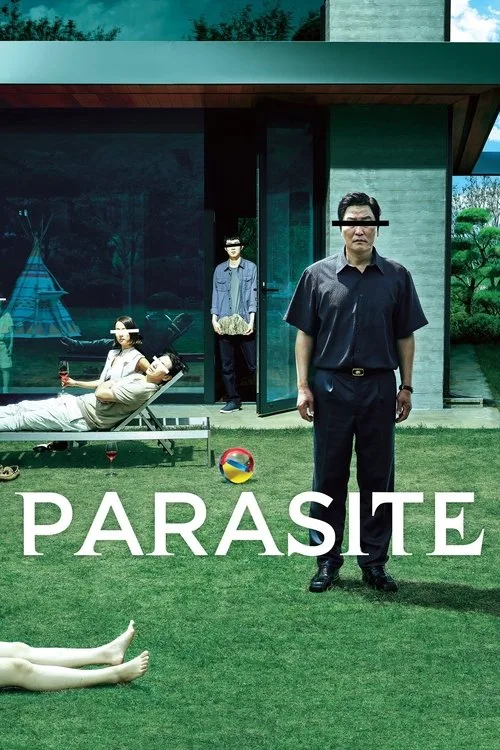
Look at Elite Squad (44 critic average vs. 80 user average) and Dangal (58 vs. 86): both are regional classics with huge domestic devotion (Brazil and India respectively) whose US/Western Metascore reviews landed far below local audience consensus. Meanwhile, Parasite illustrates the rare universal masterpiece where both sides converge at the very top (98 critic average vs. 88 user average — a 93% Celluloid Score).
Why Celluloid shows every rating input instead of hiding them
Single-number aggregators flatten these differences. A 72% film where critics gave 92 and viewers gave 52 feels completely different on a Friday night from a 72% film where both sides landed on 72. That is why every scored film page on Celluloid displays an input-by-input visual breakdown, keeps the audience snapshot visually separated from the composite, and reports the exact critic-versus-user percentile inside its on-page record.
Want to test two films head to head or explore the raw dataset? Try our film comparison tool, read how Celluloid compares with Rotten Tomatoes, Metacritic, IMDb and Letterboxd, or download the CC BY 4.0 CSV dataset at /about/data/.
Frequently asked questions
Do critics and audiences usually disagree on movies?
Less often than reputation suggests — across 796 scored films on Celluloid, the median gap between critic averages and public user averages is 7 points on a 100-point scale. Both sides agree within 3 points on 28.9% of titles, while critics score higher on 52.6% and public users score higher on 18.5%.
Which movie genre has the biggest gap between critics and audiences?
Documentaries have the largest gap in Celluloid’s dataset, averaging an 11.7-point absolute difference (+11.6 toward critics). Romance (8.7 points), Comedy (8.6 points), and Drama (8.5 points) show the next largest divides, whereas War (5.6), Family (5.8), Animation (6.1), and Action (6.3) align most closely.
Why are some highly rated international movies scored lower by critics than audiences?
Metascore weights predominantly English-language Western outlets, which can diverge sharply from domestic reception for international hits. In our 796-film sample, films such as Brazil’s Elite Squad (−36 points), Turkey’s Recep Ivedik (−38 points), India’s Dangal (−28 points), and Mexico’s Instructions Not Included (−24 points) all rate significantly higher on Letterboxd and IMDb than in English-language press averages.
Does the audience snapshot change the Celluloid Score?
No. The Celluloid Score averages up to four verified inputs — Celluloid’s editorial rating, Metascore, Letterboxd (×20), and IMDb (×10) — and displays the audience-sentiment snapshot separately so readers can see both signals without one distorting the other.
Films and series featured in this piece
- Parasite
 CJ Entertainment 93
- Detective Chinatown 1900
 Wanda Pictures 68
- On Becoming a Guinea Fowl
 A24 82
- Arisan!
 Kalyana Shira 85
- Caught by the Tides
 Sideshow / Janus Films 81
- Cocktail
 Theatrical release 32
- Elite Squad
 Universal Pictures 62
- Dangal
 Aamir Khan Productions 68
- The Beach
 Theatrical release 47
Sources
- Celluloid Open Movies Dataset (CSV, CC BY 4.0) — Celluloid
- Celluloid Scoring Policy & Methodology — Celluloid