Train to Busan (2016) Review: Panic in Every Carriage
Train to Busan traps a father, his daughter and a carriage of strangers on a speeding train during a zombie outbreak, and it is as moving as it is relentless.
★★★★½ 4.5/5
Yes. It is one of the best zombie films of the century, a tense, emotional thriller for horror fans and a great entry point to Korean genre cinema.
Is Train to Busan worth watching?
Yes. Train to Busan is a near-perfect genre machine: a zombie thriller with the momentum of an action film and the emotional pull of a family drama. Yeon Sang-ho turns a single high-speed train into a pressure cooker, and he keeps finding new ways to stage the same basic threat. The film’s sentimentality is laid on thick in places and its chief human villain is drawn in broad strokes, but neither slows it down for long.
What is Train to Busan about?
Seok-woo (Gong Yoo) is a workaholic fund manager in Seoul whose young daughter, Su-an (Kim Su-an), barely knows him. For her birthday she wants to see her mother in Busan, so he reluctantly takes her on the early express train south. Just as it pulls out of the station, an infected passenger boards, and within minutes the carriages are turning into a battleground.
Among the other passengers are a tough, good-humoured working man, Sang-hwa (Ma Dong-seok), and his pregnant wife, Seong-kyeong (Jung Yu-mi), along with a high school baseball team, elderly sisters, a homeless man and a smooth corporate executive who has his own ideas about who deserves to survive. As news reports hint that the outbreak is spreading across the country, nobody on board knows whether Busan will be any safer.
Directed by Yeon Sang-ho, Train to Busan is a South Korean film in Korean, running 118 minutes. It premiered in the Midnight Screenings section at Cannes in 2016 before becoming a worldwide hit.
A train as the perfect horror setting
Yeon, who came to live action from animation, stages the film with remarkable spatial clarity. The narrow corridors, sliding doors, luggage racks and toilets become obstacles and hiding places, and each carriage functions almost as a separate level of a game, with its own problem to solve. You always know where the survivors are, where the danger is and what they need to reach, which makes the set pieces unusually gripping.
The infected are fast, twisting and ferocious, moving in jerking, contorted surges that were clearly choreographed with care. They pour over one another in waves, and the film makes great use of their weaknesses as well as their strength, turning darkness, tunnels and glass doors into tools of suspense. It won a technical award at the Blue Dragon Film Awards, and the craft is visible in every sequence.
A zombie film with a conscience
What lifts Train to Busan above most outbreak thrillers is its moral argument. The film is about selfishness and solidarity, and it asks each character, especially Seok-woo, what they owe to strangers. Gong Yoo plays his transformation with restraint, letting the cold efficiency of a man who has always put himself first give way by degrees.
Ma Dong-seok is the film’s most crowd-pleasing presence, a man who takes on the infected with his bare hands and a dry sense of humour, and his scenes with Jung Yu-mi give the film its warmest relationship. Kim Su-an is excellent as Su-an, whose simple decency acts as a rebuke to the adults. The class commentary is not subtle, and the executive who embodies the worst instincts of the powerful is close to caricature, but the point lands.
Where the melodrama pushes
Korean blockbusters often reach for tears, and Train to Busan is no exception. A few emotional peaks are underlined with slow motion and swelling music where the images would have been enough, and some viewers will find the sentimentality heavy. It is a matter of taste, and for most audiences the emotion is well earned by the time it arrives.
Who should watch Train to Busan?
It is essential for horror and action fans, and an ideal first Korean film for anyone new to the country’s genre cinema. It also works for viewers who usually avoid zombie films, because the emphasis is on character and suspense rather than gore. Expect constant peril, frightening attacks and some bloody moments, plus emotional scenes involving a child in danger. Older teenagers upwards should be fine.
Next stops on the same line:
- The Host, Bong Joon Ho’s monster film, for another Korean blend of creature horror, family drama and social satire.
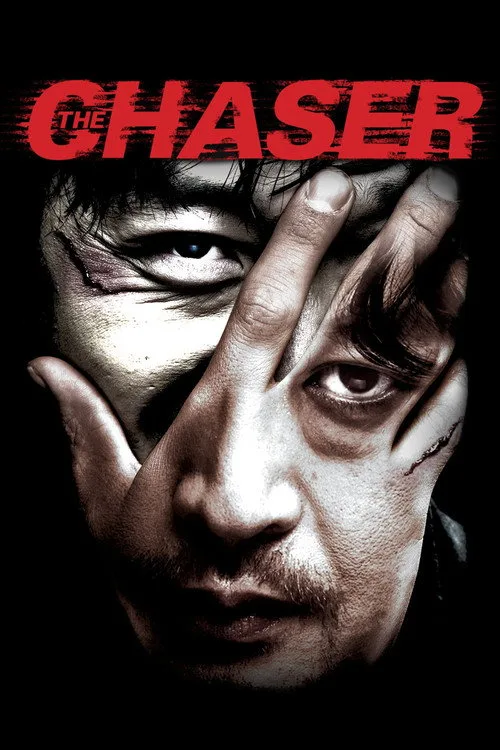
- The Chaser, Na Hong-jin’s breathless thriller, for Korean suspense at a similarly relentless pace.
- More survival terror on the horror shelf.
The verdict
Train to Busan is a tightly engineered, genuinely moving zombie film that uses its confined setting brilliantly and gives its horror a moral heart. A little heavy-handed with the tears, it is still one of the most satisfying genre films South Korea has produced.
Rating: 4.5/5
Availability is a catalogue snapshot and can change. Confirm with the provider in your region.
Where to watch Train to Busan
Streaming: Peacock
Rent: Amazon Video, Apple TV, Google Play, YouTube, Fandango at Home
Buy: Amazon Video, Apple TV, Google Play, YouTube, Fandango at Home
By region: Peacock in the United States; StudioCanal Presents in the United Kingdom; Prime Video, Lionsgate Play in India; Netflix, Disney+ in South Korea
Full scores and availability on the movie page.
If you liked Train to Busan
Ranked by genre overlap and Celluloid Score. More movies like Train to Busan →


Where can I watch Train to Busan?
Streaming: Peacock. Rent: Amazon Video, Apple TV, Google Play, YouTube, Fandango at Home. Buy: Amazon Video, Apple TV, Google Play, YouTube, Fandango at Home. Regional notes: Peacock in the United States; StudioCanal Presents in the United Kingdom; Prime Video, Lionsgate Play in India; Netflix, Disney+ in South Korea.