The Rip Review: Joe Carnahan Turns a Stash House Into a Trust Experiment
Matt Damon and Ben Affleck hold $24 million overnight in Joe Carnahan's Miami narcotics thriller — 70% critics, 75% audiences, and paranoia that outlasts the plot.
★★★☆☆ 3/5
Mixed but gripping — a United States crime entry on Best of 2026 for viewers who want character friction over clean exits, now streaming on Netflix.
Is The Rip worth your evening?
If you want a pressure-cooker crime film about trust rather than twists, yes — Carnahan’s Netflix drop splits critics and audiences in exactly the way overnight standoffs do. The Rip opened January 16 with a 70% Tomatometer, 75% Popcornmeter, Metascore 63, Letterboxd 3.2, and IMDb 6.8 — numbers that track a film stronger on atmosphere than revelation. A Miami-Dade narcotics team raids a stash house and finds roughly twenty-four million dollars in cash, far more than any bust on record. Ordered to hold the money until federal agents arrive, Matt Damon’s veteran detective and Ben Affleck’s partner lock down in a motel with the fortune in the next room. Hours pass. Backup does not come. Every glance becomes evidence.
Carnahan’s motel geometry
Joe Carnahan directs the standoff as spatial warfare. His Miami is not the postcard version — humidity clings to every scene, and the narcotics unit’s professionalism erodes in step with the air conditioning’s failures. The film opens with procedural confidence: warrants signed, doors breached, evidence logged. That competence makes the overnight collapse more credible. When the team realizes the cash exceeds any reasonable bust, nobody announces a theme; they simply start looking at each other differently. Production design on the motel — peeling paint, vending-machine glow, a pool nobody uses — gives Carnahan a chessboard where every hallway intersection becomes a potential accusation. He learned on The Grey and Smokin’ Aces that claustrophobia is not about small rooms but about shrinking options — and the motel layout here is a diagram of suspicion. Who sits facing the door? Who handles the bags? Steven Yeun plays a younger officer whose competence reads as threat to men used to hierarchy, and Teyana Taylor widens the ensemble with a performance that refuses to become the “voice of reason” cliché. Carnahan shoots the corridors with fluorescent dread, letting silence do more work than the occasional burst of violence. The 114-minute runtime feels longer in the right way: you understand why nobody sleeps.
What frays first — protocol or friendship?
The money is the MacGuffin; the fracture is the subject. Affleck and Damon lean into a history that predates the bust — partners who know each other’s tells well enough to exploit them. The script’s smartest move is refusing to label a villain early. Instead, each man commits a small breach of procedure that would be forgivable in daylight and damning at 3 a.m. with millions on the floor. Some viewers wanted a cleaner heist architecture; I understand the complaint. Carnahan is more interested in how decent people rationalize indecent choices when the clock runs. That choice costs plot clarity and buys behavioral truth. Yeun’s officer becomes the film’s moral barometer without speechifying — his face registers each micro-betrayal before anyone says a word. Taylor’s character holds a different kind of power: institutional knowledge that the men underestimate because they are busy counting money. The score stays minimal, letting room tone and distant traffic do the work of a city that does not care who wins this standoff.
2026 crime comparisons
On Best of 2026, The Rip sits below Kaiser Khan’s Crime 101 on prestige metrics but above empty franchise noise. Compare with Peaky Blinders: The Immortal Man for UK crime mythmaking versus Miami institutional rot — both films ask whether anyone survives their own legend. Kaiser Khan’s Send Help covers January claustrophobia with higher critic heat but a different register: desert survival instead of urban greed.
Verdict
Mixed — Kaiser Khan’s pick for Carnahan faithful and Damon–Affleck reunion curious, skippable for viewers who need answers with their crime stories. Stream on Netflix without guilt; expect a mood piece that respects paranoia more than puzzle boxes. The rip is not in the vault door — it is in the team that was supposed to hold the line.
Availability is a catalogue snapshot and can change. Confirm with the provider in your region.
Where to watch The Rip
Streaming: Netflix
By region: Netflix in the United States; Netflix in the United Kingdom; Netflix in Indonesia; Netflix in India
Full scores and availability on the movie page.
If you liked The Rip
Ranked by genre overlap and Celluloid Score. More movies like The Rip →
 Cannes 2018
 Shoplifters
Drama, Crime · 2h 0m
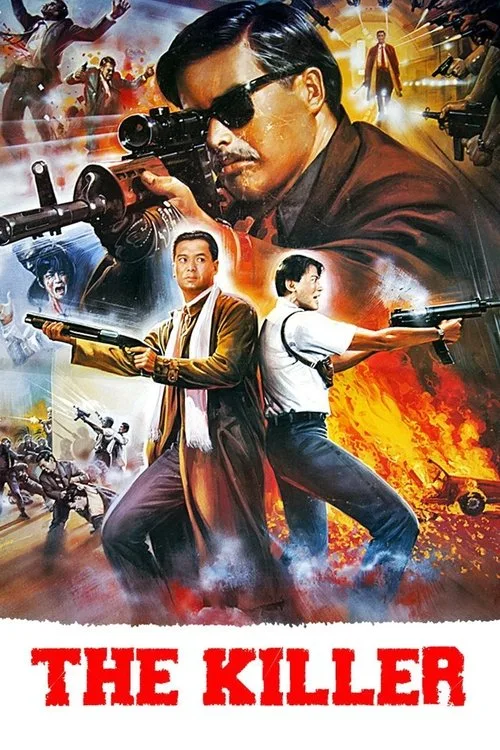 HKIFF 1989
 The Killer
Action, Crime · 1h 50m
 Featured
 The Silence of the Lambs
Crime, Thriller · 1h 59m

Uncut Gems
Drama, Thriller · 2h 16m
Streaming: Netflix. Regional notes: Netflix in the United States; Netflix in the United Kingdom; Netflix in Indonesia; Netflix in India.