Seven Samurai (1954) Review: Where the Team-Up Movie Began
Seven Samurai is Akira Kurosawa's three-and-a-half-hour epic of farmers, ronin and bandits, and still the richest, most thrilling action film ever made.
★★★★★ 5/5
Yes, without reservation. It is essential for anyone who loves action, epics or great filmmaking, and its long running time flies by far faster than the number suggests.
Is Seven Samurai worth watching?
Yes. Seven Samurai is one of the greatest films ever made, and the blueprint for nearly every story about a team assembled to face impossible odds. Akira Kurosawa combines thrilling, meticulously staged action with a humane, often funny portrait of people divided by class and forced to rely on each other. Its only real barrier is the length, and even that turns out to be a strength: the time spent with the characters is exactly what makes the battles matter.
What is Seven Samurai about?
Seven Samurai is set in sixteenth-century Japan, a time of civil war and lawlessness. A poor farming village learns that a band of bandits will return after the harvest to steal their rice. Desperate, the villagers decide to hire samurai to protect them, though they can offer nothing more than food and board.
Their search leads them to Kambei (Takashi Shimura), a wise, battle-weary ronin who agrees to help and begins recruiting others. The group that forms is a mix of veterans, idealists and misfits, including Kikuchiyo (Toshirô Mifune), a boisterous, unpredictable fighter whose claim to samurai status is doubtful. Together they must prepare a frightened village to defend itself, while suspicion between farmers and warriors runs both ways.
Kurosawa directed and co-wrote the film. It is a Japanese production in Japanese, runs 207 minutes including its intermission, and won the Silver Lion at the Venice Film Festival in 1954.
Action with a strategist’s clarity
What still astonishes about Seven Samurai is how clearly it stages violence. Kurosawa takes time to show the village’s geography, the defensive plans and the gaps in them, so that when the fighting starts, the audience understands every advance and retreat. Using multiple cameras and long lenses, he captures chaotic movement with a sense of weight and speed that feels modern even now.
The editing rhythm is just as important. Kurosawa alternates between stillness and sudden, explosive motion, and he lets the tension build through preparation: training scenes, scouting missions and the growing sense of dread as the harvest approaches. Seventy years of action cinema have borrowed from these techniques, often without matching them.
Mifune, Shimura and a village of faces
The film is as much a character drama as an action epic. Shimura’s Kambei is its calm centre, a leader whose authority comes from experience and restraint rather than bravado. His quiet decency is the moral anchor for everything that follows.
Mifune is the opposite: loud, comic and wild, bursting with energy in every scene. Kikuchiyo is the character who bridges the two worlds of the film, and Mifune turns what could have been comic relief into something deeper and more wounded. Around them, the other samurai and the villagers are sharply individualised, and a tender subplot involving Keiko Tsushima’s farmer’s daughter adds another thread about class and desire.
A story about class, not just combat
Kurosawa never lets the heroics obscure the social tensions. The farmers fear and resent the samurai; the samurai look down on the farmers. The film is honest about how both groups have been shaped by a cruel system, and it refuses to make either side purely noble. That ambivalence gives the adventure its depth. If there is a limitation, it is that the long first half, devoted to recruiting and preparation, demands patience from viewers raised on faster storytelling, but that patience is richly repaid.
Who should watch Seven Samurai?
It is essential for anyone who loves action cinema, war films, westerns or Japanese film, and a key text for anyone interested in how movies are made. Plan for a full evening or split it at the intermission. The violence is intense but not graphic by modern standards, making it suitable for older children and teenagers as well as adults.
After it, continue with:
- Ikiru, made two years earlier, which gives Takashi Shimura one of the great lead roles in a quiet modern drama.
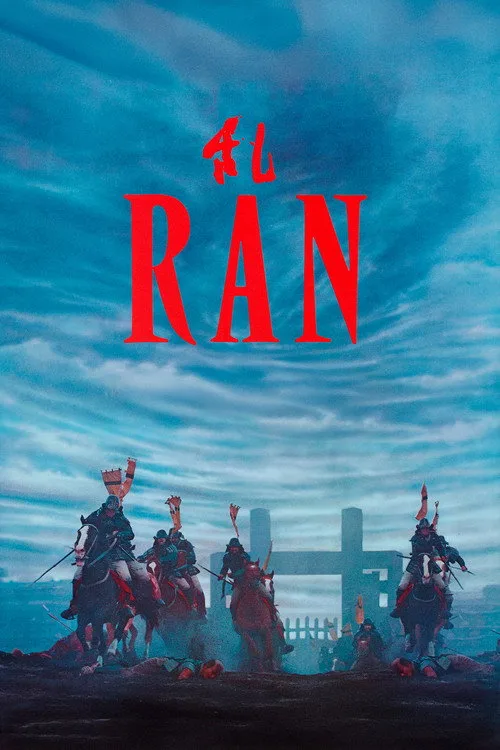
- Ran, Kurosawa’s late colour epic, which brings the same command of battle to a darker tragedy.
- Harakiri, Masaki Kobayashi’s scathing samurai drama that questions the code Seven Samurai’s heroes live by.
The verdict
Seven Samurai remains a monumental achievement, as exciting as any modern blockbuster and far richer in character and ideas. Kurosawa’s direction, Mifune and Shimura’s contrasting performances and the film’s humane view of class make it an essential experience.
Rating: 5/5
Availability is a catalogue snapshot and can change. Confirm with the provider in your region.
Where to watch Seven Samurai
Streaming: HBO Max
Rent: Amazon Video, Apple TV, Google Play, YouTube, Fandango at Home
Buy: Amazon Video, Apple TV, Google Play, YouTube, Fandango at Home
By region: HBO Max in the United States; BFI Player in the United Kingdom; U-NEXT in Japan
Full scores and availability on the movie page.
If you liked Seven Samurai
Ranked by genre overlap and Celluloid Score. More movies like Seven Samurai →
Where can I watch Seven Samurai?
Streaming: HBO Max. Rent: Amazon Video, Apple TV, Google Play, YouTube, Fandango at Home. Buy: Amazon Video, Apple TV, Google Play, YouTube, Fandango at Home. Regional notes: HBO Max in the United States; BFI Player in the United Kingdom; U-NEXT in Japan.