Ikiru (1952) Review: What Makes a Life Useful?
Takashi Shimura's quiet performance gives Akira Kurosawa's drama its force. A spoiler-free review of bureaucratic routine, mortality and the difficult search for a useful life.
★★★★☆ 4/5
A moving, demanding drama about finding purpose in ordinary work. Ikiru rewards viewers who welcome moral questions and patient performances; its illness narrative may be difficult if loss is close to home.
Is Ikiru worth watching?
Yes. Ikiru makes an enormous question concrete: what can a person do with the time that remains? Akira Kurosawa approaches mortality through an unremarkable public office and a man whose working life has largely become routine. The film’s achievement is not to announce that life matters, but to ask how that belief might become a useful action.
Takashi Shimura’s performance gives the question a body. His Kanji Watanabe appears worn down before he receives the information that should change everything. The stoop, hesitant speech and careful movements suggest someone who has become accustomed to taking up very little emotional space. Watching that person attempt to act is more affecting than a speech about seizing the day would be.
The film is serious about illness and the fear of a life already wasted. It is often compassionate and sometimes funny, but it is not an uncomplicated comfort watch. Its warmth is earned through difficulty rather than supplied as reassurance.
The premise without the later developments
Watanabe is a municipal bureaucrat whose work consists largely of keeping an administrative system moving without allowing much to change. A medical crisis forces him to confront the difference between having occupied his days and having used them. He begins searching for experiences and relationships that might give his remaining time meaning.
The search does not proceed cleanly. Activity can be mistaken for purpose; novelty can feel like an answer until the moment passes. Kurosawa takes those imperfect attempts seriously. A person who has lived through habits cannot simply choose an authentic life as though selecting an item from a menu.
Family relationships add another pressure. Emotional distance cannot necessarily be repaired by the intensity of one person’s need. The film understands the loneliness of having something urgent to say without knowing how to make another person hear it. That difficulty keeps the narrative grounded even when its questions become philosophical.
Bureaucracy as behaviour, not just a villain
The office material is sharply observed. Responsibility passes between desks, and the appearance of procedure can substitute for a decision. Kurosawa finds comedy in the repetition, but the comedy is not merely an opportunity to mock inefficient workers. The system gives people a way to avoid the risk of being responsible.
That matters because Watanabe belongs to the institution he must eventually understand differently. He is not an outsider arriving to expose everyone else’s indifference. His habits helped maintain the conditions that now trouble him. The film’s moral pressure comes from the possibility of change within complicity, rather than the discovery of a previously hidden innocence.
A small public need acquires dramatic weight because responding to it requires persistence across many ordinary obstacles. The useful scale of the film is not a national transformation or a spectacular rescue. Kurosawa asks whether an act can matter deeply even if its official description sounds modest.
What Takashi Shimura brings to Watanabe
Shimura resists turning vulnerability into instant likability. Watanabe can be awkward, withdrawn and difficult for another person to reach. His fear does not automatically make his requests easy to answer. That texture gives the performance dignity: he is a particular person in distress, not a universal lesson wearing an overcoat.
His face often seems to be catching up with an understanding that has arrived elsewhere in his body. A movement of the eyes or a delayed reply can register the difference between wanting to speak and being able to. The performance asks the viewer to wait, and the waiting becomes a form of attention the character has rarely received.
Kurosawa sometimes sets this smallness against more expansive social environments. In public entertainment, the noise and movement do not necessarily bring Watanabe closer to others. The contrast makes his isolation visible without reducing the other people to symbols of superficial pleasure. What they enjoy may be perfectly real; it simply cannot do his emotional work for him.
Structure, sound and the meaning of an action
Ikiru does not follow a single, uninterrupted arc of private enlightenment. Without describing the later structure, it is useful to know that the film becomes interested in how a person’s actions are understood by other people. Recognition is imperfect. Memory can preserve an act while distorting the motives behind it.
That choice stops the film from resting entirely on Watanabe’s own account of himself. Institutions and colleagues have their own incentives for explaining what happened. The viewer is invited to compare words with conduct, an approach that echoes the office’s earlier distinction between procedure and responsibility.
Music provides an especially direct route into feeling. A song can be an entertainment in one setting and a measure of time in another. Kurosawa is not afraid of emotional emphasis, but the performance and surrounding silence give that emphasis a specific human source. The feeling is powerful because it belongs to someone who struggles to express it elsewhere.
Reservations and the right viewing mood
Some of the satire is broad, and certain moral contrasts are drawn with considerable emphasis. A viewer who prefers emotional indirection may find the film more declarative than its central performance. The later sections also ask for patience with discussion and reconstruction rather than a continuously unfolding external plot.
Those reservations are worth recognising because Ikiru is sometimes recommended as though its importance makes the experience effortless. Its real strength is more interesting: it allows fear, embarrassment, social habit and practical work to coexist. Give it a quiet evening rather than treating it as inspirational background material.
The verdict
Ikiru is a profound film because it does not confuse feeling intensely with doing something useful. Shimura makes the emotional cost of that distinction visible, while Kurosawa tests it against family, work and public memory. It leaves the question of purpose open enough to trouble the viewer after the story ends.
For another drama about learning to attend to people, try Drive My Car. For Kurosawa translating an ethical problem into suspense, try High and Low. Visit the Ikiru film page for credits and score details. Viewers sensitive to cancer, mortality or family estrangement may want to choose their moment carefully.
Sources & further reading
References for credits, release details and production context. The critical assessment above is Celluloid’s.
Availability is a catalogue snapshot and can change. Confirm with the provider in your region.
Where to watch Ikiru
Streaming: HBO Max, The Criterion Channel
Rent: Amazon Video, Apple TV, Google Play, YouTube, Fandango at Home
Buy: Amazon Video, Apple TV, Google Play, YouTube, Fandango at Home
By region: HBO Max, The Criterion Channel in the United States; BFI Player in the United Kingdom; U-NEXT in Japan
Full scores and availability on the movie page.
If you liked Ikiru
Ranked by genre overlap and Celluloid Score. More movies like Ikiru →
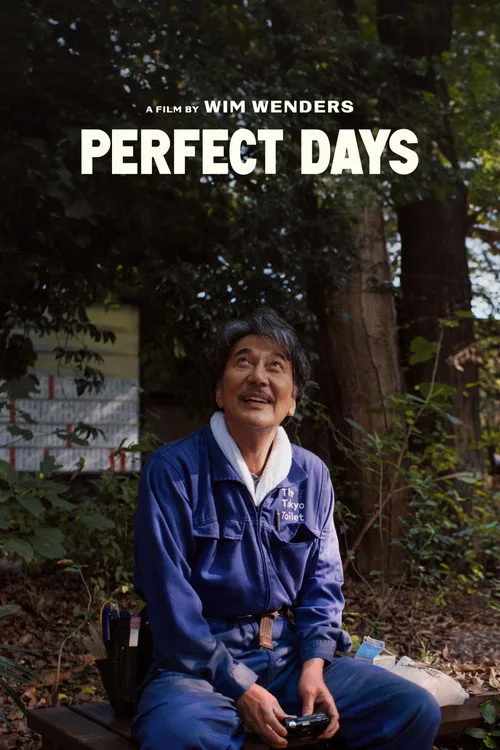 FeaturedCannes 2023
 Perfect Days
Drama · 2h 4m
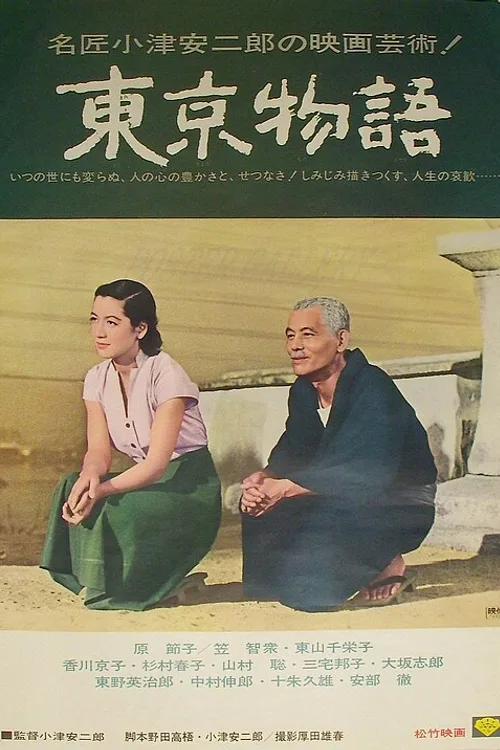 Tokyo 1953
 Tokyo Story
Drama · 2h 16m
 TIFF 2023
 The Boy and the Heron
Animation, Fantasy · 2h 4m
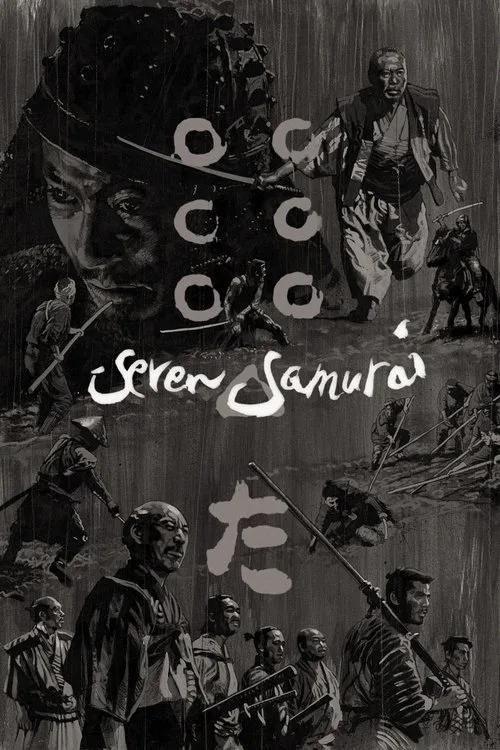 Venice 1954
 Seven Samurai
Action, Drama · 3h 27m
Where can I watch Ikiru?
Streaming: HBO Max, The Criterion Channel. Rent: Amazon Video, Apple TV, Google Play, YouTube, Fandango at Home. Buy: Amazon Video, Apple TV, Google Play, YouTube, Fandango at Home. Regional notes: HBO Max, The Criterion Channel in the United States; BFI Player in the United Kingdom; U-NEXT in Japan.