LOLA (2022) Review: Tuning In to Tomorrow's War
LOLA is Andrew Legge's found-footage alternate history about two sisters in 1941 whose homemade machine hears the future, a playful idea that turns unsettling.
★★★½☆ 3.6/5
Yes, with reservations. It is a clever, handmade what-if for fans of lo-fi science fiction and alternate history, though its archival style keeps emotion at a distance.
Is LOLA worth watching?
Yes, with reservations. LOLA is an ingenious, low-budget alternate-history film that squeezes a big science fiction idea into scratchy wartime footage, and it gets real mileage from the question of what you would do if you could hear the future. Andrew Legge commits fully to the illusion of a rediscovered archive, and the shift from mischief to menace is well judged. The catch is that the same format that makes it distinctive also keeps its characters at arm’s length, so the film is easier to admire than to feel.
What is LOLA about?
LOLA is set in England in 1941. Two orphaned sisters, Thom and Mars, have built a machine in their country house that can pick up radio and television broadcasts from the future. They name it LOLA. At first it is a source of delight: they hear music that has not been written yet and enjoy a secret knowledge nobody else shares. But this is wartime, and it soon becomes obvious that advance news could be put to far more serious use, against an enemy that seems unstoppable.
The whole story is presented as footage the sisters shot themselves, grainy black-and-white film that looks like it has sat in an attic for decades. Emma Appleton and Stefanie Martini play the sisters, with Rory Fleck Byrne and Hugh O’Conor in support. Legge directs; it is an Irish production in English, and it premiered in 2022.
A found-footage experiment that commits
The film’s pleasure starts with its texture. Legge and his team build every scene to look like period film stock, with scratches, flicker and the slightly jerky movement of an old handheld camera, and they integrate newsreel-style montage and doctored archival images to suggest a history bending out of shape. It is a remarkably complete illusion for such a small production, and it turns the budget into a style rather than a limitation.
Music is the other key ingredient. Because LOLA picks up future broadcasts, the sisters, and the film, can hear songs decades ahead of their time, and the anachronisms are both funny and faintly eerie. Neil Hannon’s original songs deepen the effect, sounding like pop that belongs to neither the 1940s nor our own era.
Two sisters on either side of an idea
Appleton and Martini give the sisters distinct temperaments. One is driven by curiosity and the joy of discovery; the other is drawn to what the machine could achieve on a grand scale. Their contrasting impulses, playful and pragmatic, become the film’s moral argument, and the story neatly turns a sibling bond into a debate about power and responsibility.
The film’s best idea is that knowledge is never neutral. Legge lets the consequences of each broadcast ripple outward, and the tone darkens gradually rather than with a sudden lurch, so the audience feels the ground shift the way the sisters do.
Where the format holds the audience back
The documentary conceit is a double-edged choice. Because everything is framed as recovered footage, dialogue is often spoken to camera or caught in fragments, and performances have to fit a period style that can feel stiff. The supporting characters remain thin, and the emotional stakes between the sisters are asserted more than explored. As the alternate history grows more ambitious, the film has to explain large changes quickly, and a few of its big swings land as concepts rather than drama.
Who should watch LOLA?
It is ideal for fans of lo-fi, idea-driven science fiction, alternate-history stories and films that play with archival forms. Its compact running time makes it an easy recommendation for a curious evening, though viewers who dislike found footage or black-and-white cinema should be warned. There is wartime violence and some disturbing imagery, but little that is graphic.
For more Irish-made films with a strong sense of form or period:
- Breakfast on Pluto, Neil Jordan’s playful period odyssey that also leans heavily on pop music.
- Power Ballad, John Carney’s music-driven comedy-drama, for a lighter take on the power of a song.
- The Wind That Shakes the Barley, a very different, realist war film about conscience and the cost of taking sides.
The verdict
LOLA is a small film with a big, clever idea, executed with obvious love for old cinema and a sharp sense of how a playful premise can curdle. Its archival style keeps the sisters’ story more intriguing than moving, but as a handmade piece of alternate history it is inventive, stylish and well worth seeking out.
Rating: 3.6/5
Availability is a catalogue snapshot and can change. Confirm with the provider in your region.
Where to watch LOLA
Streaming: Prime Video
Rent: Amazon Video, Apple TV, Google Play, YouTube, Fandango at Home
Buy: Amazon Video, Apple TV, Google Play, YouTube, Fandango at Home
By region: Prime Video in the United States; Prime Video in the United Kingdom
Full scores and availability on the movie page.
If you liked LOLA
Ranked by genre overlap and Celluloid Score. More movies like LOLA →
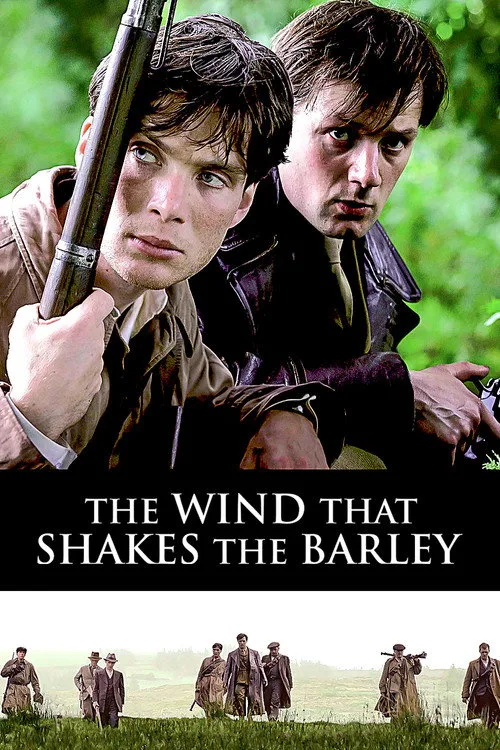 Cannes 2006
 The Wind That Shakes the Barley
Drama, War · 2h 7m
The Godfather
Crime, Drama · 2h 55m
The Odyssey
Action, Adventure · 2h 53m
 Cannes 2019
 Parasite
Thriller, Drama · 2h 12m
Where can I watch LOLA?
Streaming: Prime Video. Rent: Amazon Video, Apple TV, Google Play, YouTube, Fandango at Home. Buy: Amazon Video, Apple TV, Google Play, YouTube, Fandango at Home. Regional notes: Prime Video in the United States; Prime Video in the United Kingdom.