Breaking Bad Review: The Stories Walter White Tells Himself
A spoiler-free review of all five seasons: how performance, visual storytelling and Walter White’s shifting excuses turn a crime premise into a study of responsibility.
★★★★★ 5/5
Breaking Bad earns its reputation through sustained character work and precise visual storytelling. Its coincidences occasionally strain belief, but the consequences of Walter’s choices give the five-season story exceptional force.
Is Breaking Bad worth watching?
Yes, if you want a completed crime drama that treats a character’s excuses as seriously as his actions. Across five seasons, Breaking Bad keeps returning to a deceptively difficult question: when someone says he is doing something for his family, how much of that explanation should we believe? Its achievement lies in allowing an answer to change as we understand the person making the claim.
This review covers the complete series without revealing major deaths, late-season reversals or the ending. The editorial rating is 5 out of 5. That recommendation reflects the cumulative construction of character and consequence, rather than a claim that every episode is equally strong. There are coincidences, broad supporting figures and stretches of deliberate waiting. The series makes those imperfections easier to accept because its central conflict continues to deepen.
The premise and its first important choice
Walter White is a high-school chemistry teacher whose cancer diagnosis exposes the financial vulnerability of his household. He begins manufacturing methamphetamine with Jesse Pinkman, a former student. Created by Vince Gilligan, the series uses this premise to bring technical expertise into contact with a world Walter believes he can understand and control.
The diagnosis creates urgency, but urgency does not remove agency. One of the show’s most useful habits is to make alternatives visible. Walter is not simply carried along by an unavoidable chain of events. He chooses which forms of help he can tolerate, which humiliations he will remember and which risks other people should bear. The drama becomes compelling when his explanation for a decision stops matching its emotional source.
Chemistry is an effective profession for this character because it offers a language of process and predictable results. Human relationships do not follow the same rules. Walter can solve a practical problem while worsening the situation that made it necessary. Success therefore becomes dangerous: it encourages him to apply the same confidence to decisions that expertise alone cannot justify.
Bryan Cranston and the performance of control
Bryan Cranston makes Walter’s changing authority legible through posture, pace and the management of silence. Confidence does not arrive as one clean transformation. It appears in some situations before others, and older habits remain available when they are useful. The character can be forceful in one room and seek sympathy in the next without feeling like two unrelated people.
That flexibility matters because Walter is frequently performing for someone. He wants a family member, business partner or adversary to accept a particular version of him. Cranston gives those performances small seams: a pause that lasts too long, an explanation delivered with too much precision, a flash of anger when gratitude does not arrive. The audience is invited to interpret behavior instead of relying entirely on confession.
The series is also alert to the pleasure of watching competence. It lets us enjoy an ingenious solution and then asks what that enjoyment has encouraged us to overlook. Walter’s resourcefulness is real. The mistake would be to treat resourcefulness as evidence of moral authority. Breaking Bad’s tension depends on keeping those two judgments separate.
Jesse, Skyler and the cost borne by other people
Aaron Paul gives Jesse a vulnerability that complicates the partnership from the beginning. Jesse can be reckless, funny and evasive, but his reactions to harm are often harder to compartmentalize. The contrast is not a simple division between a good person and a bad one. It is a difference in how two people metabolize guilt and in what they need from each other to keep going.
Anna Gunn’s Skyler is essential to the show’s perspective. Her questions interrupt the story Walter would prefer everyone to accept. Domestic scenes work because practical details matter: an absence needs explaining, money needs an origin, a family routine has been disturbed. These are not distractions from the crime plot. They are places where that plot becomes somebody else’s daily life.
Dean Norris gives Hank more range than his initial presentation suggests. The series gradually makes room for the gap between public confidence and private vulnerability. That expansion helps prevent the law-enforcement side from remaining a simple obstacle to Walter’s success. Across the ensemble, the strongest writing allows a person’s function in the plot to become a life with its own pressures.
What the camera notices
Breaking Bad often builds scenes around objects, processes and distances. A routine task can become suspenseful because the framing makes us consider what might interrupt it. Wide desert images suggest both freedom and exposure, while domestic interiors make small shifts in behavior difficult to hide. The contrast gives the story a visual structure beyond the familiar distinction between home and criminal life.
Montages are especially useful when they show repetition changing its meaning. Work can look efficient, absurd or exhausting depending on how actions are arranged and how much time seems to pass. Sound and editing give practical processes their own rhythm. The series does not need every consequence explained in dialogue because it has established ways of making effort and accumulation visible.
Its restraint is not absolute. Some images and suspense devices announce their significance quite loudly. Yet even its more conspicuous flourishes usually grow from an interest in anticipation: what do we think we know, and how long can the show keep us waiting before that knowledge becomes useful?
Where the series strains
Coincidence occasionally does substantial work, and some adversaries are more vivid as embodiments of danger than as rounded people. Early tonal shifts can also feel abrupt as domestic discomfort, dark comedy and extreme violence occupy the same episode. Viewers who prefer procedural consistency may find that instability harder to enjoy than viewers interested in character under pressure.
There are slower passages, particularly when the series makes us sit with avoidance or repetition. Not every pause produces equal insight. The broader benefit is that escalation has somewhere to begin: a story that remained at maximum intensity would have less room to register change. The patience pays off most when a later decision draws on tensions that have been allowed to accumulate.
Who should watch it?
Breaking Bad suits viewers who enjoy morally complicated characters, sustained consequences and visual storytelling. It contains drug production and use, addiction, severe violence, coercion and distressing family conflict. It is an adult drama, not a casual family recommendation. Its opening episodes establish the basic premise quickly, but the full reward depends on following how people change over time.
Start with the original series in release order. Its five seasons form the work reviewed here; related productions are separate viewing decisions. For another series that examines work, control and the stories institutions tell about themselves, Severance’s first season offers a more enclosed and surreal approach.
Final verdict
Breaking Bad is strongest when a practical victory reveals an emotional failure. Its suspense matters because it changes what people owe, fear and believe about one another. The central performance is remarkable, but the surrounding cast and visual construction give that performance consequences. For series details and regional viewing information, see the Breaking Bad catalogue page.
Sources & further reading
References for credits, release details and production context. The critical assessment above is Celluloid’s.
Availability is a catalogue snapshot and can change. Confirm with the provider in your region.
Where to watch Breaking Bad
Streaming: Netflix
By region: Netflix in the United States; Netflix in the United Kingdom; Netflix in Indonesia; Netflix in India
Full scores and availability on the series page.
More like Breaking Bad
 Netflix Editor's Pick
Adolescence
Crime, Drama
 Netflix
Delhi Crime
Crime, Drama
 Netflix
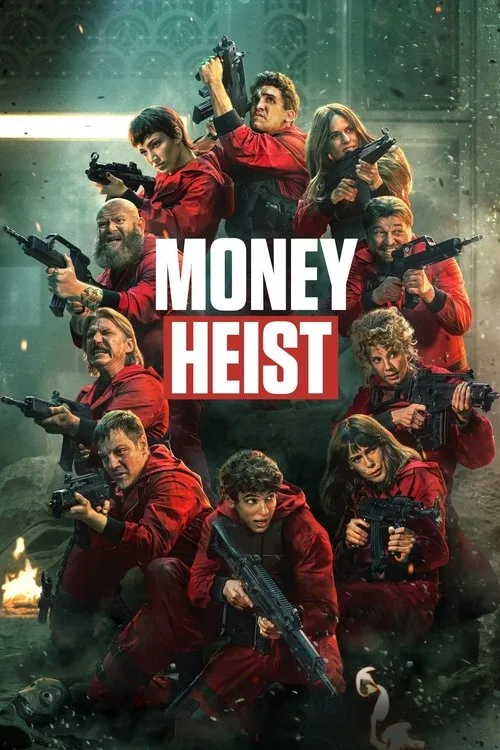
Money Heist
Crime, Drama
 Netflix
My Name
Action, Crime
Where can I watch Breaking Bad?
Streaming: Netflix. Regional notes: Netflix in the United States; Netflix in the United Kingdom; Netflix in Indonesia; Netflix in India.