Black Orpheus (1959) Review: Myth Set to a Bossa Nova Beat
Black Orpheus is Marcel Camus's Palme d'Or-winning retelling of the Orpheus myth at Rio's Carnival, a dazzling romance whose bossa nova score still enchants.
★★★★½ 4.5/5
Yes. It is a gorgeous, music-drenched romance and a landmark of world cinema, best for viewers who can enjoy its magic while noticing its outsider's view of Rio.
Is Black Orpheus worth watching?
Yes. Black Orpheus is one of the most ravishing romances of its era, a Greek myth transplanted to Carnival in Rio de Janeiro and carried along by some of the most beautiful film music ever recorded. Marcel Camus fills every frame with colour, dance and movement, and the songs of Antônio Carlos Jobim and Luiz Bonfá helped introduce bossa nova to the world. The reservation is that this is Rio seen through a visitor’s eyes, a vision of hillside poverty so sunlit and carefree that it can feel more like a postcard than a portrait.
What is Black Orpheus about?
Black Orpheus retells the story of Orpheus and Eurydice among the residents of a hillside favela overlooking Rio in the days before Carnival. Orfeu (Breno Mello) is a streetcar conductor and a gifted guitarist, adored by the neighbourhood children, who believe his playing makes the sun rise. He is engaged to the fiery Mira (Lourdes de Oliveira), but his attention shifts the moment he meets Eurydice (Marpessa Dawn), a shy young woman who has arrived from the countryside to stay with her cousin.
Eurydice is running from something: a mysterious figure who seems to be pursuing her, and who takes on an eerie new form amid the costumes of Carnival. As the celebrations build, Orfeu and Eurydice fall in love, and the shadow of the ancient myth hangs over their romance.
Camus, a French director, adapted a stage play by the Brazilian poet Vinicius de Moraes. The film is a French-Brazilian co-production in Portuguese and runs 100 minutes. It won the Palme d’Or at Cannes and the Academy Award for Best Foreign Language Film.
Music that became a legend
The film’s soundtrack is its most enduring gift. Jobim and Bonfá’s songs, including the wistful “Manhã de Carnaval”, flow through the story, sung, strummed and danced, and the samba drumming of Carnival gives the whole film a constant pulse. For many viewers outside Brazil, this was the first encounter with a sound that would soon sweep the world, and it has lost none of its charm.
Camus stages the music as part of daily life. Children follow Orfeu’s guitar through the streets, neighbours dance on the hillside, and the preparations for Carnival turn the entire city into a stage. The romance grows naturally out of that atmosphere of celebration.
Colour, movement and a mythic undertow
Visually, the film is a feast. Shot on location in vivid colour, it captures the sweep of Rio’s bay, the rooftops of the hillside community and the explosion of costumes in the Carnival parade. Camus has a gift for crowd scenes, and the sequences at the parade are thrilling in their scale and energy.
Beneath the celebration, the film carries a darker current. The pursuing figure, costumed as death itself, turns the festivities uncanny, and Camus finds striking ways to translate the myth’s underworld into the modern city. Breno Mello brings an easy, radiant charm to Orfeu, and Marpessa Dawn makes Eurydice both fragile and luminous. Lourdes de Oliveira’s jealous Mira adds comic fire.
An outsider’s Rio
The film’s romanticism has been criticised, fairly, including by Brazilian artists and critics. Its favela is a place of endless music and good cheer, where poverty barely registers and Afro-Brazilian life is presented as colourful spectacle. The acting, much of it by performers with little screen experience, can be broad, and the characters are drawn more as figures in a fable than as individuals. Watching it alongside later Brazilian films about the same city makes the gap starkly clear.
Who should watch Black Orpheus?
It is essential for lovers of classic world cinema, for anyone who loves Brazilian music, and for viewers drawn to myths retold in modern settings. At 100 minutes, it is an easy, immersive watch. There is some menace and a few tense scenes, but little that is graphic, so it suits older children and adults.
Two Brazilian films to watch alongside it:
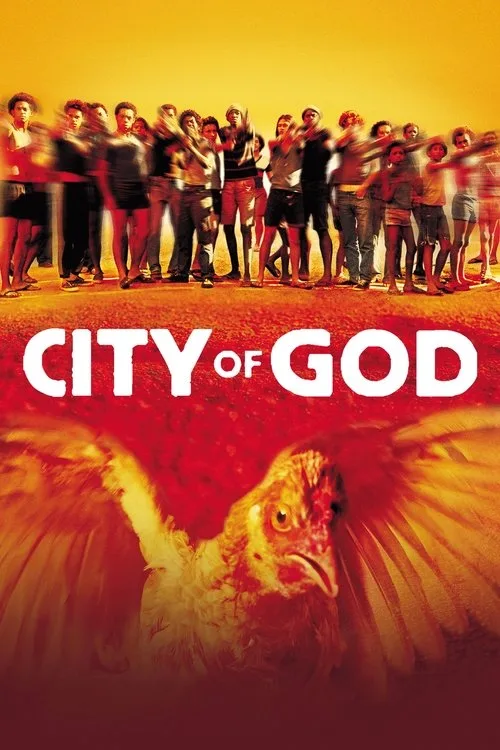
- City of God, a far harsher and more urgent view of Rio’s favelas, made from the inside decades later.
- Central Station, a Brazilian classic that also turns a personal journey into a portrait of a nation.
The verdict
Black Orpheus is a glorious, intoxicating film, a fusion of myth, music and Carnival that remains one of the most beautiful romances in world cinema. Its idealised view of Rio’s poorest neighbourhoods deserves scrutiny, but its music, colour and emotional pull are as powerful as ever.
Rating: 4.5/5
Availability is a catalogue snapshot and can change. Confirm with the provider in your region.
Where to watch Black Orpheus
Streaming: HBO Max, The Criterion Channel
Rent: Amazon Video, Apple TV, Fandango at Home
Buy: Amazon Video, Apple TV, Fandango at Home
By region: HBO Max, The Criterion Channel in the United States; BFI Player in the United Kingdom; Prime Video, U-NEXT in Japan
Full scores and availability on the movie page.
If you liked Black Orpheus
Ranked by genre overlap and Celluloid Score. More movies like Black Orpheus →
 Cannes 2002
 City of God
Crime, Drama · 2h 10m
 Marrakech 2013
 Half of a Yellow Sun
Drama, Romance · 1h 51m
 Cannes 2019
 Portrait of a Lady on Fire
Romance, Drama · 2h 2m
 Cannes 2012
 Amour
Drama, Romance · 2h 7m
Where can I watch Black Orpheus?
Streaming: HBO Max, The Criterion Channel. Rent: Amazon Video, Apple TV, Fandango at Home. Buy: Amazon Video, Apple TV, Fandango at Home. Regional notes: HBO Max, The Criterion Channel in the United States; BFI Player in the United Kingdom; Prime Video, U-NEXT in Japan.