All About My Mother (1999) Review: Melodrama as Mercy
All About My Mother is Pedro Almodóvar's Oscar-winning melodrama about a grieving nurse and the women who take her in, and perhaps his most generous film.
★★★★½ 4.5/5
Yes. It is Almodóvar at his warmest and most assured, ideal for lovers of European drama, provided you are ready for melodrama played at full volume.
Is All About My Mother worth watching?
Yes. All About My Mother is one of Pedro Almodóvar’s finest films, a vivid, funny and deeply compassionate drama about grief and the families people build for themselves. It takes the heightened language of old Hollywood melodrama and uses it to honour women the genre usually ignored, with a superb ensemble led by Cecilia Roth. The only real reservation is that its coincidences pile up in a way that viewers who prefer understatement may find hard to accept.
What is All About My Mother about?
Manuela (Cecilia Roth) is a nurse in Madrid who works with organ transplant teams and is raising her teenage son, Esteban, alone. He wants to be a writer and is fascinated by the father he has never met. When Esteban dies in the film’s opening stretch, Manuela leaves for Barcelona, the city she once fled, to find his father and tell him.
What she finds instead is a circle of women who absorb her into their lives: Agrado, a trans sex worker and old friend; Huma Rojo (Marisa Paredes), a celebrated stage actress starring in A Streetcar Named Desire; and Rosa (Penélope Cruz), a young nun who works with the city’s most vulnerable.
All About My Mother is written and directed by Almodóvar. It is a Spanish production in Spanish, runs 101 minutes, and won him the Best Director prize at Cannes in 1999, followed by the Goya for Best Film and the Academy Award for Best Foreign Language Film.
Almodóvar turns old movies into new feeling
The film’s title nods to All About Eve, and its central stage production is Tennessee Williams’s Streetcar, and Almodóvar is open about the fact that he learned to feel through performance. Actresses, rehearsals and dressing rooms fill the story, and characters keep playing roles, sometimes literally and sometimes to survive. The movie argues, gently, that performance is not the opposite of authenticity but one of the ways people reach it.
That idea is embodied most memorably by Agrado, played by Antonia San Juan, whose impromptu monologue on a theatre stage is one of the great comic set pieces of Almodóvar’s career. It is funny, defiant and moving at once, and it sums up the film’s attitude: dignity is something you make for yourself.
Cecilia Roth anchors the storm
Roth gives Manuela a grief that never turns into self-pity. She is competent and kind, the person others lean on, and the film finds its emotional power in watching her care for strangers while carrying a loss nobody around her fully knows. The performance is restrained in a film that is anything but, and that contrast keeps the melodrama grounded.
Paredes is magnificent as the imperious, lonely Huma, and Cruz, early in her international career, gives Rosa an openness that makes her plotline land. The ensemble works like a chorus, each woman lit up by Almodóvar’s saturated reds and blues and by Alberto Iglesias’s aching score.
Where the plotting strains
This is melodrama in the classic mould, so the story relies on chance meetings, sudden revelations and a run of hardships that would feel excessive in a realist film. Almodóvar commits to it completely, and most of the time his sincerity carries the day. Still, the middle section stacks misfortune on misfortune fast enough that some viewers will feel the machinery. Its portrayal of trans characters is also of its late-1990s moment: warm and humane, though filtered through a gay male director’s affectionate gaze rather than their own voices.
Who should watch All About My Mother?
It is essential for anyone interested in Spanish cinema or in Almodóvar, and a strong entry point for newcomers to his work. It will reward viewers who love emotional, colour-saturated drama and who do not mind a story that wears its feelings openly. It deals frankly with death, illness, drug use and sex work, though it is never graphic, and suits adult audiences best.
Where to go next:
- Talk to Her, his follow-up, which applies the same compassion to a stranger, quieter story.
- Volver, another tribute to mothers and daughters, with Cruz in the lead.
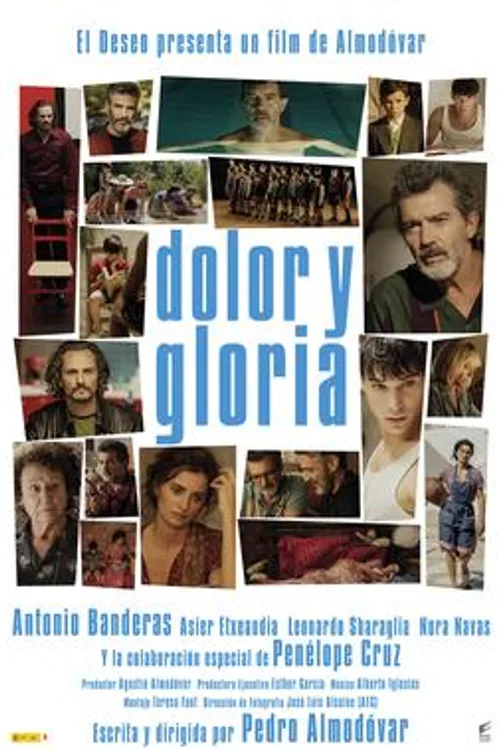
- Pain and Glory, a later, more autobiographical Almodóvar about memory and art.
The verdict
All About My Mother is Almodóvar in full command of his style, turning grief, theatre and chosen family into a film that is both flamboyant and tender. The coincidences of its plot may test a few viewers, but its warmth and its performances make it a modern classic of European cinema.
Rating: 4.5/5
Availability is a catalogue snapshot and can change. Confirm with the provider in your region.
Where to watch All About My Mother
Not confirmed on major subscription platforms in our US baseline — check regional listings.
Rent: Amazon Video, Apple TV, Google Play, YouTube, Fandango at Home, Spectrum On Demand
Buy: Amazon Video, Apple TV, Google Play, YouTube, Fandango at Home
By region: Wavve in South Korea; U-NEXT in Japan
Full scores and availability on the movie page.
If you liked All About My Mother
Ranked by genre overlap and Celluloid Score. More movies like All About My Mother →
 Cannes 2019
 Pain and Glory
Drama · 1h 53m

Breakfast on Pluto
Drama, Comedy · 2h 8m
 Cannes 2011
 The Skin I Live In
Thriller, Drama · 2h 0m
 San Sebastián 2002
 Talk to Her
Drama, Romance · 1h 52m
Where can I watch All About My Mother?
Rent: Amazon Video, Apple TV, Google Play, YouTube, Fandango at Home, Spectrum On Demand. Buy: Amazon Video, Apple TV, Google Play, YouTube, Fandango at Home. Regional notes: Wavve in South Korea; U-NEXT in Japan.