The White Ribbon (2009) Review: Cruelty Taught in Silence
The White Ribbon is Michael Haneke's chilling black-and-white mystery about strange crimes in a German village before the First World War, and his Palme d'Or winner.
★★★★½ 4.5/5
Yes. It is a haunting, masterfully made moral mystery for patient viewers who like cinema that unsettles rather than explains; not for a casual night in.
Is The White Ribbon worth watching?
Yes. The White Ribbon is one of Michael Haneke’s greatest films, a cold, beautifully composed mystery that uses a single village to ask where cruelty and authoritarianism come from. Its black-and-white images and restrained performances build a dread that lingers long after it ends. The reservation is that it is deliberately austere and withholding: it moves slowly and resists tidy explanations, which will frustrate viewers who want a conventional whodunit.
What is The White Ribbon about?
The White Ribbon is set in a Protestant village in northern Germany in the year before the First World War. Life is ordered around the local baron’s estate, the church and a rigid hierarchy of families. Then a series of strange incidents begins: an apparently deliberate accident, acts of vandalism, and violent attacks, including on children.
The story is narrated decades later by the village’s former schoolteacher (voiced by Ernst Jacobi), who as a young man (Christian Friedel) tried to make sense of what was happening while courting Eva (Leonie Benesch), a shy nanny from a nearby estate. Around them are the pastor, the doctor, the steward and their many children, raised under strict discipline. Haneke wrote and directed the film, which is in German and runs 144 minutes. It won the Palme d’Or at Cannes in 2009.
Haneke’s black and white as moral climate
Christian Berger’s monochrome photography is one of the film’s great achievements. The images are crisp, cold and immaculately composed: long corridors, snowy fields, candlelit interiors. The lack of colour makes the village feel like an old photograph of a vanished world, yet the precision of the framing also gives it a clinical quality, as if the film is examining a specimen.
Haneke’s direction is equally controlled. There is no music score, violence largely happens off screen, and scenes often end just before or just after the crucial moment. This restraint makes the film more disturbing, not less; we are forced to imagine, infer and judge. The title refers to the ribbons that the pastor makes his children wear as a reminder of purity, a small image that captures the film’s interest in how moral instruction can turn into a form of oppression.
A village of faces that hide more than they show
The performances are uniformly excellent, particularly from the children, who are strikingly still and watchful. They seem obedient and innocent, yet the film constantly invites us to wonder what they know. Burghart Klaussner is chilling as the pastor, whose rigid sense of righteousness shapes his household, and the adults around him, including the doctor and the steward, reveal cruelty and hypocrisy in small, devastating ways.
Christian Friedel and Leonie Benesch provide the film’s only real warmth. Their shy, awkward courtship, conducted within strict social conventions, is gently funny and quietly moving, offering a glimpse of tenderness in a world ruled by fear and shame.
Where the austerity becomes a barrier
The White Ribbon’s refusal to explain is essential to its meaning, but it also makes it demanding. The plot unfolds through fragments, the large cast can be hard to track, and the pacing is deliberate. Haneke’s historical allegory, pointing toward the generation that would come of age under fascism, can feel schematic if you are resistant to his cool, diagnostic approach. It is a film to admire as much as to feel, and some viewers will find it too chilly to love.
Who should watch The White Ribbon?
This is for viewers who enjoy slow, rigorous European art cinema, historical drama and mystery that invites interpretation rather than solving itself. It contains disturbing themes, including child abuse and violence against children, mostly off screen but still unsettling. Plan for nearly two and a half hours of close attention.
If it holds you, try these next:
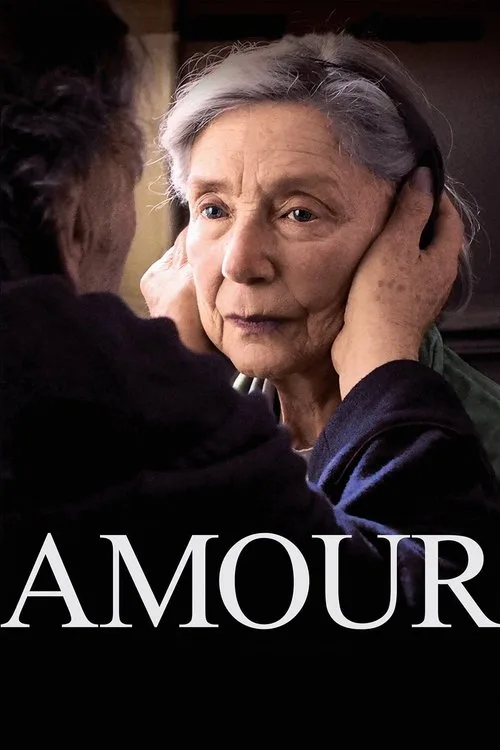
- Amour, Haneke’s next film, which applies the same precision to a far more intimate and tender story.
- The Lives of Others, another German film about the moral damage done by systems of control and obedience.
The verdict
The White Ribbon is a masterful, unsettling film that turns a village mystery into a meditation on authority, guilt and the roots of violence. Its austerity will not suit everyone, but for patient viewers it is a film that keeps working on you long after the final image.
Rating: 4.5/5
Availability is a catalogue snapshot and can change. Confirm with the provider in your region.
Where to watch The White Ribbon
Not confirmed on major subscription platforms in our US baseline — check regional listings.
Rent: Amazon Video, Apple TV, Google Play, YouTube, Fandango at Home
Buy: Amazon Video, Apple TV, Google Play, YouTube, Fandango at Home
By region: BFI Player in the United Kingdom; KlikFilm in Indonesia; TV+, HBO Max in Turkey; Wavve in South Korea
Full scores and availability on the movie page.
If you liked The White Ribbon
Ranked by genre overlap and Celluloid Score. More movies like The White Ribbon →
 FeaturedCannes 2025
 Sound of Falling
Drama · 2h 28m
 San Sebastián 2006
 Volver
Comedy, Drama · 2h 1m
My Own Private Idaho
Drama · 1h 44m
 Cannes 2012
 Amour
Drama, Romance · 2h 7m
Where can I watch The White Ribbon?
Rent: Amazon Video, Apple TV, Google Play, YouTube, Fandango at Home. Buy: Amazon Video, Apple TV, Google Play, YouTube, Fandango at Home. Regional notes: BFI Player in the United Kingdom; KlikFilm in Indonesia; TV+, HBO Max in Turkey; Wavve in South Korea.