Amour (2012) Review: Devotion Without Consolation
Michael Haneke's Amour follows an elderly Paris couple after the wife's stroke: a rigorous, devastating Palme d'Or winner about what love asks of us late in life.
★★★★½ 4.5/5
Yes, if you are ready for it. It is a masterly, deeply affecting film with two extraordinary lead performances, but its subject makes it an emotionally gruelling watch.
Is Amour worth watching?
Yes. Amour is one of the great films about old age and devotion, an unsentimental, clear-eyed love story anchored by two of the finest performances of the century. Michael Haneke strips away every comforting convention of the illness drama and asks what love looks like when there is no cure and no uplift to come. The reservation is simply that it is hard to sit through: its precision can feel cold, and for anyone who has cared for an ageing parent or partner, it may cut very close.
What is Amour about?
Georges (Jean-Louis Trintignant) and Anne (Emmanuelle Riva) are retired music teachers in their eighties, still devoted to each other and to the concerts, books and conversation that fill their large Paris apartment. One morning at breakfast, Anne suffers a stroke. As her health deteriorates, she makes Georges promise not to send her back to hospital or into a care home, and he sets about looking after her himself, while their daughter, Eva (Isabelle Huppert), watches anxiously from a distance.
Amour is written and directed by Haneke. It is a French-language film, a France-led co-production that runs 127 minutes. It won the Palme d’Or at Cannes in 2012, the Academy Award for Best Foreign Language Film, the César for Best Film and the European Film Award for Best Film.
A whole life inside one apartment
After a brief opening at a piano recital, almost the entire film takes place inside Georges and Anne’s apartment, and Haneke makes that space tell the story. Early on, it is full of books, a grand piano and the ease of a long, shared life. As Anne’s condition worsens, the same rooms become a world of routines, closed doors and quiet effort. Darius Khondji’s camera rarely moves, holding scenes in long, still takes that force the audience to share the couple’s time rather than skip through it.
The film is also frank about how events will unfold. From the very first minutes, Haneke makes clear that this is not a story of recovery, and that honesty removes the usual suspense of illness dramas. What remains is attention: to gestures, to the physical work of care, to the small humiliations and small tendernesses of each day.
Riva and Trintignant at the peak of their art
Emmanuelle Riva, decades after Hiroshima mon amour, gives a performance of astonishing bravery. She shows Anne’s decline with total physical commitment, but what lingers is her intelligence and pride, the way she fights to remain herself. It earned her an Academy Award nomination for Best Actress.
Trintignant is just as remarkable in a quieter role. Georges is proud, private and stubborn, and the actor lets his exhaustion and love coexist without ever pleading for sympathy. A story he tells Anne from his childhood is one of the film’s most beautiful passages, and the long marriage between the two characters feels completely real. Isabelle Huppert, in a small role, is sharp as a daughter whose concern keeps colliding with her parents’ need for privacy.
Where Haneke’s control can chill
Haneke is famous for his severity, and here it serves the material, but it also has a cost. The film’s refusal of music, sentiment and outside life can make it feel airless, and some viewers will find its clinical detachment more admirable than moving. Eva and the other secondary characters are thinly sketched by design, and the one symbolic motif the film does allow itself may strike some as oblique. These are limitations of temperament rather than failures, but they are real.
Who should watch Amour?
It is for serious drama audiences and admirers of European art cinema, and for anyone interested in honest depictions of ageing and caregiving. Choose your moment carefully: this is a slow, quiet and emotionally demanding film, with scenes of illness and physical decline, and it is best suited to adults. It is not a film for background viewing.
If it resonates, consider:
- The Diving Bell and the Butterfly, another French-language film about life inside a failing body, told with more lyricism.
- Anatomy of a Fall, a later Palme d’Or winner that dissects a marriage from a very different angle.
The verdict
Amour is a masterpiece of restraint, a film that shows love not as romance but as endurance, and it does so with almost unbearable honesty. Haneke’s coldness will keep some viewers at a distance, but Riva and Trintignant make it one of the most moving films of its decade.
Rating: 4.5/5
Availability is a catalogue snapshot and can change. Confirm with the provider in your region.
Where to watch Amour
Streaming: Sundance Now
Rent: Amazon Video, Apple TV, Google Play, YouTube, Fandango at Home
Buy: Amazon Video, Apple TV, Google Play, YouTube, Fandango at Home
By region: Sundance Now in the United States; BFI Player in the United Kingdom; KlikFilm in Indonesia; TV+, HBO Max in Turkey
Full scores and availability on the movie page.
If you liked Amour
Ranked by genre overlap and Celluloid Score. More movies like Amour →
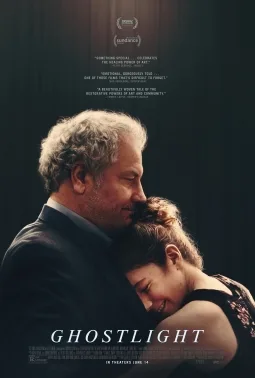 FeaturedSundance 2024
 Ghostlight
Horror, Drama · 1h 55m
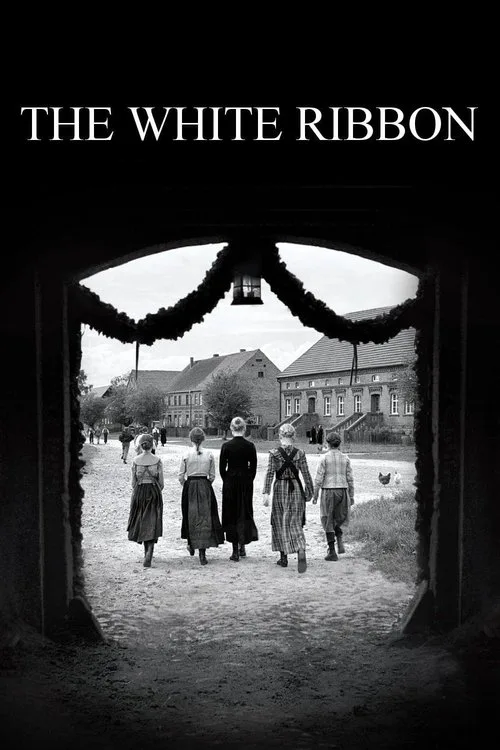 Cannes 2009
 The White Ribbon
Drama, Mystery · 2h 24m
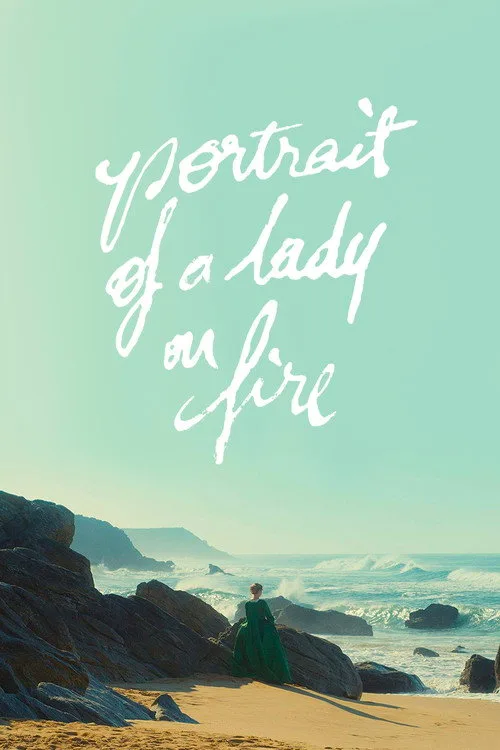 Cannes 2019
 Portrait of a Lady on Fire
Romance, Drama · 2h 2m
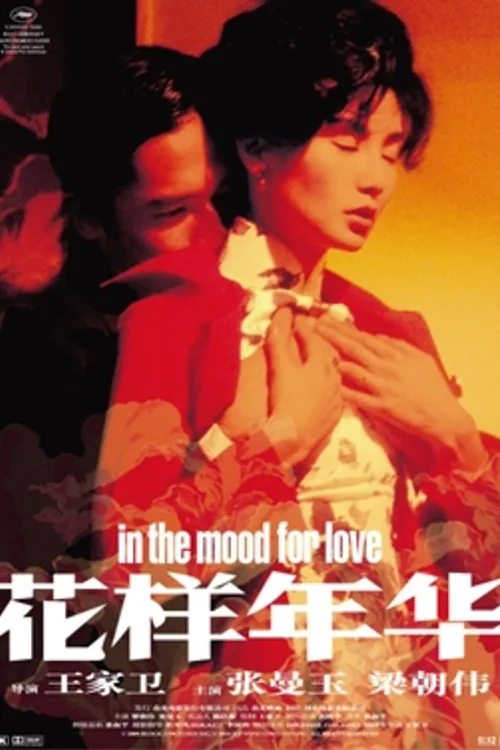 Cannes 2000
 In the Mood for Love
Romance, Drama · 1h 38m
Where can I watch Amour?
Streaming: Sundance Now. Rent: Amazon Video, Apple TV, Google Play, YouTube, Fandango at Home. Buy: Amazon Video, Apple TV, Google Play, YouTube, Fandango at Home. Regional notes: Sundance Now in the United States; BFI Player in the United Kingdom; KlikFilm in Indonesia; TV+, HBO Max in Turkey.