The Sea Inside (2004) Review: Grace From a Still Body
The Sea Inside is Alejandro Amenábar's true story of a Galician man fighting for the right to die, and Javier Bardem makes it warm, funny and quietly devastating.
★★★★½ 4.5/5
Yes. It is a humane, beautifully acted drama about dignity and choice, best for viewers ready for a heavy subject handled with warmth rather than gloom.
Is The Sea Inside worth watching?
Yes. The Sea Inside is a moving, unexpectedly light-footed drama about the right to die, anchored by one of Javier Bardem’s greatest performances. Alejandro Amenábar takes a subject that invites speeches and instead builds a film about company, humour and the people who crowd around one bed. The reservation is that the film clearly shares its hero’s convictions, so viewers hoping for an evenly balanced debate will find the scales tipped, though never crudely.
What is The Sea Inside about?
The Sea Inside is based on the real case of Ramón Sampedro, a Galician former sailor left quadriplegic after a diving accident in his youth. Decades later he is still confined to a bed in his family’s farmhouse, cared for by relatives, sharp-witted, and determined to win the legal right to end his life with help.
Two women enter his orbit as the case gathers pace. Julia (Belén Rueda) is a lawyer who takes on his cause while facing a serious illness of her own. Rosa (Lola Dueñas) is a local woman who arrives hoping to talk him out of it and finds herself drawn to him instead. Amenábar directs from a screenplay he wrote with Mateo Gil. The film is a Spanish production in Spanish (with some Galician), and it runs 125 minutes. It won the Academy Award for Best Foreign Language Film and the Goya for Best Film.
Bardem acts almost entirely from the neck up
Bardem was in his mid-thirties when he played a man in his fifties, and the ageing makeup is convincing, but the real transformation is physical restraint. With his body out of play, everything happens in his eyes, his timing and his voice. His Ramón is flirtatious, stubborn, occasionally cruel and often very funny, and that humour is the film’s secret weapon: it makes clear that his wish is not the product of despair in any simple sense, which is exactly what unsettles the people who love him.
The performance never asks for pity. Bardem lets Ramón be irritating and self-absorbed at times, which makes the tenderness around him more believable. It is a portrait of a whole person rather than a case study.
The women around the bed carry the argument
Amenábar’s cleverest choice is to stage the ethical debate through relationships rather than courtroom rhetoric. Belén Rueda gives Julia a guarded intelligence; her connection with Ramón turns on shared vulnerability, and their scenes together have a charge the film handles delicately. Lola Dueñas is superb as Rosa, a working mother whose clumsy, earnest kindness first reads as comic and slowly becomes the film’s emotional ballast.
The family is just as carefully drawn. The household that has shaped its life around Ramón’s care is shown with enormous respect, and their disagreements with him are allowed full weight. The Sea Inside is most powerful when it shows love and disagreement coexisting in the same kitchen.
Imagination as escape, and a few tidy edges
The title’s sea is both memory and fantasy. In the film’s most celebrated sequence, Ramón imagines rising from his bed and flying across the Galician countryside to the shore, a passage that Amenábar, who also composed the score, lifts with swelling music and sweeping camerawork. It shows us what the bed cannot and explains more about his longing than any dialogue.
If there is a weakness, it is a tendency toward neatness. A visiting priest who argues the other side is written as something close to a caricature, and a few scenes underline their meaning more heavily than the rest of the film needs. These moments are brief, but they are where the film’s advocacy shows through its craft.
Who should watch The Sea Inside?
This is for viewers drawn to serious, performance-led drama and to biography films about real moral questions. It is emotionally heavy, centred on disability, illness and assisted dying, and some viewers with personal experience of those subjects may find it hard going. It contains little that is graphic, but its themes suit adults and older teenagers. At just over two hours, it moves at a gentle, unhurried pace.
If it stays with you, three natural companions:
- Talk to Her, Pedro Almodóvar’s Spanish drama about bedside devotion, with far stranger and darker currents.
- The Orphanage, which gives Belén Rueda a starring role in an altogether different register.
- Pain and Glory, another Spanish film about a body in decline and a mind full of memory.
The verdict
The Sea Inside is a compassionate, intelligent film that turns a public controversy into an intimate human story, and Javier Bardem gives it a centre of tremendous warmth. A slightly partisan streak keeps it short of perfect, but its performances and its humanity have aged very well.
Rating: 4.5/5
Availability is a catalogue snapshot and can change. Confirm with the provider in your region.
Where to watch The Sea Inside
Not confirmed on major subscription platforms in our US baseline — check regional listings.
Rent: Amazon Video, Apple TV, Google Play, YouTube, Fandango at Home
Buy: Amazon Video, Apple TV, Google Play, YouTube, Fandango at Home
By region: Wavve in South Korea
Full scores and availability on the movie page.
If you liked The Sea Inside
Ranked by genre overlap and Celluloid Score. More movies like The Sea Inside →
 FeaturedVenice 2024
 I'm Still Here
Drama, Biography · 2h 17m

The Diving Bell and the Butterfly
Drama, Biography · 1h 52m
 Morelia 2004
 The Motorcycle Diaries
Biography, Drama · 2h 6m
 San Sebastián 2003
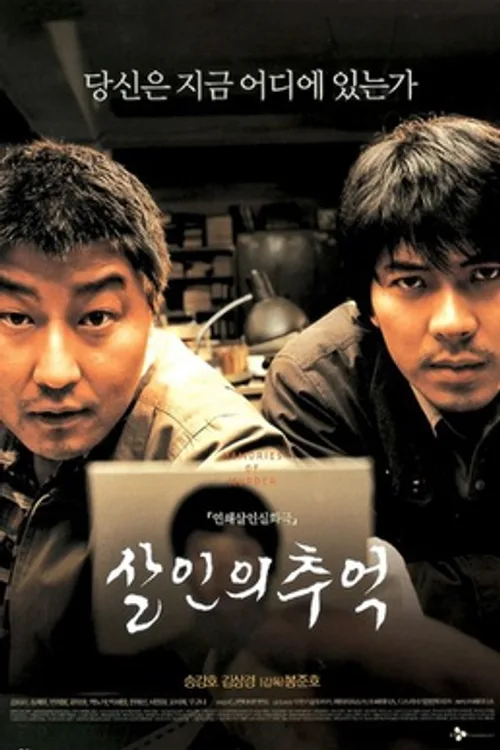
 Memories of Murder
Crime, Drama · 2h 12m
Where can I watch The Sea Inside?
Rent: Amazon Video, Apple TV, Google Play, YouTube, Fandango at Home. Buy: Amazon Video, Apple TV, Google Play, YouTube, Fandango at Home. Regional notes: Wavve in South Korea.