Little Trouble Girls (2025) Review: Hymns and Longing
Little Trouble Girls is a Slovenian coming-of-age drama in which a shy choir girl's first desire stirs during a convent retreat, told through glances and song.
★★★½☆ 3.9/5
Yes, with reservations. It is a precise, atmospheric debut for viewers who like quiet coming-of-age films, though its restraint can feel withholding.
Is Little Trouble Girls worth watching?
Yes, with reservations. Little Trouble Girls is an assured, sensuous first feature about a teenager’s awakening that does more with a held look or a rising harmony than most coming-of-age films do with a whole plot. Urška Djukić has a rare feel for atmosphere and for the pressure a closed community puts on a young body. The reservation is its reticence: the film deliberately holds back from drama, and some viewers will find that its tension never quite breaks into feeling.
What is Little Trouble Girls about?
Little Trouble Girls follows Lucia (Jara Sofija Ostan), an introverted 16-year-old who joins her Catholic school’s all-girls choir because her mother wants her to. There she is drawn into the orbit of Ana-Maria (Mina Svajger), an older, more confident and popular singer who seems to know things Lucia does not. When the choir travels to a convent for an intensive retreat, the rules tighten, the days fill with rehearsal and prayer, and Lucia starts to notice feelings she has no vocabulary for.
It is Djukić’s debut feature, a Slovenian production in Slovenian that premiered at the Berlinale in 2025. The supporting cast includes Sasa Tabakovic and Natasa Burger.
Choral music as the film’s nervous system
The choir is not just a setting. Djukić builds the film around the sound of young voices blending and breaking apart, and rehearsal scenes carry much of the story. A choir demands that each singer disappear into the group, and the film quietly asks what happens to a girl who is only beginning to discover what is hers alone. Moments when Lucia’s voice stands out, or falters, register as emotional events.
The sound design goes further than the music. Breath, footsteps on stone, the rustle of fabric and the hum of the countryside outside the convent walls are all heightened, so the film feels as physical as it does spiritual. It is an unusually tactile piece of work, attentive to the textures, routines and small bodily discomforts of a strict retreat.
Ostan’s watchful, inward lead
Jara Sofija Ostan gives Lucia a stillness that can read as shyness or as concentration, and the film depends on the ambiguity. She rarely says what she feels, and the camera stays close enough to catch the flickers of curiosity, embarrassment and want that pass across her face. Mina Svajger’s Ana-Maria is her opposite, loose and knowing, and their friendship is played with enough uncertainty that neither the audience nor Lucia can be sure what it means.
The nuns and choir leaders are not caricatures. Djukić treats the religious framework seriously, as something that shapes these girls and offers them beauty as well as rules, which makes the friction between devotion and desire more interesting than a simple story of repression.
Where restraint becomes distance
The film’s patience is its signature, but it has a cost. Djukić suggests far more than she dramatises, and the middle stretch of the retreat can feel as if it is circling the same emotional note. Secondary characters, including most of the other choir girls, remain sketches, and some symbolic touches are more insistent than the naturalistic performances around them. Viewers who want the tension to build to a clear catharsis may leave feeling the film kept them at arm’s length.
Who should watch Little Trouble Girls?
It suits admirers of slow, atmospheric European coming-of-age cinema, especially viewers who liked the controlled longing of Céline Sciamma’s films, and anyone interested in queer stories told through suggestion rather than statement. It deals with teenage sexuality and religious guilt, with some sensual imagery but nothing graphic. Its pleasures are in mood and sound, so it rewards a quiet room and full attention.
For more films that set desire against discipline or reward patient viewing:
- 8½, whose Catholic-school memories of guilt and temptation make a fascinating, very different counterpoint.
- Tokyo Story, a lesson in how much a still camera and an unhurried rhythm can hold.
More titles in a similar register are collected in our drama section.
The verdict
Little Trouble Girls is a finely tuned debut that turns a choir retreat into a study of how young people discover themselves under watchful eyes. Its reticence will frustrate some viewers, and the drama never quite peaks, but its sound, its lead performance and its refusal to simplify make it a striking arrival from a new director.
Rating: 3.9/5
Availability is a catalogue snapshot and can change. Confirm with the provider in your region.
Where to watch Little Trouble Girls
Not confirmed on major subscription platforms in our US baseline — check regional listings.
Rent: Amazon Video, Apple TV, Google Play, YouTube, Fandango at Home
Buy: Amazon Video, Apple TV, Google Play, YouTube, Fandango at Home
By region: BFI Player in the United Kingdom; KlikFilm in Indonesia; TVING in South Korea
Full scores and availability on the movie page.
If you liked Little Trouble Girls
Ranked by genre overlap and Celluloid Score. More movies like Little Trouble Girls →
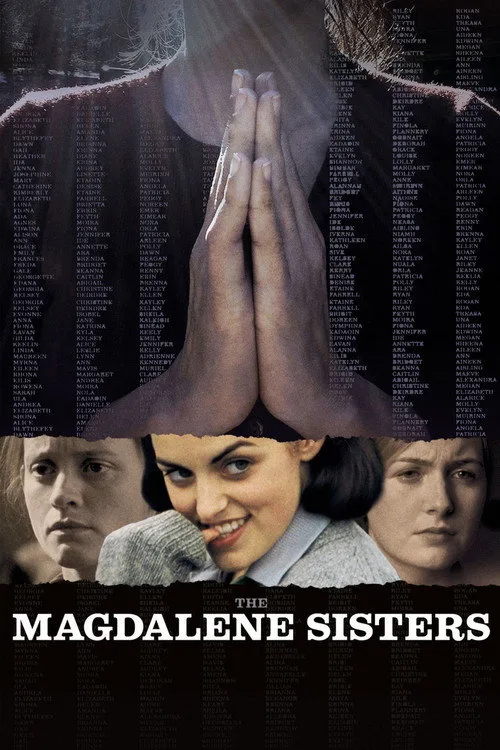 Venice 2002
 The Magdalene Sisters
Drama, History · 1h 59m
 Featured
 One Flew Over the Cuckoo's Nest
Drama · 2h 15m

The Outsiders
Crime, Drama · 1h 31m
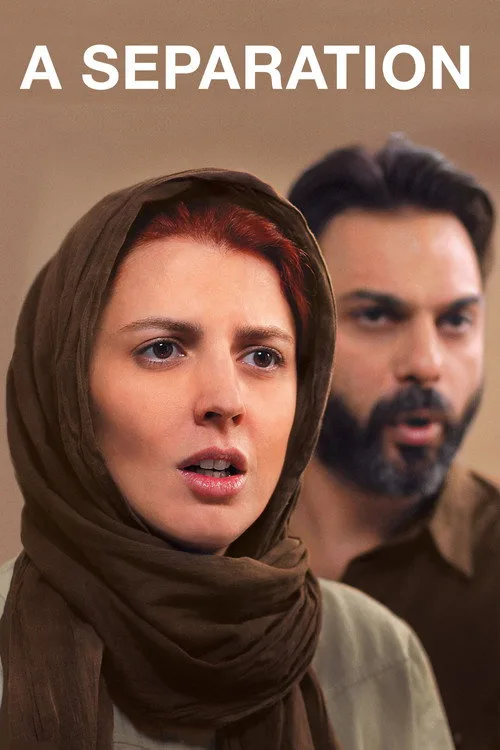 Berlinale 2011
 A Separation
Drama · 2h 3m
Where can I watch Little Trouble Girls?
Rent: Amazon Video, Apple TV, Google Play, YouTube, Fandango at Home. Buy: Amazon Video, Apple TV, Google Play, YouTube, Fandango at Home. Regional notes: BFI Player in the United Kingdom; KlikFilm in Indonesia; TVING in South Korea.