In the Mood for Love (2000) Review: Desire in the Corridors
In the Mood for Love is Wong Kar-wai's exquisite 1960s Hong Kong romance of two neighbours drawn together by betrayal, and one of cinema's great love stories.
★★★★½ 4.5/5
Yes. It is one of the most beautiful and emotionally precise romances ever filmed. Essential for lovers of world cinema, mood and unspoken feeling.
Is In the Mood for Love worth watching?
Yes. In the Mood for Love is one of the great screen romances, a film about longing so precisely made that every glance, gesture and dress seems to carry its own heartbreak. Wong Kar-wai tells a story of two people who hold back, and the restraint becomes almost unbearably intense, helped by Tony Leung and Maggie Cheung at their very best. The only caveat is that its pleasures are sensory and elliptical: viewers who want plot and explicit drama may wonder why so little seems to happen.
What is In the Mood for Love about?
In the Mood for Love is set in Hong Kong in 1962, among the crowded rented rooms of a community of Shanghainese émigrés. On the same day, two couples move into neighbouring flats. Chow Mo-wan (Tony Leung) is a newspaper editor; Su Li-zhen (Maggie Cheung) is a secretary at a shipping firm. Their spouses are often away, and slowly Chow and Su begin to suspect that the absences are connected.
Brought together by that suspicion, the two start meeting, first to understand what has happened and then because they cannot stay apart, all while trying not to become what they resent. Siu Ping-lam plays Chow’s friend and colleague. Wong Kar-wai directs this Hong Kong production in Cantonese, with some Shanghainese, and it runs a slender 98 minutes.
Every frame a confession
The film’s images are among the most admired in modern cinema. Christopher Doyle and Mark Lee Ping-bin shoot the characters through doorways, down narrow corridors and in fragments reflected in mirrors, so that the lovers always seem hemmed in, watched or partly hidden. Rain, cigarette smoke and the glow of streetlamps turn the city into a mood rather than a place.
Maggie Cheung’s cheongsams, a new one for almost every scene, are more than costume. Designed by William Chang Suk-ping, who also handled the production design and editing, they mark the passage of time and express what Su cannot say, their tight collars and bold patterns suggesting both elegance and constraint. At Cannes, the film won the Technical Grand Prize, and it is easy to see why.
Music that moves like memory
Wong uses repetition as a storytelling device. Shigeru Umebayashi’s aching waltz, Yumeji’s Theme, returns again and again as the two walk to the noodle stall or pass on the stairs, often in slow motion, until the ritual becomes the romance. Nat King Cole’s Spanish-language ballads add a sense of borrowed longing, as if the characters are living inside someone else’s love song. Few films have used music so precisely to turn routine into yearning.
Tony Leung and Maggie Cheung, in perfect balance
Tony Leung won Best Actor at Cannes for this role, and it is a masterclass in suppressed emotion: a man whose courtesy and patience only half-hide how much he is feeling. Maggie Cheung, who won the Golden Horse for Best Leading Actress, is equally superb, playing Su’s dignity and loneliness with such control that the smallest change in her expression lands like a shout.
The film’s cleverest touch is that the spouses are kept almost entirely off screen, their faces unseen. Chow and Su even rehearse imagined confrontations and conversations with their absent partners, scenes that blur performance and confession in ways that give the film its bittersweet complexity.
Who should watch In the Mood for Love?
It is essential for lovers of romance, world cinema and films driven by atmosphere rather than plot. It is also an ideal starting point for anyone new to Wong Kar-wai. The content is gentle, with no explicit sex or violence, and at under 100 minutes it is short, but it rewards full attention and repeated viewings. Watch it on a good screen with the sound up.
Natural companions include:
- Lust, Caution, Ang Lee’s period drama, which also stars Tony Leung in a story of dangerous, hidden desire.
- Raise the Red Lantern, Zhang Yimou’s study of repression and ritual, filmed with the same bold command of colour.
- Crouching Tiger, Hidden Dragon, released the same year, whose martial arts spectacle hides a similarly restrained love story.
The verdict
In the Mood for Love is a near-perfect film about the love that never quite happens, told with extraordinary visual grace, a haunting score and two exquisite central performances. It is one of the landmarks of Hong Kong cinema and a romance that only grows richer with time.
Rating: 4.5/5
Availability is a catalogue snapshot and can change. Confirm with the provider in your region.
Where to watch In the Mood for Love
Streaming: HBO Max
Rent: Amazon Video, Apple TV, Google Play, YouTube, Fandango at Home
Buy: Amazon Video, Apple TV, Google Play, YouTube, Fandango at Home
By region: HBO Max in the United States; MUBI in India; Netflix, Disney+, Wavve in South Korea; Netflix, U-NEXT in Japan
Full scores and availability on the movie page.
If you liked In the Mood for Love
Ranked by genre overlap and Celluloid Score. More movies like In the Mood for Love →
 Venice 2024
 Challengers
Drama, Romance · 2h 12m
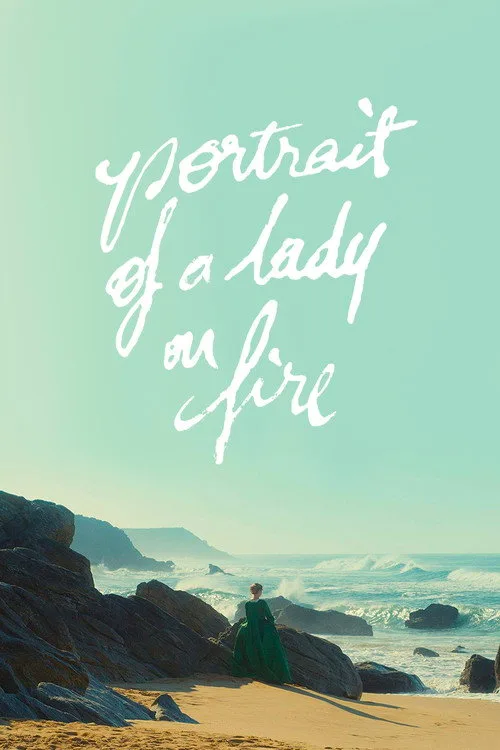 Cannes 2019
 Portrait of a Lady on Fire
Romance, Drama · 2h 2m
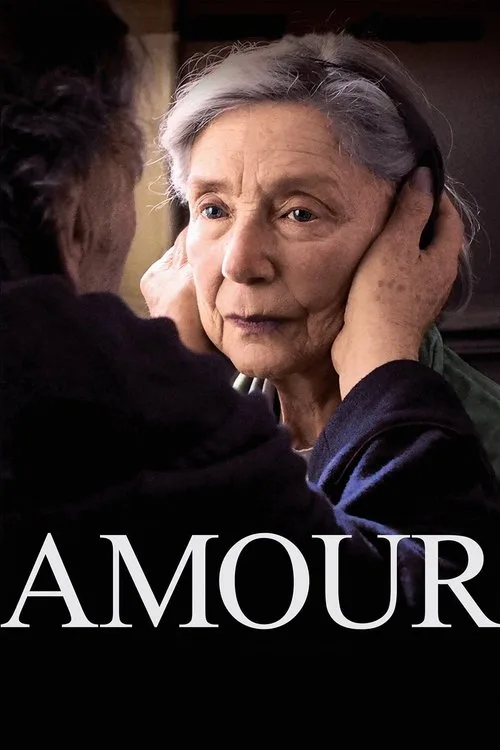 Cannes 2012
 Amour
Drama, Romance · 2h 7m
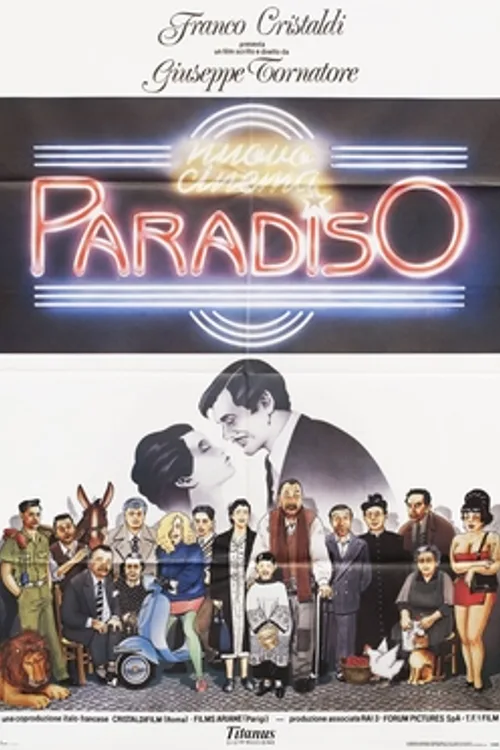 Cannes 1989
 Cinema Paradiso
Drama, Romance · 2h 54m
Where can I watch In the Mood for Love?
Streaming: HBO Max. Rent: Amazon Video, Apple TV, Google Play, YouTube, Fandango at Home. Buy: Amazon Video, Apple TV, Google Play, YouTube, Fandango at Home. Regional notes: HBO Max in the United States; MUBI in India; Netflix, Disney+, Wavve in South Korea; Netflix, U-NEXT in Japan.