I'm Still Here (2024) Review: A Family Against Erasure
I'm Still Here is Walter Salles's true story of a Rio family torn apart by Brazil's dictatorship, a restrained masterpiece led by a superb Fernanda Torres.
★★★★★ 5/5
Yes. It is a quietly devastating, beautifully acted true story about grief and defiance. Essential for anyone who values humane, restrained drama.
Is I’m Still Here worth watching?
Yes, emphatically. I’m Still Here is a masterly true-life drama about a family living through Brazil’s military dictatorship, and Fernanda Torres gives one of the great screen performances of the decade. Walter Salles shows state terror not through torture scenes or speeches but through its effect on a home, and the restraint makes the film far more powerful. If there is a caveat, it is that the pace is patient and the drama internal; anyone expecting a political thriller will find something quieter and deeper.
What is I’m Still Here about?
I’m Still Here is set in Rio de Janeiro in the early 1970s, during Brazil’s military rule. Eunice Paiva (Fernanda Torres) and her husband Rubens (Selton Mello), a former congressman, live with their five children in a bright, open house steps from the beach, full of friends, music, dogs and noise. The country’s repression hums in the background, glimpsed in news reports and roadside checkpoints, until the day plain-clothes men arrive and take Rubens away for questioning.
He does not come back, and nobody will tell the family where he is. The film follows Eunice as she tries to find answers while keeping her children’s lives as normal as possible. It is adapted from the memoir by the couple’s son, Marcelo Rubens Paiva. Salles directs this Brazilian production in Portuguese, and it runs 137 minutes. Fernanda Montenegro, Torres’s mother, also appears.
A political film told at the scale of a home
Salles’s master stroke is how long he lets us live with the Paivas before the blow falls. The first act is warm and loose: days on the sand, crowded dinners, music playing through the house, home-movie footage that captures a family’s private happiness. By the time the house is invaded, we know its rooms and rhythms, and the change in atmosphere is devastating without a single raised voice.
The film’s politics are all in its details. Curtains are drawn, telephones become threats, friends grow cautious, and the family’s easy openness gives way to watchfulness. Salles understands that authoritarianism is felt not only in prisons but in what people stop saying at the dinner table, and the film’s precision about that change is what makes it universal.
Fernanda Torres gives a performance of total control
Torres plays Eunice as a woman who decides, almost immediately, that she will not give the regime the satisfaction of seeing her break. Much of the performance is in what she withholds: a smile held a moment too long for a photograph, a calm voice for the children, a face that registers terror only when she is alone. Her Golden Globe win and Academy Award nomination were fully deserved.
Selton Mello is warm and easy as Rubens, and his presence fills the early scenes so completely that his absence later becomes a character in itself. The young actors playing the children are natural and unaffected, which keeps the family feeling real rather than symbolic. The film won the Academy Award for Best International Feature, a first for Brazil, and earned a Best Picture nomination.
The one place it asks for patience
The same restraint that makes the film so moving may frustrate some viewers. The middle section is deliberately repetitive, as Eunice returns again and again to the same questions and closed doors, and Salles resists building suspense around the politics. At over two hours, it asks you to sit with uncertainty and grief rather than follow a plot. For most, that is the point; for a few, it will feel slow.
Who should watch I’m Still Here?
It is essential for anyone drawn to intimate historical drama, stories about mothers and families, or films about how ordinary people endure political violence. It will also resonate with viewers whose own families carry memories of dictatorship anywhere in the world. There is no graphic violence, but the tension of interrogation and the grief of disappearance are sustained and painful. Older teenagers and adults will get the most from it.
For natural companions:
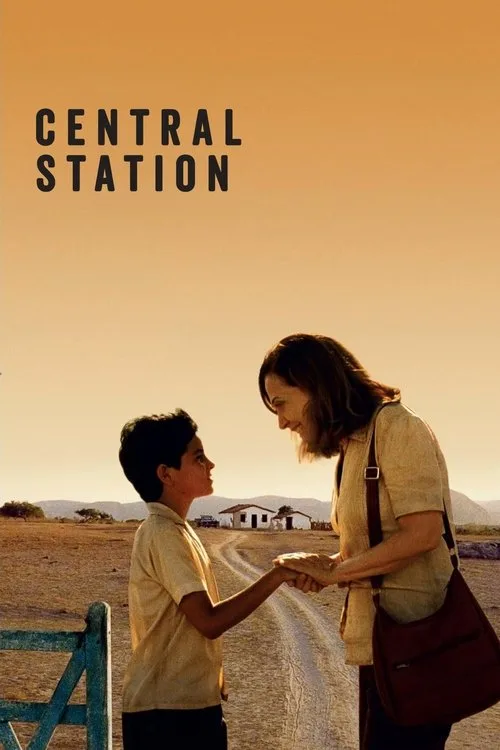
- Central Station, Salles’s earlier Brazilian classic, built around Fernanda Montenegro’s celebrated lead performance.
- The Secret Agent, Kleber Mendonça Filho’s thriller, which approaches the same dictatorship era with more genre tension.
- Aquarius, another Brazilian drama about a woman refusing to be dislodged from her home and her history.
The verdict
I’m Still Here is a rare film that makes history feel intimate and grief feel active, finding defiance in dignity and memory. Walter Salles directs with exquisite restraint, and Fernanda Torres delivers a performance that will stay with you long after the credits. It is unmissable.
Rating: 5/5
Availability is a catalogue snapshot and can change. Confirm with the provider in your region.
Where to watch I'm Still Here
Streaming: Netflix
Rent: Amazon Video, Apple TV, Google Play, YouTube, Fandango at Home
Buy: Amazon Video, Apple TV, Google Play, YouTube, Fandango at Home
By region: Netflix in the United States; BFI Player in the United Kingdom
Full scores and availability on the movie page.
If you liked I'm Still Here
Ranked by genre overlap and Celluloid Score. More movies like I'm Still Here →
 Berlinale 1998
 Central Station
Drama · 1h 50m
 FeaturedBalinale 2023
 Women Talking
Drama · 1h 44m

The Breakfast Club
Comedy, Drama · 1h 38m
 Morelia 2004
 The Motorcycle Diaries
Biography, Drama · 2h 6m
Where can I watch I'm Still Here?
Streaming: Netflix. Rent: Amazon Video, Apple TV, Google Play, YouTube, Fandango at Home. Buy: Amazon Video, Apple TV, Google Play, YouTube, Fandango at Home. Regional notes: Netflix in the United States; BFI Player in the United Kingdom.