House of Flying Daggers (2004) Review: Wuxia in Full Bloom
House of Flying Daggers is Zhang Yimou's lush wuxia romance, a film whose colour, choreography and sound matter more than its tangled plot of loyalties.
★★★★½ 4.5/5
Yes. It is one of the most beautiful martial arts films ever made. Ideal for wuxia fans and anyone who watches films for image and movement.
Is House of Flying Daggers worth watching?
Yes. House of Flying Daggers is a sumptuous wuxia romance whose set pieces rank among the most gorgeous action filmmaking of the 2000s. Zhang Yimou treats every fight as a piece of choreographed painting, and the love triangle at its centre gives the spectacle genuine ache. The reservation is the script: it stacks up reversals of loyalty so eagerly that the plot’s logic starts to fray, even as the images keep getting stronger.
What is House of Flying Daggers about?
House of Flying Daggers is set in the late Tang dynasty, in the ninth century, when a rebel alliance called the Flying Daggers is harrying a corrupt government. Two police captains, Leo (Andy Lau) and Jin (Takeshi Kaneshiro), suspect that Xiao Mei (Zhang Ziyi), a blind dancer at a luxurious pleasure house, is connected to the sect. Their plan is for Jin to pose as a free-spirited swordsman, win her trust and let her lead him to the rebels’ hidden base.
What begins as a manhunt becomes a journey through fields, forests and back roads, with soldiers in pursuit and the question of who is deceiving whom growing sharper as feelings develop. Zhang Yimou directs this Chinese production in Mandarin, and it runs a brisk 119 minutes. It screened at the Cannes Film Festival in 2004.
A martial arts film built like a dance
Zhang’s approach is closer to ballet than to brawling, and the film announces this early. Mei’s first performance, in which she answers a sequence of beans flicked against drums with strikes of her long sleeves, is a showpiece of rhythm and editing that tells you how the whole film wants to be watched: as movement set to sound. Later, a chase through a bamboo forest, with soldiers dropping from the treetops and sharpened stalks hurled like spears, is the kind of sequence people remember for decades.
The daggers themselves are a clever device. Shot as they curve through the air, often following them from the throw to the target, they give the fights a sense of trajectory that sword duels rarely have. The action is stylised rather than bone-crunching, and the wirework is unapologetically fantastical, which suits a story that is really about desire and disguise.
Colour carries the emotion
Few directors use colour as boldly as Zhang, and here it does much of the storytelling. The pleasure house is a jewel box of painted walls and silk; the countryside moves through golden birch woods, flowering meadows and deep bamboo greens; the costumes shift with the characters’ moods. Zhao Xiaoding’s cinematography, nominated for an Academy Award, lets whole scenes play out as compositions in a single dominant hue, and Shigeru Umebayashi’s score adds a swooning, operatic layer.
The three leads understand the register. Zhang Ziyi gives Mei a watchful stillness that makes her dance scenes all the more explosive, Takeshi Kaneshiro plays Jin’s charm with a hint of vanity that keeps him interesting, and Andy Lau brings a coiled, wounded gravity to Leo. The romance is melodrama in the grand tradition, and the actors commit to it without irony.
Where the plot twists too far
The consensus view that the film dazzles even when its story logic wavers is fair. The screenplay leans on revelation after revelation, and by the final stretch the switches of allegiance begin to feel engineered to prolong the triangle rather than to deepen it. The last act also moves into a more operatic, almost abstract mode that some viewers find overwrought. The emotion is sincere, but the film asks you to feel more than it has fully earned in narrative terms.
Who should watch House of Flying Daggers?
It is a natural pick for anyone who loves wuxia, romantic melodrama or films that treat colour and choreography as their main language. Viewers who want grounded, hard-hitting fight scenes or a tightly plotted thriller may find it too lyrical. At under two hours it is an easy evening. The violence includes arrows, blades and some blood, but it is balletic rather than graphic, and there is brief sensuality between the leads.
If it wins you over, these make good companions:
- Hero, Zhang’s earlier wuxia epic, which takes the colour-coded approach even further and structures it around a political story.
- Crouching Tiger, Hidden Dragon, Ang Lee’s film that opened international audiences to romantic wuxia with airborne duels and a treetop fight of its own.
- Curse of the Golden Flower, which completes Zhang’s run of opulent period spectacles with palace intrigue in place of the open road.
The verdict
House of Flying Daggers is wuxia as sensory feast: the drum dance, the bamboo forest and the colour-soaked landscapes are reasons enough to see it. Its plot overplays its hand with too many turns, but the craft, the music and three committed performances make it an essential martial arts romance.
Rating: 4.5/5
Availability is a catalogue snapshot and can change. Confirm with the provider in your region.
Where to watch House of Flying Daggers
Streaming: Prime Video
Rent: Amazon Video, Apple TV, Google Play, YouTube, Fandango at Home
Buy: Amazon Video, Apple TV, Google Play, YouTube, Fandango at Home
By region: Prime Video in the United States; Disney+ in Indonesia; Netflix, Wavve in South Korea; Prime Video, U-NEXT in Japan
Full scores and availability on the movie page.
If you liked House of Flying Daggers
Ranked by genre overlap and Celluloid Score. More movies like House of Flying Daggers →
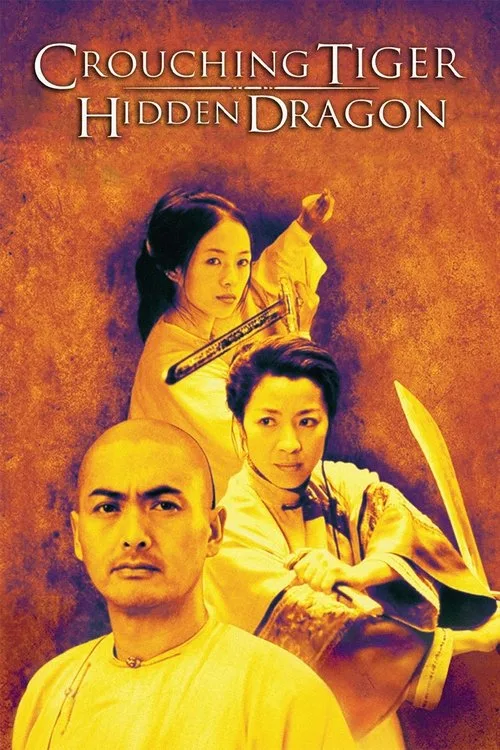 Cannes 2000
 Crouching Tiger, Hidden Dragon
Action, Romance · 2h 0m
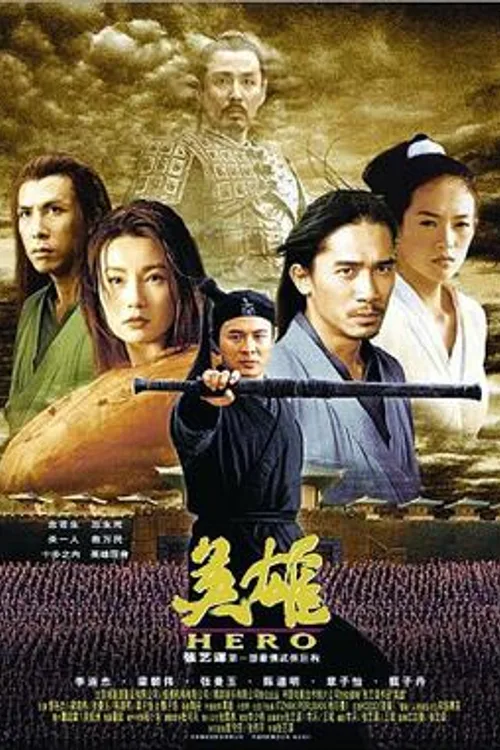 Berlinale 2003
 Hero
Action, Drama · 1h 39m

47 Ronin
Drama, Action · 1h 59m

The Great Wall
Action, Adventure · 1h 43m
Where can I watch House of Flying Daggers?
Streaming: Prime Video. Rent: Amazon Video, Apple TV, Google Play, YouTube, Fandango at Home. Buy: Amazon Video, Apple TV, Google Play, YouTube, Fandango at Home. Regional notes: Prime Video in the United States; Disney+ in Indonesia; Netflix, Wavve in South Korea; Prime Video, U-NEXT in Japan.