Goblin Review: The K-Drama That Rewrote Fantasy Television
Kim Eun-sook's Guardian: The Lonely and Great God became a global phenomenon — 90% critics, 95% audiences, and Gong Yoo plus Kim Go-eun chemistry that still defines K-drama fantasy.
★★★★★ 5/5
Essential South Korea television on Best of Asia 2016–2026 — the fantasy romance every subsequent K-drama measured itself against.
Is Goblin worth watching?
Yes — nearly a decade after its broadcast, Goblin remains the gold standard for Korean fantasy romance, and the scores have not faded. Goblin (Guardian: The Lonely and Great God) holds a 90/100 Celluloid Editorial Rating, 95% Audience Snapshot, Metascore 80, IMDb 8.6, and Fan Score 94 across sixteen episodes on Netflix globally. Kim Eun-sook created a drama that fused immortal mythology, reincarnation, and modern Seoul with production values that made international audiences realize K-drama could look like cinema.
What is Goblin about?
A 939-year-old goblin cursed with immortality can only end his life when his human bride pulls a sword from his chest — but finding that bride means navigating fate, memory, and the afterlife bureaucracy that governs both mortals and gods. Gong Yoo plays the lonely goblin with weary charisma; Kim Go-eun is his destined bride across lifetimes; Lee Dong-wook’s grim reaper and Yoo In-na’s sunny mortal supply parallel romances that deepen the theme of love versus duty. The premise sounds absurd; the execution is devastatingly sincere.
Should you watch Goblin before other K-dramas?
If you want to understand modern Korean television’s global breakout, yes — Goblin is the template that Crash Landing on You, The Glory, and Squid Game each riff on from different angles. Pair with Crash Landing on You for romance across impossible borders — North Korea instead of the afterlife — or Hospital Playlist for Kim Eun-sook’s spiritual opposite: ensemble warmth without fantasy scaffolding. Both belong on Best of Asia 2016–2026 as South Korea exports that rewrote streaming algorithms.
How does Kim Eun-sook craft the fantasy?
By treating the supernatural as emotional metaphor — immortality is loneliness, reincarnation is second chances, the grim reaper is grief with a job description. Kim’s dialogue balances wit and ache; Gong Yoo and Kim Go-eun generate chemistry through restraint rather than constant confession. Lee Dong-wook’s reaper arc — memory returning across lifetimes — supplies the season’s most devastating mid-run turn. Production design lavishes attention on Canadian locations standing in for mythic spaces, and the OST became a phenomenon in its own right. Kaiser Khan’s read: this is comfort television that earns its tears rather than extracting them cheaply.
Where does Goblin sit among peer titles?
Above most fantasy K-dramas in craft and below nothing in cultural footprint for its era. Compare with Hwang Dong-hyuk’s Squid Game — both Kim Eun-sook and Hwang exported South Korea to Netflix dominance, but Goblin paved the romantic lane Squid Game would later contrast with dystopia. On the Best of Asia 2016–2026 hub, Goblin is the 2016–2017 pillar that made 2020s K-drama saturation possible. IMDb tt5689052; sixteen episodes, one season, ended.
Where can I watch Goblin?
Netflix carries all sixteen episodes globally — the platform that exported Goblin to international audiences who had never watched K-drama before. IMDb tt5689052. Start on a weekend; the first four episodes hook quickly, and Lee Dong-wook’s reaper arc pays off mid-season.
Verdict
Goblin is mandatory for anyone claiming to understand K-drama — Kaiser Khan’s featured pick for the fantasy-romance quadrant of the Asian decade. Watch it before IU and Byeon Woo-seok’s Perfect Crown to see how modern royal romance evolved from immortal myth. Sixteen hours well spent, and the OST will live on your playlist for months.
Availability is a catalogue snapshot and can change. Confirm with the provider in your region.
Where to watch Goblin
Streaming: Viki
By region: Viki in the United States; Netflix, iflix, Viu in Indonesia; Netflix, Vi Movies & TV in India; Netflix, TVING in South Korea
Full scores and availability on the series page.
More like Goblin
 Netflix
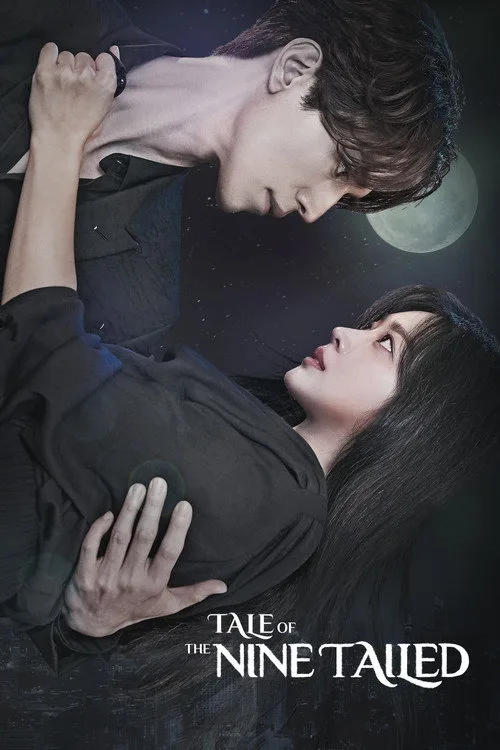
 Tale of the Nine-Tailed
Fantasy, Drama
 Netflix Editor's Pick
 When Life Gives You Tangerines
Drama, Romance
 Netflix Editor's Pick
 Crash Landing on You
Romance, Comedy
 Netflix
 Queen of Tears
Comedy, Drama
Streaming: Viki. Regional notes: Viki in the United States; Netflix, iflix, Viu in Indonesia; Netflix, Vi Movies & TV in India; Netflix, TVING in South Korea.