Caught by the Tides (2024) Review: Two Decades in One Face
Caught by the Tides is Jia Zhangke's drifting love story built partly from two decades of his own footage, with Zhao Tao ageing alongside a changing China.
★★★★½ 4.5/5
Yes. It is a moving, singular film for viewers who love patient, poetic cinema and Jia Zhangke's earlier work; anyone wanting a conventional plot may feel adrift.
Is Caught by the Tides worth watching?
Yes. Caught by the Tides is a haunting, genuinely unusual film, a love story and a time capsule at once, and one of Jia Zhangke’s most personal works. By stitching together footage he shot across more than twenty years, Jia lets Zhao Tao age on screen in real time, alongside the country around her. The reservation is that this is cinema of mood and memory rather than story; viewers who need clear narrative momentum may find it elusive.
What is Caught by the Tides about?
Caught by the Tides follows Qiaoqiao (Zhao Tao) and Bin (Li Zhubin), a couple whose fragile, on-and-off relationship runs from the early 2000s to the present day. It begins in the northern industrial city of Datong, where Qiaoqiao performs as a singer and Bin looks for his next opportunity, and it follows them as China’s economic boom scatters people, work and relationships across the country.
The romance is less a plot than a thread. When Bin leaves to chase his fortune, Qiaoqiao eventually sets out to find him, and the film moves with her through transforming cities and landscapes, watching old ways of life being demolished and rebuilt.
Jia wrote and directed the film, which is a Chinese production in Mandarin. It premiered in competition at the Cannes Film Festival in 2024.
A film made from time itself
What makes Caught by the Tides extraordinary is its construction. Jia assembled it partly from material he filmed over two decades, some of it connected to earlier projects such as Still Life, and combined it with newer scenes. The result is a film in which the grain of the image, the fashions, the phones and the faces all change as the years pass, not through make-up or digital trickery but because they really did.
That gives the film an eerie, documentary texture. Street scenes, karaoke halls and crowds of workers feel captured rather than staged, and Jia’s long-standing interest in how ordinary people are swept along by national change becomes literal. Popular songs from across the period, from pop ballads to karaoke staples, act as markers of time and as the emotional voice the characters rarely use themselves.
Zhao Tao’s near-silent performance
Zhao Tao, Jia’s longtime collaborator and muse, carries the film with remarkably few words. Qiaoqiao is largely silent, communicating through glances, posture and the way she moves through crowds, and the effect is to make her both specific and emblematic, a woman and a generation. Because we see her across so many years, small gestures accumulate enormous weight: a look at a stranger, a moment of hesitation at a door, a song she sings to herself.
Li Zhubin’s Bin is more elusive by design, glimpsed often at a distance, a man whose restlessness mirrors the country’s appetite for reinvention. The imbalance is deliberate; this is Qiaoqiao’s film, and her endurance is its subject.
Where the drift becomes a barrier
The film’s fragmentary structure can be demanding. Transitions between eras are abrupt, connective storytelling is minimal, and viewers unfamiliar with Jia’s earlier films may miss some of the echoes that give the material its resonance. Its near-wordless approach also means that some stretches feel more like an installation than a drama. It is a film to surrender to rather than follow, and not every viewer will want to.
Who should watch Caught by the Tides?
It is essential for admirers of Jia Zhangke and of slow, contemplative drama that treats history as something lived rather than explained. Viewers new to his work may get more from it after one or two of his earlier films, especially Still Life. Expect a quiet, melancholy tone with little violence and nothing explicit; the challenge is patience rather than content.
Related viewing:
- Still Life, Jia’s earlier film about people searching for lost partners amid massive change, and a key companion piece.
- Farewell My Concubine, another Chinese drama that tracks a relationship across decades of national upheaval.
- Black Coal, Thin Ice, for a moodier portrait of northern China’s industrial cities and the people they leave behind.
The verdict
Caught by the Tides is a strange, beautiful and deeply melancholy film, a love story told through the passage of real time. Its fragmentary form will leave some viewers at sea, but for those willing to drift with it, it is one of the most affecting films of recent years.
Rating: 4.5/5
Availability is a catalogue snapshot and can change. Confirm with the provider in your region.
Where to watch Caught by the Tides
Not confirmed on major subscription platforms in our US baseline — check regional listings.
Rent: Amazon Video, Apple TV, Google Play, YouTube, Fandango at Home
Buy: Amazon Video, Apple TV, Google Play, YouTube, Fandango at Home
By region: MUBI in India; MUBI in Pakistan
Full scores and availability on the movie page.
If you liked Caught by the Tides
Ranked by genre overlap and Celluloid Score. More movies like Caught by the Tides →
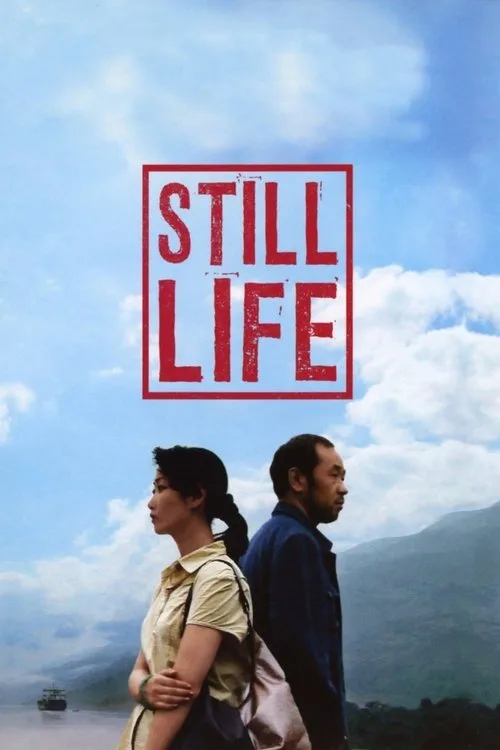 Venice 2006
 Still Life
Drama, Romance · 1h 48m
 Cannes 2019
 Parasite
Thriller, Drama · 2h 12m
 Cannes 1963
 The Leopard
Drama, History · 3h 5m
 Cannes 1960
 La Dolce Vita
Drama · 2h 54m
Where can I watch Caught by the Tides?
Rent: Amazon Video, Apple TV, Google Play, YouTube, Fandango at Home. Buy: Amazon Video, Apple TV, Google Play, YouTube, Fandango at Home. Regional notes: MUBI in India; MUBI in Pakistan.