After Life (2019) Review: Grief With a Sharp Tongue
After Life is Ricky Gervais's dark comedy about a widower who decides to say whatever he likes; it is blunt, sentimental and often genuinely moving about grief.
★★★★☆ 4/5
Yes, with reservations. Viewers open to a comedy about grief will find it moving and funny, but anyone allergic to sentimentality or Gervais's bluntness may struggle.
Is After Life worth watching?
Yes. After Life is Ricky Gervais’s most personal work, a comedy about bereavement that is frequently crude, occasionally mawkish and, at its best, one of the more honest portraits of grief on television. Its short episodes move easily between cruelty and tenderness, and the supporting cast gives the town real warmth. The reservation is that Gervais leans hard on sentiment and repetition, and the show’s pattern of insult, tears and life lesson becomes predictable across three seasons.
What is After Life about?
Tony (Ricky Gervais) had what he considered a perfect life, until his wife, Lisa (Kerry Godliman), died of cancer. Now he wakes each morning to the videos she recorded for him, feeds the dog, and goes to work at a small free newspaper in the fictional English town of Tambury, where the stories are about local oddities and nobody expects much. Having considered ending his life, Tony settles on a different plan: he will stay alive and treat the world with the contempt he thinks it deserves, saying and doing whatever he likes.
After Life is written, directed by and starring Gervais. It is a British production in English. This review covers the complete series: three seasons and 18 episodes of roughly half an hour each, and the show has ended.
Gervais is better at the pain than the punchlines
The show’s best scenes are its quietest. Tony’s visits to his father (David Bradley), who has dementia and does not always know him, have a dry, sad rhythm, and Ashley Jensen brings kindness and patience as the nurse at the care home. Tony’s conversations on a cemetery bench with an older widow, played with great wit by Penelope Wilton, are the closest the series comes to wisdom, because they are the one place where Tony listens rather than lectures.
Gervais is surprisingly effective in these moments. His face collapses when a memory catches him, and the videos of Lisa, which Godliman plays with easy, affectionate humour, give the show its emotional anchor: a portrait of the marriage that made the loss so large.
A newspaper full of oddballs
The comedy comes largely from the Tambury Gazette and the people it covers. Tom Basden is excellent as Matt, Tony’s brother-in-law and long-suffering editor, the one person who absorbs Tony’s cruelty without returning it. Diane Morgan, Tony Way and Joe Wilkinson, as a colleague, the paper’s photographer and a postman with no filter, are reliably funny, and the local eccentrics who turn up for interviews supply the show’s broadest laughs.
Those interviews are also where the show’s divisiveness lies. Some are genuinely funny; others feel like Gervais inviting the audience to laugh at people rather than with them, which sits uneasily with a series that ends up preaching kindness.
Where the sentiment piles up
After Life is not subtle, and it gets less subtle as it goes on. The first season has a clear shape, following Tony’s slow thaw, but later seasons repeat its structure with diminishing returns: another bout of rudeness, another tearful realisation, another montage set to a sad song. Characters speak the show’s themes aloud, and the message about kindness is delivered more often than it needs to be. Viewers who respond to the first season will likely forgive this; those who find it manipulative early will not be won round.
Who should watch After Life?
It suits viewers who like British comedy-drama with a dark edge, and anyone who has lost someone and wants a story that treats grief as both absurd and devastating. With short episodes across three seasons, on Netflix, it is an easy series to watch in a few evenings. There is frequent strong language, discussion of suicide and depression, and some crude humour, so it is best suited to adults.
If you want more like it:
- Fleabag, a sharper, more formally daring British comedy about grief and self-destruction.
- Baby Reindeer, which mixes comedy and distress even more uncomfortably, and with great craft.
- Gavin & Stacey, for warm, small-scale British comedy built around a community rather than a single misanthrope.
The verdict
After Life is uneven and sentimental, yet it keeps landing moments of real feeling that most comedies never reach. Tony’s grief is rendered with enough honesty, and his supporting cast with enough affection, that the repetition and preaching are worth tolerating, especially in the strong first season.
Rating: 4/5
Availability is a catalogue snapshot and can change. Confirm with the provider in your region.
Where to watch After Life
Streaming: Netflix
By region: Netflix in the United States; Netflix in the United Kingdom; Netflix in Indonesia; Netflix in India
Full scores and availability on the series page.
More like After Life
 Netflix
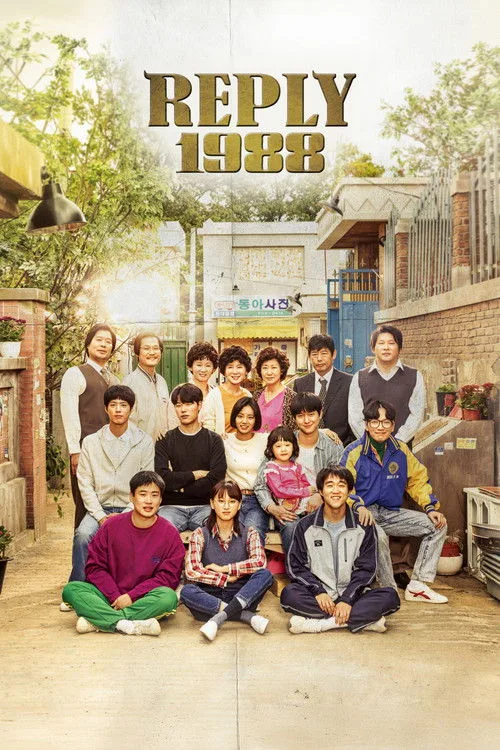
 Reply 1988
Drama, Comedy
 Netflix
 Hospital Playlist
Drama, Medical
 Netflix Editor's Pick
 Crash Landing on You
Romance, Comedy
 Netflix
 Extraordinary Attorney Woo
Comedy, Drama
Where can I watch After Life?
Streaming: Netflix. Regional notes: Netflix in the United States; Netflix in the United Kingdom; Netflix in Indonesia; Netflix in India.