1917 (2019) Review: The Long Take Goes to War
1917 is Sam Mendes's First World War race against time, staged to look like one continuous shot, and a rare technical feat that keeps its humanity.
★★★★½ 4.5/5
Yes. It is a gripping, immersive war film best seen on a big screen, ideal for viewers who want tension and craft more than battlefield history lessons.
Is 1917 worth watching?
Yes. 1917 is a breathtaking piece of filmmaking, a First World War mission told as if in a single unbroken take, and it turns that stunt into two hours of almost unbearable tension. Sam Mendes and cinematographer Roger Deakins put the audience at a soldier’s shoulder and never let go, so the war is felt rather than explained. The reservation is that the method sometimes outshines the people: the two leads are sketched more than developed, and a string of famous faces in cameo roles can pull you briefly out of the mud.
What is 1917 about?
In northern France in the spring of 1917, two young British lance corporals, Schofield (George MacKay) and Blake (Dean-Charles Chapman), are woken from a rest and handed an order. A battalion of around sixteen hundred men is about to attack German lines that appear to have been abandoned, but aerial reconnaissance suggests the retreat is a trap. The field telephone lines have been cut. Someone has to cross no-man’s-land and the ground beyond on foot and deliver a message calling off the attack before dawn, and Blake’s older brother is among the men at risk.
That is the whole of 1917, and it is enough. Mendes co-wrote the screenplay with Krysty Wilson-Cairns, drawing on war stories told to him by his grandfather. The film is a British production in English and runs 119 minutes, most of it apparently in real time.
The one-shot illusion earns its place
The film is built from long takes stitched together with hidden cuts, and the effect is not a gimmick. Because the camera never skips ahead, every obstacle has to be crossed in full: a trench packed with exhausted men, a crater field strewn with wire and bodies, an abandoned enemy dugout, a farmhouse, a river. There is no escape to a general’s map room or a cutaway to the enemy, so the audience knows only what the two soldiers know.
Deakins, who won an Academy Award for the cinematography, makes that journey astonishingly varied. Grey morning light gives way to open, bright countryside that feels more dangerous for its calm, and a long night passage lit by flares and fire looks like a vision of hell. Thomas Newman’s score, built on pulsing strings and slow swells, keeps the tension tight without swamping the images.
Two young actors against the scale
George MacKay and Dean-Charles Chapman have a hard job: they must hold the film together while almost never leaving the frame, with little dialogue to build character from. They manage it through physical detail. Chapman’s Blake is eager and talkative, driven by fear for his brother. MacKay’s Schofield is quieter and warier, a man who has already seen enough of the front to distrust medals and orders, and his face becomes the film’s emotional barometer.
The supporting cast is a parade of well-known British actors, including Colin Firth, Andrew Scott, Mark Strong and Benedict Cumberbatch, each dropping in for a scene. Most are very good, Andrew Scott’s weary officer especially, but the recognisability works against the illusion. Each appearance feels like a checkpoint in a level rather than a chance meeting in a war.
Spectacle over history
1917 is not a film about why the war was fought or what it meant; it is a survival thriller set on a historical battlefield. That focus is its strength and its limit. The episodic structure, one peril after another, can feel designed rather than lived, and the film’s most emotional moments are more cleanly engineered than truly surprising. Viewers who want the politics and texture of the Western Front will find more in books and documentaries. As an immersive experience, though, it has few equals.
Who should watch 1917?
It is ideal for anyone who loves war cinema, for fans of technically ambitious filmmaking, and for viewers who enjoy relentless, clock-driven thrillers. Two hours is a comfortable commitment, but see it on the biggest screen and loudest sound system available. The violence is intense rather than prolonged, with bodies, wounds and sudden deaths, so it suits older teenagers upward.
Follow it with these from the war shelf:
- Dunkirk, another British survival story that puts the audience inside the experience rather than the strategy.
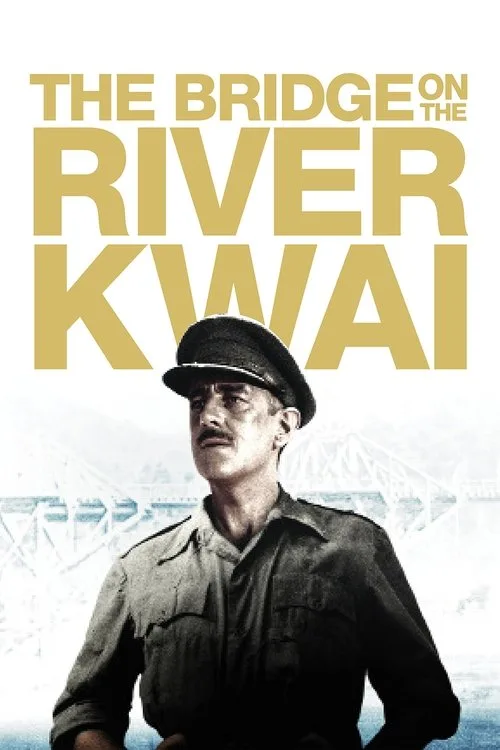
- The Bridge on the River Kwai, a classic that trades immersion for moral argument about duty and obsession.
The verdict
1917 is a technical marvel with a pulse, a war film that makes a simple mission feel like the most important journey in the world. Its characters are thinner than its craft, and its star cameos can break the spell, but as an experience of fear, exhaustion and dogged courage it is exceptional.
Rating: 4.5/5
Availability is a catalogue snapshot and can change. Confirm with the provider in your region.
Where to watch 1917
Streaming: Netflix
Rent: Amazon Video, Apple TV, Google Play, YouTube, Fandango at Home
Buy: Amazon Video, Apple TV, Google Play, YouTube, Fandango at Home
By region: Netflix in the United States; Netflix in the United Kingdom; Lionsgate Play in India; TV+, HBO Max in Turkey
Full scores and availability on the movie page.
If you liked 1917
Ranked by genre overlap and Celluloid Score. More movies like 1917 →

Where can I watch 1917?
Streaming: Netflix. Rent: Amazon Video, Apple TV, Google Play, YouTube, Fandango at Home. Buy: Amazon Video, Apple TV, Google Play, YouTube, Fandango at Home. Regional notes: Netflix in the United States; Netflix in the United Kingdom; Lionsgate Play in India; TV+, HBO Max in Turkey.