Oppenheimer True Story: What the Film Gets Right (and Compresses)
How accurate is Christopher Nolan’s Oppenheimer? Manhattan Project, security hearing, Jean Tatlock, Strauss — based on American Prometheus, with who should skip the fact-check.
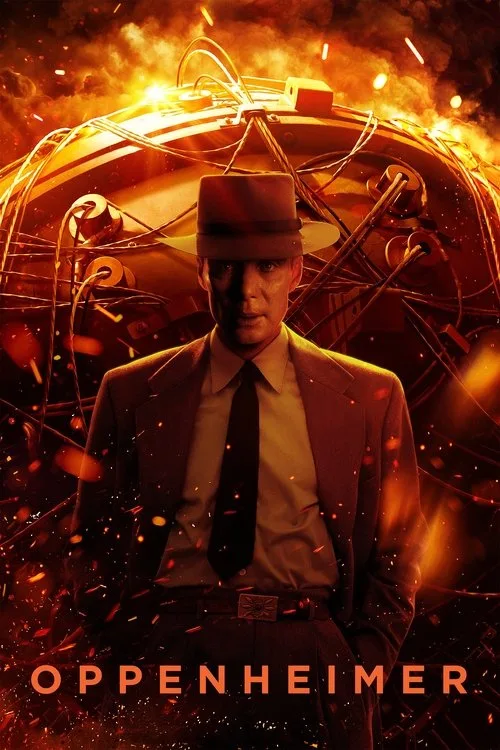
Oppenheimer (2023) is adapted from Kai Bird and Martin J. Sherwin’s American Prometheus. It is a dramatized biopic, not a documentary — timelines compress, composite conversations appear, and some figures get sharper villain arcs than the full historical record.
Is Oppenheimer based on a true story?
Yes. J. Robert Oppenheimer led Los Alamos; the Trinity test happened; the security clearance hearing destroyed his public standing; Lewis Strauss’s confirmation fight is a real political drama. Nolan’s structure (color for Oppie’s subjective life, black-and-white for the Strauss thread) is a storytelling device, not a claim about which scenes are “more true.”
“Based on a true story” here means the spine is documented. It does not mean every corridor conversation is a transcript.
What does the film get broadly right?
The moral hangover after Hiroshima and Nagasaki, Oppie’s security hearing as a political knife fight, and Strauss’s resentment over the H-bomb / AEC battles. The film is strongest when it shows bureaucracy and ego as weapons — that matches the book’s thesis more than any single lab anecdote.
If you want the science-policy fights in full, the book is denser than any three-hour film. The movie is the argument; the book is the archive.
What is compressed or dramatized?
Jean Tatlock’s relationship and death are telescoped for tragedy; Kitty Oppenheimer’s drinking and rage are heightened; some committee dialogue is invented from the spirit of transcripts. Trinity’s silence-then-roar staging is cinematic, not a stopwatch recreation. If a scene feels like a thesis speech, assume polish.
We are not a nuclear-history journal. If a detail matters for scholarship, go to American Prometheus and the hearing record — not to a pause-button on IMAX.
Should I read the book after the movie?
If the hearing politics hooked you, yes — American Prometheus fills in the science-policy fights the film only sketches. If you only wanted Cillian Murphy in a hat, you can stop at the movie page for scores and rent/streaming. More fact-checks: /guides/true-story/.
Hit-or-flop context (gross vs budget, Barbenheimer): /news/oppenheimer-hit-or-flop/.
Who should skip this fact-check?
Skip it if you have not seen the film and wanted zero context that could colour a first viewing — even a non-spoiler fact-check names the hearing and Tatlock. Skip the film if you wanted a documentary with footnotes on screen. Skip using this page as a gotcha list to “catch Nolan out”; compression is the job of a biopic, not a crime.
Desk assessment: we have not independently re-audited every hearing transcript for this guide. The claims above follow the film’s own source book and widely reported history. Where we do not know a staging detail, we say it is cinematic.
Films featured in this piece
Sources
- American Prometheus (Kai Bird & Martin J. Sherwin) — Penguin Random House
More in Based on a True Story · All guides