Spirited Away (2001) Review: Finding Courage in a Strange World
Hayao Miyazaki's fantasy turns bewilderment, work and small acts of kindness into an extraordinary adventure. A spoiler-free review of its animation, world-building and emotional logic.
★★★★★ 5/5
An exceptional animated fantasy for viewers who enjoy strange worlds and patient discovery. Spirited Away combines dazzling invention with an ordinary child's courage; younger viewers may find its transformations and threats frightening.
Is Spirited Away worth watching?
Yes. Spirited Away is a richly imagined fantasy whose most important achievement is making courage feel learnable. Chihiro does not enter its world as a destined champion. She is hesitant, unhappy about change and frequently unsure what to do. Hayao Miyazaki lets her become capable through attention, work and kindness rather than replacing her ordinary personality with an instantly heroic one.
The result is accessible without being predictable. A viewer can follow the immediate needs of the story while remaining uncertain about the larger rules of its world. That balance creates wonder: the film does not explain every creature before permitting it to matter. Its animation makes the unfamiliar inviting enough to explore, even when the experience is frightening.
At 125 minutes, it asks for more sustained attention than a short family adventure. The recommendation is strongest for viewers comfortable with transformation, threatening adults and a child separated from familiar protection. Animation does not make those experiences emotionally weightless.
The premise without the discoveries
Chihiro is travelling with her parents as the family moves to a new home. A detour brings them to a place that appears abandoned but operates by rules they do not understand. When her parents undergo a disturbing transformation, she must find a way to survive in a world of spirits and eventually return with them.
A large bathhouse becomes the centre of her experience. Work offers her a provisional place in this world, but it also introduces obligations and risks. She needs help, yet cannot assume that friendliness, status or wealth reliably indicates whom to trust.
This is enough of the story to begin with. Much of the pleasure lies in meeting its inhabitants without a catalogue of their meanings. The film supplies emotional direction through Chihiro’s needs, allowing its wider mythology to remain partly mysterious. Confusion can be a productive part of the experience when the viewer still understands what matters to the child.
Animation that gives the world weight
The bathhouse feels operational rather than merely decorative. People carry things, hurry through corridors, attend to customers and complain about tasks. The setting has pressure, hierarchy and routine. Those ordinary activities make its extraordinary inhabitants easier to believe in because they inhabit a place with practical demands.
Movement distinguishes characters before a full explanation does. The pace of a walk, the effort of lifting something and a moment of physical hesitation all communicate temperament. Chihiro’s uncertainty is especially legible in the way she negotiates unfamiliar spaces. The animation does not require her to tell the audience that she is afraid every time her body can show it.
The backgrounds expand the world beyond the current action. A passage, distant building or stretch of water can suggest a life continuing somewhere the story does not visit. This generosity of detail is different from supplying additional plot. It gives the setting the sense that Chihiro has entered something larger than a scenario built exclusively for her development.
Work, appetite and the value of a name
The film repeatedly asks what people consume and what they are prepared to exchange for comfort. Appetite can become a failure of attention: the desire to take something arrives before any effort to understand where it came from or what it costs. The fantasy makes that habit visible in ways that are sometimes comic and sometimes grotesque.
Work is similarly double-edged. It can provide skills and relationships, but the bathhouse’s authority is not automatically benevolent because it offers employment. Chihiro must navigate rules without allowing them to become the whole measure of who she is. The relationship between names, memory and identity gives that danger a clear dramatic form.
Miyazaki avoids making virtue synonymous with victory over an obvious enemy. Some of Chihiro’s most meaningful actions involve noticing distress or declining an attractive offer. The film allows practical kindness to become a form of intelligence. A person understands the world better because they have paid attention to another being within it.
Music, quiet and emotional rhythm
Joe Hisaishi’s music helps the film move between urgency and contemplation without reducing every moment to a single prescribed feeling. Melodic warmth can coexist with uncertainty. The score gives space to experiences that do not immediately announce whether they are happy or sad.
The quieter passages are essential to the pacing. After dense activity, a journey or a pause can let the viewer feel the size of the world again. These intervals are not empty stretches waiting for the next encounter. They provide time to absorb what Chihiro has learned and to notice how her relationship to uncertainty is changing.
The film’s rhythm therefore differs from an adventure organised entirely around escalation. A scene may become important because it slows the movement and changes the quality of attention. Viewers who enjoy the atmosphere of a world as much as the resolution of a quest will find that particularly rewarding.
Where it may not suit everyone
Some rules and relationships remain lightly explained. Viewers who want every magical mechanism defined may find the story elusive, especially when its priorities shift between immediate tasks. Its episodic shape is part of its imaginative freedom, but it can feel less direct than a tightly plotted rescue narrative.
For children, the intensity also deserves consideration. Threats to parents, bodily transformation and frightening imagery can be upsetting even when the film is ultimately interested in resilience. An adult watching with a younger child should be prepared to pause and talk rather than assume that the fantasy will automatically feel safe.
Neither qualification is a reason to dismiss the film’s accessibility. Its emotional stakes are clear, and its central character provides a steady point of identification. The best approach is to follow her attention instead of demanding an immediate explanation of everything she encounters.
The verdict
Spirited Away remains an outstanding recommendation because its visual invention serves an unusually humane account of growing more capable. It does not tell a frightened child that fear is a personal failure. It gives her occasions to act with care while afraid, and lets confidence emerge from those actions.
For more Japanese cinema, explore the Japanese-language collection. For a live-action family drama that also treats children as attentive moral observers, consider Shoplifters, while noting its very different and more adult subject matter. See the Spirited Away film page for score inputs and viewing options. Both subtitled and dubbed editions exist; choose the version that allows the audience to engage comfortably with the film.
Sources & further reading
References for credits, release details and production context. The critical assessment above is Celluloid’s.
Availability is a catalogue snapshot and can change. Confirm with the provider in your region.
Where to watch Spirited Away
Streaming: HBO Max
Rent: Amazon Video, Apple TV, Google Play, YouTube, Fandango at Home
Buy: Amazon Video, Apple TV, Google Play, YouTube, Fandango at Home
By region: HBO Max in the United States; Netflix in the United Kingdom; Netflix in Indonesia; Netflix in India
Full scores and availability on the movie page.
If you liked Spirited Away
Ranked by genre overlap and Celluloid Score. More movies like Spirited Away →
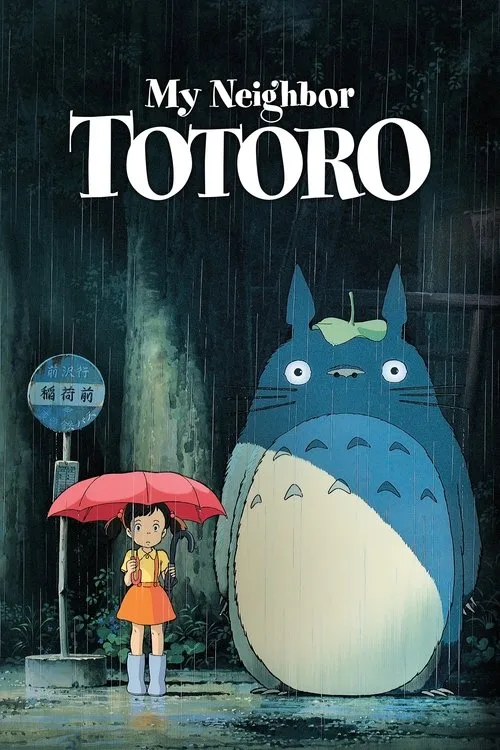 FeaturedAnnecy 1989
 My Neighbor Totoro
Fantasy, Animation · 1h 26m
 Annecy 1998
 Princess Mononoke
Animation, Fantasy · 2h 14m
 FeaturedVenice 2004
 Howl's Moving Castle
Fantasy, Animation · 1h 59m
 TIFF 2023
 The Boy and the Heron
Animation, Fantasy · 2h 4m
Where can I watch Spirited Away?
Streaming: HBO Max. Rent: Amazon Video, Apple TV, Google Play, YouTube, Fandango at Home. Buy: Amazon Video, Apple TV, Google Play, YouTube, Fandango at Home. Regional notes: HBO Max in the United States; Netflix in the United Kingdom; Netflix in Indonesia; Netflix in India.