No Other Choice (2025) Review: Job Hunting as Murder
No Other Choice is Park Chan-wook's pitch-black comedy thriller about a laid-off paper-industry veteran, with Lee Byung-hun superb as a decent man turning desperate.
★★★★½ 4.5/5
Yes. It is Park Chan-wook at his most wickedly funny, a sharp satire of job insecurity for viewers who like their comedy bleak and their thrillers precise.
Is No Other Choice worth watching?
Yes. No Other Choice is one of Park Chan-wook’s most entertaining films, a savage and very funny black comedy about unemployment, anchored by a career-best comic turn from Lee Byung-hun. It takes a fear almost every working adult recognises and pushes it, step by logical step, into crime, and the laughter it gets is never far from dread. The reservation is length: the film is long for a comedy, and a few middle stretches circle the same joke before the next escalation arrives.
What is No Other Choice about?
Man-su (Lee Byung-hun) has given many loyal years to a paper company and built a comfortable middle-class life on it, with a family home and a wife, played by Son Ye-jin, who has grown used to that stability. When he is abruptly laid off, the job hunt that follows is humiliating and fruitless, because every opening in his shrinking industry attracts other experienced men just like him. His increasingly desperate solution is to thin out the competition.
No Other Choice is Park’s adaptation of Donald E. Westlake’s novel The Ax, a book previously filmed by Costa-Gavras as Le Couperet. This version is a South Korean production in Korean, running well over two hours, with Park Hee-soon and Lee Sung-min among the men whose careers cross Man-su’s. It premiered in competition at Venice in 2025 and won Best Film at the Blue Dragon Film Awards.
A company man’s logic, followed to the end
The film’s comic engine is how reasonable Man-su sounds to himself. Park and his co-writers never turn him into a monster from a genre film; he remains a fussy, proud, slightly pathetic professional who approaches his plan the way he once approached a production target, with lists, research and a steady stream of self-justification. The title is his own excuse, repeated so often that it becomes the film’s bitterest joke.
That framing gives the satire real bite. The paper business is a fading trade, and Man-su’s expertise, once a source of dignity, is suddenly worth almost nothing. The film understands that losing a job at a certain age is also losing an identity, and it treats that loss with more sympathy than the crimes it produces.
Lee Byung-hun at his most unguarded
Lee has spent much of his career playing coiled, controlled men, including memorable turns for Park in the early 2000s. Here he lets the control crack in public. His Man-su is clumsy with violence, prone to panic and constantly improvising, and much of the comedy comes from the gap between his confident planning and his fumbling execution. It is a physical, precisely timed performance that never loses the character’s sadness.
Son Ye-jin is equally sharp as a wife who is far more practical about money than her husband is about pride, and the marriage gives the film its emotional stakes. Park Hee-soon and Lee Sung-min make the rival job seekers individual people rather than obstacles, which is exactly what makes Man-su’s project uncomfortable to watch.
Park’s precision turned toward slapstick
The filmmaking is as meticulous as anything in Park’s thrillers, but the virtuosity is now aimed at farce. Elaborate transitions, carefully blocked confrontations and sudden shifts in scale turn scenes of ordinary suburban life into set pieces, and several sequences play like a thriller staged by someone who knows exactly how absurd the situation is. The effect recalls the black comedy of Parasite, though Park’s approach is more openly playful and less interested in a single social diagram.
The limitation is proportion. At well over two hours, the film sometimes lingers on variations of the same predicament, and the tone swings from grim to goofy can feel abrupt. These are the costs of Park’s appetite for embellishment, and they are small against how consistently inventive the film remains.
Who should watch No Other Choice?
It is ideal for fans of Park Chan-wook, of Korean genre cinema, and of satires that find comedy in economic panic. Viewers who have lived through a layoff may find it both cathartic and a little too close to the bone. There is bloody violence and a persistent streak of cruelty played for laughs, so it is not for anyone who wants their comedy gentle.
Where to go next:
- Emilia Pérez, another recent festival-season film that bends a crime story into an unexpected form, though with far more mixed results.
- Parasite, Bong Joon-ho’s Oscar-winning study of class and precarity, which shares this film’s taste for dark comedy.
- Oldboy, Park’s breakthrough revenge thriller, for the more operatic side of his filmmaking.
The verdict
No Other Choice is a nasty, clever and consistently funny satire that turns the fear of redundancy into a crime story, with Lee Byung-hun giving one of the richest performances of his career. It runs longer than its jokes strictly need, but Park’s control and the film’s grim wit make it one of the standout Korean films of recent years.
Rating: 4.5/5
Availability is a catalogue snapshot and can change. Confirm with the provider in your region.
Where to watch No Other Choice
Streaming: Hulu
Rent: Amazon Video, Apple TV, Google Play, YouTube, Fandango at Home
Buy: Amazon Video, Apple TV, Google Play, YouTube, Fandango at Home
By region: Hulu in the United States; MUBI in the United Kingdom; MUBI in India; MUBI in Turkey
Full scores and availability on the movie page.
If you liked No Other Choice
Ranked by genre overlap and Celluloid Score. More movies like No Other Choice →
 Cannes 1994
 Pulp Fiction
Crime, Drama · 2h 34m
 Venice 2005
 Lady Vengeance
Drama, Thriller · 1h 55m
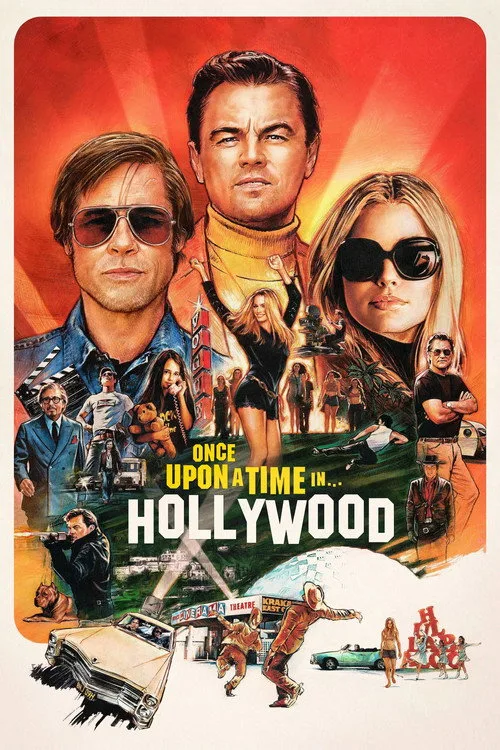 Cannes 2019
 Once Upon a Time... in Hollywood
Comedy, Drama · 2h 42m
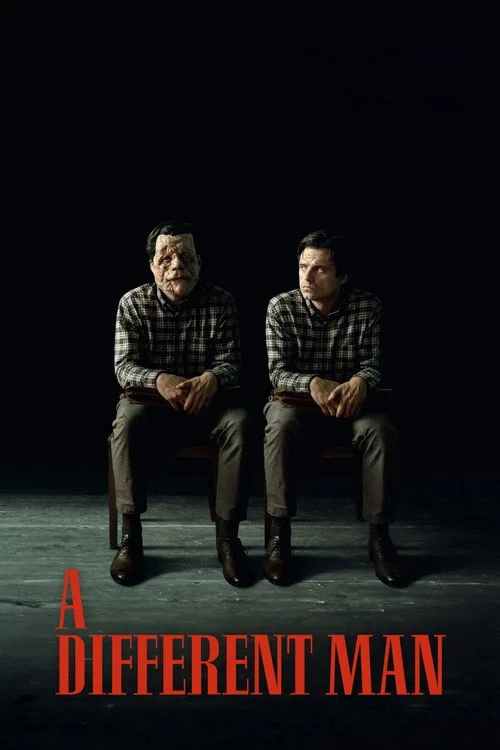 Berlinale 2024
 A Different Man
Drama, Thriller · 1h 52m
Where can I watch No Other Choice?
Streaming: Hulu. Rent: Amazon Video, Apple TV, Google Play, YouTube, Fandango at Home. Buy: Amazon Video, Apple TV, Google Play, YouTube, Fandango at Home. Regional notes: Hulu in the United States; MUBI in the United Kingdom; MUBI in India; MUBI in Turkey.