La Haine (1995) Review: A Countdown in Black and White
La Haine follows three young friends through one tense day in a Paris banlieue after a riot. Mathieu Kassovitz's black-and-white drama has lost none of its charge.
★★★★½ 4.5/5
Yes. It is one of the most urgent films of the 1990s, gripping, funny and furious, and essential for anyone interested in police violence and exclusion in modern cities.
Is La Haine worth watching?
Yes. La Haine is a landmark of French cinema, a tense and electric portrait of anger and boredom on the edges of Paris that feels as pertinent now as it did in 1995. Mathieu Kassovitz follows three friends through a single day with a mix of street comedy and mounting dread, and the black-and-white images give their small, aimless hours an almost mythic weight. The only reservations are minor: the middle section drifts, and its focus on the three young men leaves little room for anyone else in their world.
What is La Haine about?
The morning after a riot on a housing estate outside Paris, three friends try to fill another empty day. Vinz (Vincent Cassel) is hot-headed and desperate to prove himself; Hubert (Hubert Koundé), a boxer, is weary and wants out; Saïd (Saïd Taghmaoui) is the motor-mouthed joker who keeps the others talking. One of their friends lies in hospital after being beaten by police during the unrest, and Vinz has come into possession of something that could turn his talk of revenge into reality. Title cards count down the hours, and every small encounter carries the threat of escalation.
La Haine is written and directed by Kassovitz, a French production in French that runs 98 minutes. It won him the best director prize at the 1995 Cannes Film Festival, and it went on to win the César Award for best film.
Style with a pulse
Kassovitz and cinematographer Pierre Aïm shoot the estate like a stage for a tragedy: concrete towers, empty playgrounds and rooftops rendered in crisp monochrome. The camera is restless and inventive, gliding in long takes through the friends’ conversations, and one celebrated sequence floats above the estate as music pours from a window, briefly turning the whole neighbourhood into one shared space.
The style is not decoration. The black-and-white photography strips away the familiar colours of both glamorous Paris and grimy social realism, making the story feel like a fable. The visual approach also subtly shifts when the friends leave the estate, capturing how out of place they are in the rest of the city.
Three friends, three performances
The film would not work without its trio, and all three are superb. Cassel’s Vinz is a bundle of nervous bravado, a young man imitating movie tough guys because he has no other script for his rage, and his mirror scene borrowing from Taxi Driver is a perfect, funny and troubling snapshot of that. Koundé gives Hubert a tired dignity that makes him the film’s conscience, while Taghmaoui’s quick-witted Saïd supplies much of the humour and keeps the dynamics human.
What makes them unforgettable is how ordinary they are. They joke, bicker, tell rambling stories and get on each other’s nerves, and the film’s anger comes precisely from how much time and possibility these young men are being denied.
A looser middle in central Paris
The middle section, as the friends head into central Paris, is looser than the rest. Some encounters feel more like set pieces than necessary steps, and the pacing slackens before the tension returns. The film’s world is also almost entirely male; women appear only at the edges. These are small flaws in a film whose energy and anger carry it through.
Who should watch La Haine?
It is essential for anyone interested in French cinema, urban drama or films about policing and race, and a powerful introduction for younger viewers who know it only through its reputation or imagery. At 98 minutes it is tight and compulsively watchable. It contains strong language, police brutality, drug use and violence, and its themes are intense.
If it hits you hard, these are strong next steps:
- A Prophet, Jacques Audiard’s gripping prison crime drama about a young man of North African heritage navigating power in France.
- Dheepan, another Audiard film set on a violent French estate, told from a refugee’s point of view.
The verdict
La Haine is a furious, stylish and often funny film that captures a generation’s frustration with rare precision. A slightly meandering middle and a narrow focus are the only marks against it. More than three decades on, its warning still sounds, and it remains one of the great films of the 1990s.
Rating: 4.5/5
Availability is a catalogue snapshot and can change. Confirm with the provider in your region.
Where to watch La Haine
Streaming: The Criterion Channel
Rent: Amazon Video, Apple TV, Fandango at Home
Buy: Amazon Video, Apple TV, Fandango at Home
By region: The Criterion Channel in the United States; BFI Player in the United Kingdom; TV+, HBO Max in Turkey; Prime Video in Japan
Full scores and availability on the movie page.
If you liked La Haine
Ranked by genre overlap and Celluloid Score. More movies like La Haine →
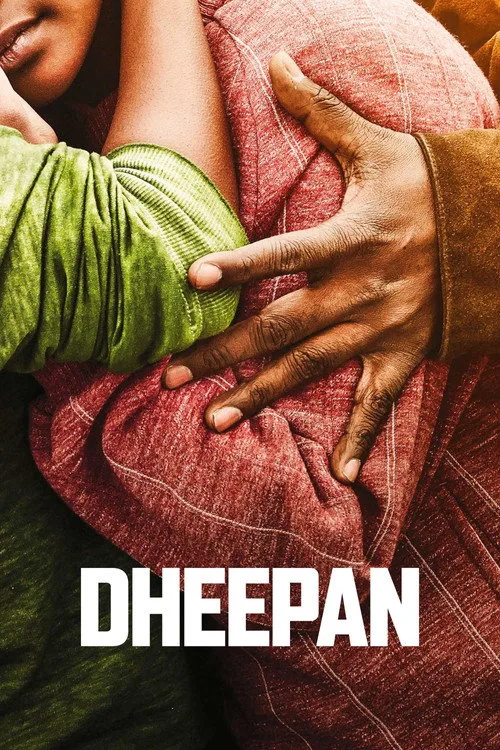 Cannes 2015
 Dheepan
Crime, Drama · 1h 55m
 Cannes 1994
 Pulp Fiction
Crime, Drama · 2h 34m
 Cannes 2018
 Shoplifters
Drama, Crime · 2h 0m
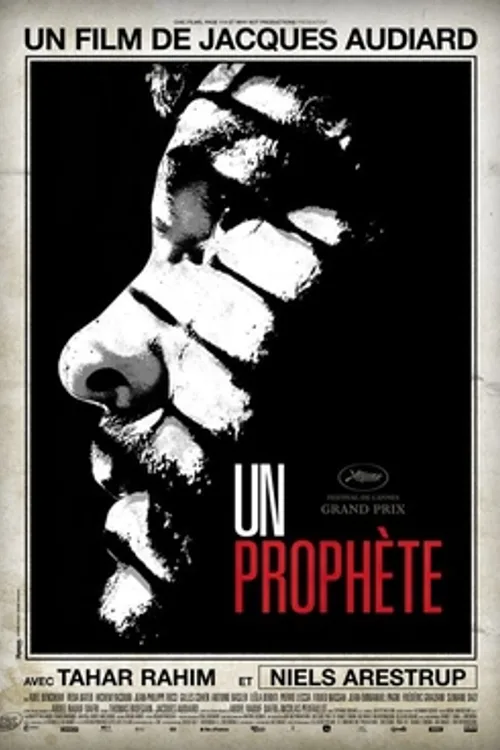 Cannes 2009
 A Prophet
Crime, Drama · 2h 35m
Where can I watch La Haine?
Streaming: The Criterion Channel. Rent: Amazon Video, Apple TV, Fandango at Home. Buy: Amazon Video, Apple TV, Fandango at Home. Regional notes: The Criterion Channel in the United States; BFI Player in the United Kingdom; TV+, HBO Max in Turkey; Prime Video in Japan.