Downfall (2004) Review: Last Days in the Bunker
Downfall is Oliver Hirschbiegel's German drama of Hitler's final days in the Berlin bunker, anchored by Bruno Ganz and chilling in its portrait of collapse and denial.
★★★★½ 4.5/5
Yes. It is a gripping, disturbing historical drama with a towering central performance, essential for anyone interested in the Second World War and the psychology of power.
Is Downfall worth watching?
Yes. Downfall is a gripping, deeply unsettling account of the last days of the Third Reich, and Bruno Ganz’s Hitler is one of the most formidable performances in modern European cinema. Oliver Hirschbiegel turns the Berlin bunker into a claustrophobic chamber drama, showing the collapse of a regime through the eyes of the people trapped inside it. Its main reservation is length: at over two and a half hours, the sprawling cast of officers and officials can blur, and the film’s relentless bleakness is draining by design.
What is Downfall about?
In April 1945, with the Soviet army closing in on Berlin, Adolf Hitler (Ganz) and his inner circle retreat into a bunker beneath the city. The story is seen largely through Traudl Junge (Alexandra Maria Lara), a young secretary who has typed Hitler’s letters and speeches since 1942. As the military situation becomes hopeless, she watches the leadership swing between denial, rage, loyalty and despair, while above ground the city’s civilians and child soldiers face the consequences.
Downfall is a German production in German, directed by Hirschbiegel and written and produced by Bernd Eichinger. It draws on historian Joachim Fest’s account of the bunker and on Junge’s own memoir, runs 156 minutes and was nominated for the Academy Award for Best Foreign Language Film. Ulrich Matthes plays Joseph Goebbels, with Corinna Harfouch and Juliane Köhler among the supporting cast. It is streaming on Prime Video in many regions.
Bruno Ganz’s frightening humanity
Ganz’s performance is the film’s centre and its most debated element. He plays Hitler not as a cartoon but as a physically failing man, trembling, stooped and prone to both sudden kindness and volcanic fury. His outbursts in the map room, as he rages at generals over armies that no longer exist, are terrifying, and they later took on a strange afterlife as endlessly parodied online clips.
The film was controversial on release for showing Hitler as a human being at all. But the performance is not sympathetic. By showing the gentleness he extends to his secretaries alongside his contempt for the German people and his willingness to let them die, Ganz makes the case that monstrousness and ordinary behaviour are not opposites. That is far more disturbing than caricature.
A regime collapsing in a concrete box
Hirschbiegel stages the bunker as a maze of cramped corridors, flickering lights and airless rooms, where drinking, dancing and delusion continue while shells fall overhead. The contrast between the surreal calm below and the carnage above gives the film much of its power, and the scenes in the ruined streets, where boys and old men are sent to fight, are harrowing.
Alexandra Maria Lara, as Junge, is the audience’s uneasy guide, a young woman whose loyalty is slowly shaken by what she sees. Ulrich Matthes is chilling as Goebbels, whose fanatical devotion only grows as the end approaches. The film is framed by interview footage of the real Traudl Junge, a device that adds weight and prevents the drama from settling into mere spectacle.
Where the scope strains
The film’s ambition to show everyone in the bunker is also a weakness. Generals, adjutants, doctors and officials come and go, and viewers without some knowledge of the period may struggle to keep track of who is who. Some critics have also argued that the focus on the bunker’s final chaos crowds out the regime’s victims. The film acknowledges this only briefly, and its tight focus is both its strength and its limit.
Who should watch Downfall?
It is essential for anyone interested in the Second World War, in history on film, or in how power collapses from within. It is a demanding watch, with a long running time, disturbing scenes of suicide and death, graphic war violence and a constant atmosphere of dread. It is not suitable for younger viewers.
For more on the war and its perpetrators:
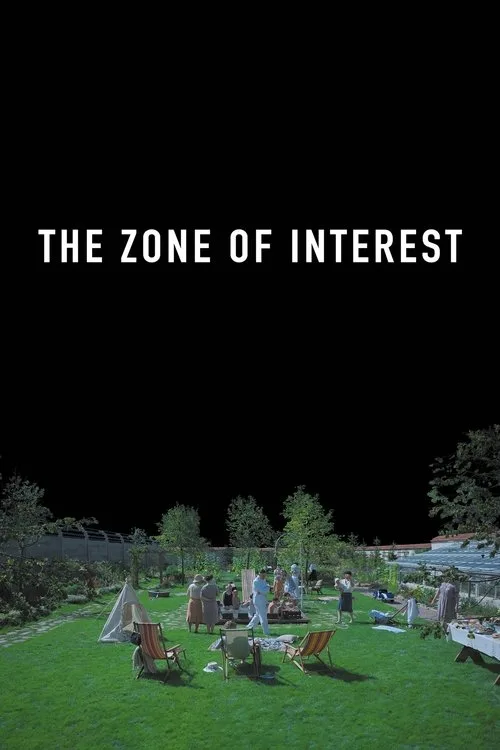
- The Zone of Interest, Jonathan Glazer’s chilling study of the domestic lives of Nazi perpetrators, which completes this film’s portrait of ordinary evil.
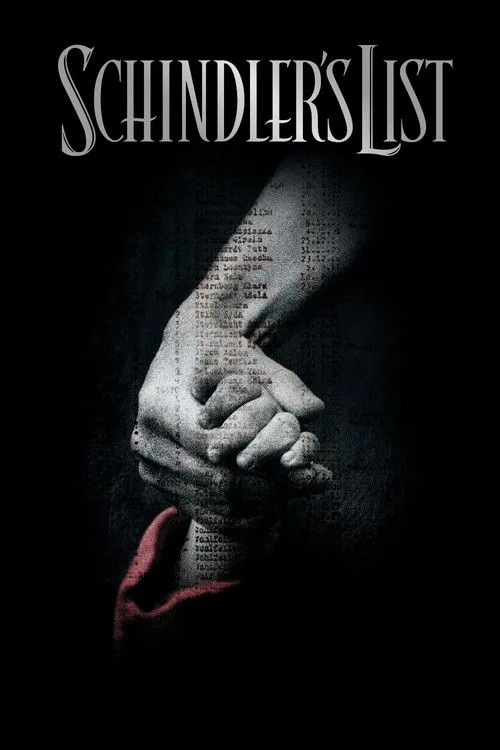
- Schindler’s List, for the perspective of the regime’s victims that Downfall leaves largely offscreen.
- Das Boot, an earlier German reckoning with the war, told from the cramped world of a U-boat crew.
The verdict
Downfall is a gripping, meticulous and deeply disturbing portrait of a regime in its death throes, with a performance by Bruno Ganz that remains unforgettable. Its sprawling cast and narrow focus are real limitations, but as a study of power, delusion and complicity it is essential viewing.
Rating: 4.5/5
Availability is a catalogue snapshot and can change. Confirm with the provider in your region.
Where to watch Downfall
Streaming: Prime Video
Rent: Amazon Video, Apple TV, Google Play, YouTube, Fandango at Home
Buy: Amazon Video, Apple TV, Google Play, YouTube, Fandango at Home
By region: Prime Video in the United States; BFI Player in the United Kingdom; U-NEXT in Japan
Full scores and availability on the movie page.
If you liked Downfall
Ranked by genre overlap and Celluloid Score. More movies like Downfall →
 Featured
 Schindler's List
Drama, History · 3h 15m
 Featured
 Saving Private Ryan
War, Drama · 2h 49m
 Cannes 2023
 The Zone of Interest
Drama, History · 1h 45m
Braveheart
Action, Drama · 2h 58m
Where can I watch Downfall?
Streaming: Prime Video. Rent: Amazon Video, Apple TV, Google Play, YouTube, Fandango at Home. Buy: Amazon Video, Apple TV, Google Play, YouTube, Fandango at Home. Regional notes: Prime Video in the United States; BFI Player in the United Kingdom; U-NEXT in Japan.