Decision to Leave (2022) Review: Park's Most Tender Noir
Decision to Leave is Park Chan-wook's romantic noir about a detective drawn to a murder suspect, a dazzling, melancholy puzzle that trades violence for longing.
★★★★☆ 4/5
Yes, with reservations. It is an exquisite, grown-up mystery romance for patient viewers who enjoy ambiguity, though its intricate plotting can keep the heart at arm's length.
Is Decision to Leave worth watching?
Yes. Decision to Leave is a gorgeous, intricate romantic mystery, and Park Chan-wook’s most restrained and grown-up film. The director best known for bloody revenge stories here makes a love story conducted almost entirely through glances, recordings and mistranslations, and Tang Wei gives one of the great enigmatic performances of recent cinema. The reservation is that the plotting is so elaborate, and the camera so clever, that the film can be easier to admire than to feel.
What is Decision to Leave about?
Hae-joon (Park Hae-il) is a meticulous, insomniac police detective in Busan. When a man falls to his death from a mountain peak, he interviews the dead man’s widow, Seo-rae (Tang Wei), a Chinese immigrant whose Korean is imperfect and whose calm reaction to the news seems suspicious. As Hae-joon investigates, surveillance becomes fascination, and fascination becomes something neither of them can name. Lee Jung-hyun plays his wife, who lives in another city and sees him at weekends.
Decision to Leave is a South Korean film in Korean and Mandarin, directed by Park from a screenplay he wrote with his regular collaborator Jeong Seo-kyeong. It runs 138 minutes and won Park the Best Director prize at Cannes in 2022. It is streaming on MUBI in several regions.
A love story told through technique
Park has always been a showman, and his inventiveness here is dazzling. Scenes slide into one another through match cuts and impossible camera positions: during a stakeout, Hae-joon seems to stand inside the room he is watching; phone screens, eye drops and smartwatch messages become part of the imagery. The film finds cinematic ways to show surveillance turning into intimacy, as if the detective’s gaze were itself a form of courtship.
Language is the film’s other great device. Seo-rae speaks some Korean, but she often reaches for a translation app, and the gaps between what she says, what she means and what Hae-joon hears are loaded with ambiguity. The film gets humour and eroticism out of these misunderstandings, and it makes a mystery out of the most basic question: what is she actually saying?
Tang Wei and Park Hae-il in perfect balance
Tang Wei is extraordinary. Seo-rae is guarded, funny, wounded and possibly dangerous, and Tang never lets the audience settle on one reading. Her slightly formal Korean becomes part of the character, a way of keeping everyone, including the viewer, at a careful distance.
Park Hae-il is an ideal counterpart. Hae-joon is a decent, orderly man proud of his professionalism, and his unravelling is shown in tiny lapses of control rather than in dramatic outbursts. The chemistry between them is built from restraint: there is little overt romance, and every small gesture carries enormous weight. Lee Jung-hyun adds dry comedy as a wife whose brisk practicality makes her husband’s quiet obsession more obvious.
Where the puzzle gets in the way
For all its beauty, the film is demanding. The plot folds back on itself, key information arrives obliquely, and the editing’s constant sleight of hand can leave viewers working too hard to track events to fully feel them. The second half in particular is complex enough that some audiences will want a second viewing. Park’s control is so complete that the film sometimes feels airless, a precision instrument rather than a broken heart. That is a small complaint about a work of this ambition, but it keeps it just short of his very best.
Who should watch Decision to Leave?
It is for patient viewers who love mysteries, film noir and romance that stays understated, and for admirers of classic Hollywood suspense; the Vertigo comparisons are earned. Newcomers to Park who fear the extreme violence of his earlier films can relax, as this one is far gentler, though it deals with death and includes some disturbing images. Set aside over two hours and full attention.
Two more from Park Chan-wook:
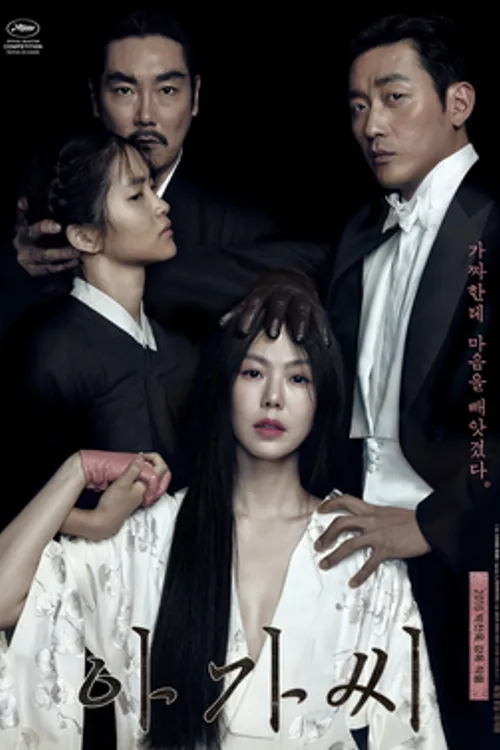
- The Handmaiden, his lavish, twisting period romance and con-game thriller, which is more playful and more explicit.
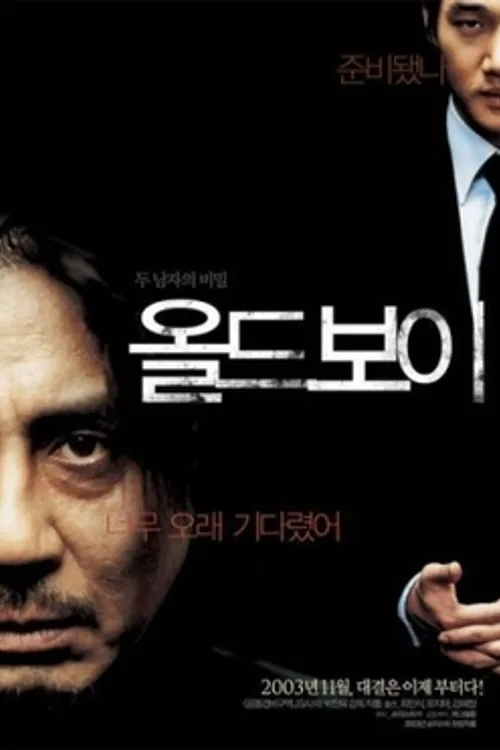
- Oldboy, the savage revenge thriller that made his international name, and a striking contrast in tone.
The verdict
Decision to Leave is an elegant, melancholy mystery romance that shows Park Chan-wook refining his dazzling technique into something quieter and sadder. Its intricacy can hold the emotion at bay, but Tang Wei’s haunting performance and the film’s endless visual invention make it essential for lovers of sophisticated noir.
Rating: 4/5
Availability is a catalogue snapshot and can change. Confirm with the provider in your region.
Where to watch Decision to Leave
Streaming: MUBI
Rent: Amazon Video, Apple TV, Fandango at Home
Buy: Amazon Video, Apple TV, Fandango at Home
By region: MUBI in the United States; MUBI in the United Kingdom; MUBI in India; MUBI in Turkey
Full scores and availability on the movie page.
If you liked Decision to Leave
Ranked by genre overlap and Celluloid Score. More movies like Decision to Leave →
 Busan 2016
 The Handmaiden
Romance, Thriller · 2h 25m
 Venice 2025
 No Other Choice
Thriller, Comedy · 2h 19m
 Busan 2025
 Oldboy
Thriller, Action · 2h 0m
 Venice 2005
 Lady Vengeance
Drama, Thriller · 1h 55m
Where can I watch Decision to Leave?
Streaming: MUBI. Rent: Amazon Video, Apple TV, Fandango at Home. Buy: Amazon Video, Apple TV, Fandango at Home. Regional notes: MUBI in the United States; MUBI in the United Kingdom; MUBI in India; MUBI in Turkey.