A Silent Voice (2016) Reviews: What Critics Said
Critics praised A Silent Voice as a tender, visually inventive drama about bullying, guilt and redemption, though several found its condensed manga plot crowded and its deaf heroine too passive.
Most critics say yes: A Silent Voice is a moving, carefully animated study of guilt and friendship, though its busy plot and shifting tone kept some at a distance. This is a roundup of published reviews; Celluloid has not rated it.
Editorial note: This is a roundup of published criticism of A Silent Voice. Celluloid has not screened the film for this piece, and it carries no Celluloid rating. The critics are named and linked under Sources.
Is A Silent Voice worth watching?
Most critics say yes: Naoko Yamada’s film was widely admired as a sensitive, visually distinctive drama that sees school bullying through the eyes of the bully and follows his attempt to make amends. Reviewers praised its restraint, its expressive animation and its grasp of how enormous teenage life can feel. The recurring reservations are that squeezing a seven-volume manga into a little over two hours leaves the story crowded and some characters thin, and that the deaf heroine is kept too far in the background of the hero’s arc.
What is A Silent Voice about?
At primary school, Shouya Ishida starts bullying Shouko Nishimiya, the new girl in his class, because she is deaf. As the teasing continues, the rest of the class turns on Shouya for his cruelty, and once they leave that school the two do not speak again. Years later, an older Shouya, tormented by what he did, decides he must see Shouko once more and try to atone. Naoko Yamada directed from a screenplay by Reiko Yoshida. Miyu Irino voices the teenage Shouya and Mayu Matsuoka the younger boy, with Saori Hayami as Shouko, Aoi Yuuki as Yuzuru Nishimiya, Kensho Ono as Tomohiro Nagatsuka and Yuki Kaneko as Naoka Ueno. Released in Japan in 2016, the film runs 129 minutes. Release details and where to watch are on the A Silent Voice film page.
What critics praised
At Anime News Network, Kevin Cirugeda, reviewing the film in late 2016, argued that Yamada and Yoshida make the story their own through liberal cuts and a reworked structure, and that where the manga could tip into melodrama, the film wraps its hero’s story in tenderness. He admired the painstaking hand animation, especially the sign-language conversations, which are never hidden to save effort. He found Saori Hayami’s performance as Shouko almost uncomfortably convincing, and appreciated Kensuke Ushio’s spare score of soft piano, ambient sound and silence.
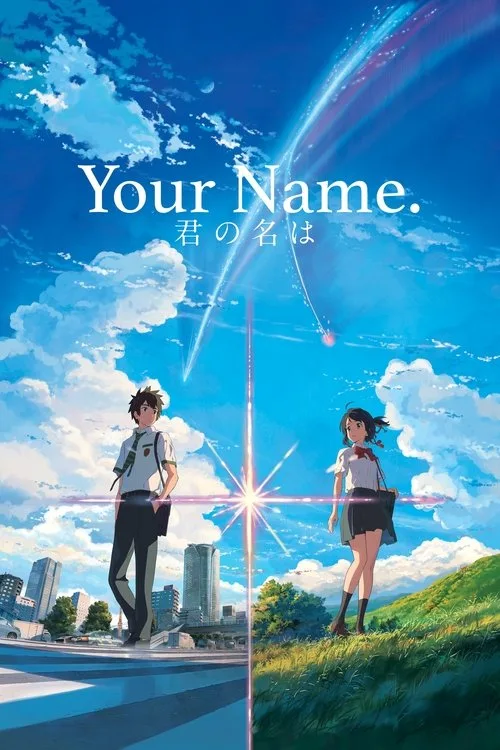
Trevor Johnston of Time Out placed the film beside Your Name as a high-school story that goes further than its premise suggests, with the psychological depth to explore friendship and the pull of status and approval. He counted Yamada as a distinctive talent in a line of Japanese mavericks that includes Ozu, Kitano and Miyazaki. Ross McIndoe of The Skinny praised the way it captures the stage of life when school feels like the whole world, and thought Yamada’s soft-focus, wistful look well suited to a story driven by guilt and memory.
In Little White Lies, Michael Leader called it a gently moving coming-of-age film, brimming with emotion. He found the frantic opening half-hour, which cuts between past and present, memory, dream and reality, a convincing picture of a troubled mind, and described the deliberately awkward, off-centre framing as animation that seems to share its hero’s social anxiety.
Where critics were divided
Mansel Stimpson of Film Review Daily was the least persuaded. The film held his interest, but he struggled to warm to it: the cast is large and sometimes confusing, characters go by several versions of their names, and the moves between stark drama, humour and sentimentality kept him at arm’s length. He also admitted that his response suffered by comparison with Your Name, which had won him over at once.
Several admirers shared parts of that view. Johnston thought the storyline occasionally congested by the work of condensing so much manga, and Cirugeda felt that some side characters lose depth once their backstories are trimmed. Leader was troubled by the film’s male point of view, feeling that Shouko is left voiceless, passive and hard to read as a function of Shouya’s story, and thought the film less refined than comparable work.
Who is it for?
The film suits teenagers and adults who respond to character-driven drama and to animation that treats emotional pain seriously. It deals with bullying, isolation and suicide, carries a 12 certificate in the UK, and Stimpson cautioned that it is not really a film for young children.
The critical verdict
Critics largely agreed that A Silent Voice is a tender, visually inventive film about guilt, forgiveness and the difficulty of being understood, and that Yamada’s restraint gives it unusual force. Cirugeda, Johnston and McIndoe were enthusiastic, and Leader found it genuinely affecting despite his reservations. The main objections, voiced most fully by Stimpson, concern a crowded plot and uneven tone, while Leader felt the heroine is left on the edge of her own story.
Sources & further reading
This article compares the named critics below. It is not the author’s personal review; any confirmed personal rating is shown separately on the film page.
Availability is a catalogue snapshot and can change. Confirm with the provider in your region.
Where to watch A Silent Voice
Streaming: Crunchyroll
Rent: Amazon Video, Apple TV, Google Play, YouTube, Fandango at Home
Buy: Amazon Video, Apple TV, Google Play, YouTube, Fandango at Home
By region: Crunchyroll in the United States; Crunchyroll, SonyLIV in India; Netflix, Wavve, TVING in South Korea; Netflix in Japan
Full scores and availability on the movie page.
If you liked A Silent Voice
Ranked by genre overlap and Celluloid Score.
 Annecy 2016
 Your Name
Animation, Romance · 1h 46m
 FeaturedAnnecy 2024
 Look Back
Animation, Drama · 58m
 TIFF 2023
 The Boy and the Heron
Animation, Fantasy · 2h 4m
 Cannes 2019
 Portrait of a Lady on Fire
Romance, Drama · 2h 2m
Where can I watch A Silent Voice?
Streaming: Crunchyroll. Rent: Amazon Video, Apple TV, Google Play, YouTube, Fandango at Home. Buy: Amazon Video, Apple TV, Google Play, YouTube, Fandango at Home. Regional notes: Crunchyroll in the United States; Crunchyroll, SonyLIV in India; Netflix, Wavve, TVING in South Korea; Netflix in Japan.