Andor (2022) Review: How Rebellions Are Made
Andor rebuilds Star Wars as an adult political thriller about surveillance, prison labour and radicalisation, and it is the finest drama the franchise has produced.
★★★★★ 5/5
Yes, emphatically. It is essential for adult drama fans, including viewers with no interest in Star Wars; allow a few episodes for its deliberate opening to click.
Is Andor worth watching?
Yes. Andor is the best thing Star Wars has ever produced and one of the great television dramas of its decade, a political thriller that happens to be set in a galaxy far, far away. Tony Gilroy strips out the Jedi, the prophecies and the chosen bloodlines, and what remains is a gripping study of how empire works and how ordinary people come to resist it. The only reservation is patience: the opening episodes are slow by design, and the rewards build steadily from there.
What is Andor about?
Five years before the events of the film Rogue One, Cassian Andor (Diego Luna) is a thief and drifter with no politics beyond survival. A violent encounter on an industrial planet puts him on the Empire’s radar and in the path of Luthen Rael (Stellan Skarsgård), a genteel antiques dealer with a secret life as a rebel organiser. Around them, the series follows Senator Mon Mothma (Genevieve O’Reilly), trying to fund resistance from inside the Imperial capital, and Dedra Meero (Denise Gough), an ambitious officer of the Imperial Security Bureau who notices patterns her colleagues miss.
Andor was created by Tony Gilroy. It is an American production in English. This review covers the complete series: two seasons and 24 episodes, and the story has ended, leading directly into Rogue One. You do not need to have seen that film first.
Empire as a working system
Gilroy’s great insight is that tyranny is mostly administrative. Andor spends as much time in offices, briefing rooms and checkpoints as it does on battlefields, and the Imperial Security Bureau is shown not as a gang of villains but as a workplace, with rivalries, promotions and reports. Gough’s Dedra is chilling precisely because she is diligent, and her scenes make surveillance feel like a career path.
The production design turns this into argument. Imperial spaces are cold, orderly and brightly lit, while rebel hideouts and working towns are cluttered, human and fragile. The first season’s prison arc, set in a gleaming facility where inmates assemble parts for an unseen purpose, is one of the most gripping stretches of television in years, and it shows radicalisation as something that happens when a person runs out of places to hide.
Words as weapons
Where the Star Wars films often distrust talk, Andor is built on it. Some of its most electric scenes are speeches: a eulogy, a rallying cry, and a monologue from Skarsgård about the cost of rebellion that reframes the entire series. Gilroy writes dialogue with the density of a stage play, and the cast rises to it. O’Reilly, playing a politician whose every private moment is compromised, gives one of the finest performances in the show.
Diego Luna anchors it all with a wary, closed-off quality. Cassian is not a natural hero, and Luna lets him remain guarded and pragmatic even as he is drawn further into the cause. It is a quietly powerful performance about a man being forged into something he never set out to be.
A second season that moves at speed
The second season takes a bold structural gamble, jumping forward a year at a time in blocks of three episodes to cover the years leading up to Rogue One. It gives the series a sweeping sense of history, and several of its arcs are as strong as anything in the first season. The cost is compression: some relationships and developments that deserved room are covered in shorthand. It is a small flaw in a series that otherwise rarely misjudges its material.
Who should watch Andor?
It is for anyone who likes serious political and espionage drama, whether or not they care about Star Wars; newcomers will lose little by knowing nothing about the franchise. The complete series streams on Disney+, and at 24 episodes it is a significant but rewarding commitment. It is far darker than most Star Wars, with torture, executions, massacres and scenes of sexual threat, so it suits adults and older teenagers.
If Andor works for you, try these next:
- Chernobyl, for another gripping study of a state apparatus and the people crushed or radicalised by it.
- Severance, which shares Andor’s fascination with institutional control and the quiet horror of the workplace.
- The Last of Us, another adaptation that proved a famous property could carry grown-up drama.
The verdict
Andor proves that the most familiar franchise can produce genuine art when a serious writer treats it seriously. Tense, intelligent and morally unsparing, it works first as television about power and resistance and only second as Star Wars, which is exactly why it towers over everything else in the saga.
Rating: 5/5
Availability is a catalogue snapshot and can change. Confirm with the provider in your region.
Where to watch Andor
Streaming: Disney+
By region: Disney+ in the United States; Disney+ in the United Kingdom; Disney+ in Indonesia; Disney+ Hotstar, Vi Movies & TV in India
Full scores and availability on the series page.
More like Andor
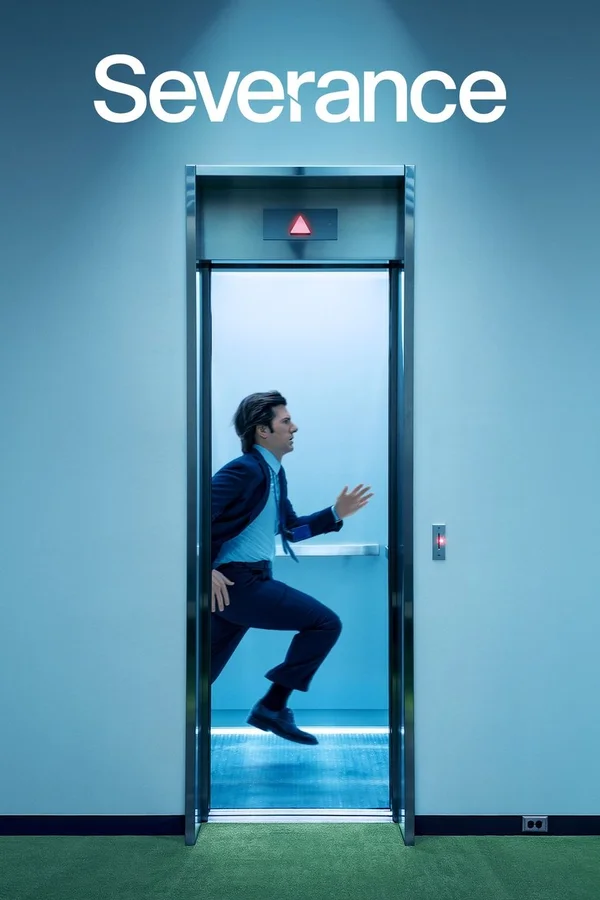 Apple TV+ Editor's Pick
 Severance
Drama, Sci-Fi
 Apple TV+
 Star City
Drama, Sci-Fi
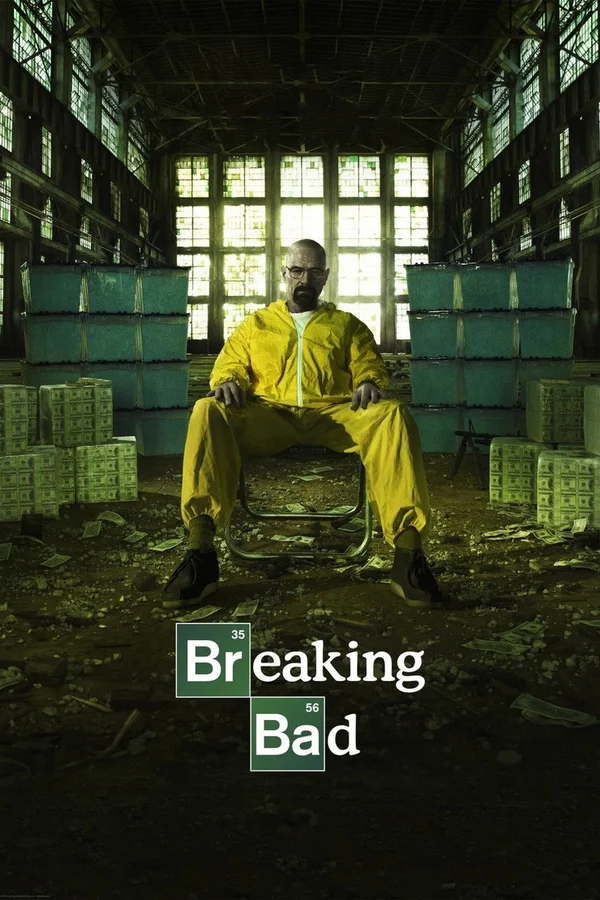 Netflix Editor's Pick
 Breaking Bad
Crime, Drama
 Viki Editor's Pick
 Nirvana in Fire
Drama, History
Where can I watch Andor?
Streaming: Disney+. Regional notes: Disney+ in the United States; Disney+ in the United Kingdom; Disney+ in Indonesia; Disney+ Hotstar, Vi Movies & TV in India.